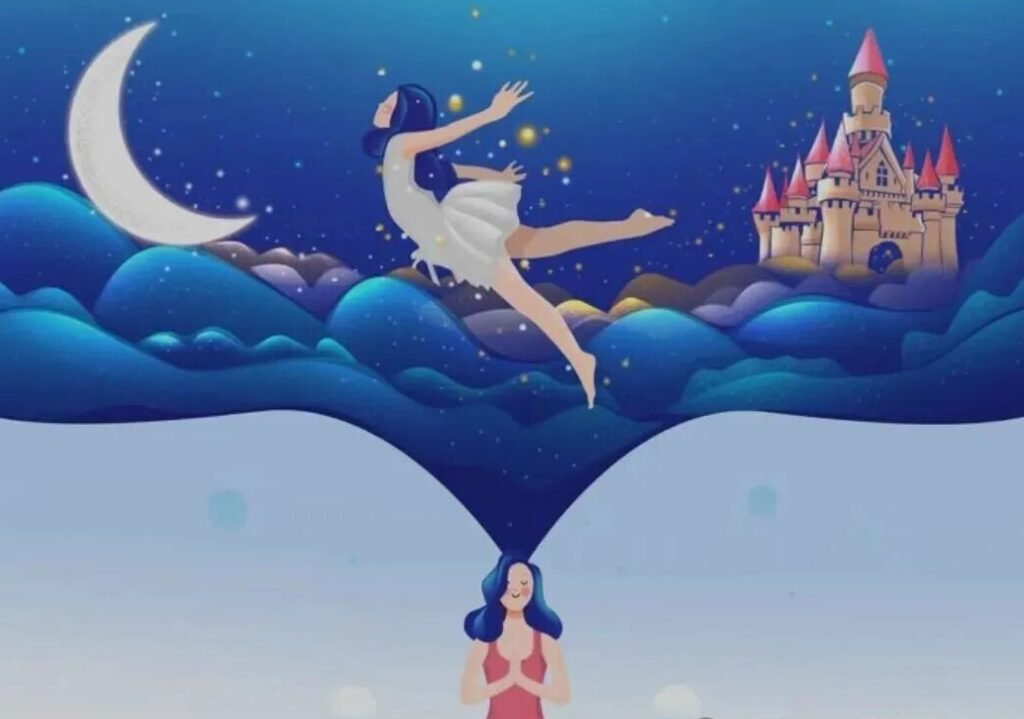
Common dreams and their meanings often revolve around change, vulnerability, freedom, fear, relationships, and the search for direction. In Western spiritual interpretation, a recurring dream is usually read as an invitation to notice a pattern—not as a guaranteed prediction. The most useful meaning comes from combining the dream symbol, your emotions, your current life, and the cultural tradition you choose to consult.
This guide explores ten of the most searched dream themes through modern Western metaphysics, Biblical imagery, European folklore, psychology, and selected global comparisons. Use the interpretations as possibilities, then test them against what was happening in your life before the dream.
Common Dreams and Their Meanings at a Glance
| Common dream | Possible spiritual meaning | Question to ask |
|---|---|---|
| Teeth falling out | Loss of confidence, transition, words left unsaid | Where do I feel powerless or exposed? |
| Being chased | Avoided truth, shadow work, unfinished conflict | What am I not ready to face? |
| Failing an exam | Initiation, self-judgment, fear of not being ready | Whose standard am I trying to meet? |
| Flying | Freedom, higher perspective, spiritual expansion | What feels possible from a wider view? |
| Drowning or deep water | Emotional overwhelm, surrender, cleansing | Which feeling needs space rather than control? |
| Being lost or trapped | Crossroads, loss of direction, need for boundaries | Where do I need a new route? |
| Death | Ending, transformation, identity change | What chapter may be closing? |
| Falling | Loss of support, surrender, instability | What no longer feels secure? |
| Naked in public | Exposure, authenticity, fear of judgment | Where am I hiding my real self? |
| Deceased loved one | Continuing bond, remembrance, possible visitation belief | What feeling or memory did the dream leave? |
How to Interpret a Common Dream
A symbol does not have one universal translation. A snake may feel protective to one dreamer and threatening to another; water may mean renewal in one dream and overwhelm in the next. For a clearer answer, use the Huluos Four-Lens Method:
- Symbol: What person, place, animal, object, color, or action stood out?
- Emotion: Did you feel fear, relief, wonder, grief, shame, or peace?
- Life context: What relationship, decision, deadline, loss, or opportunity is active now?
- Culture: Which spiritual, religious, or folklore tradition is personally meaningful to you?
Start with your own associations before borrowing a meaning from any dream dictionary. The same image can point in opposite directions depending on whether you felt trapped or liberated.
1. Teeth Falling Out Dream Meaning
Teeth falling out is commonly associated with confidence, personal power, appearance, communication, and major transition. Because teeth help us speak and bite, modern Western spiritual readers often connect this dream with words you fear saying, a weakening boundary, or anxiety about how others see you.
Popular European and North American folklore sometimes treats losing teeth in a dream as an omen involving family news or loss. That interpretation varies widely and should not be treated as a forecast. A more grounded spiritual question is: What feels as though it is slipping beyond my control?
- Loose tooth: an uncertain decision or weakening commitment
- Teeth crumbling: depleted confidence or a plan losing structure
- No pain: a transition you may already be ready to accept
- Blood or pain: a change that feels personal, costly, or emotionally intense
2. Being Chased in a Dream
A chase dream often appears when something demands your attention. In Jung-influenced Western dream work, the pursuer may represent a “shadow” quality—the anger, ambition, grief, desire, or truth you have pushed outside your conscious identity. Spiritually, the dream can mark a call to turn toward what you keep avoiding.
The identity of the pursuer changes the reading. An unknown figure can symbolize unnamed pressure; an animal may embody instinct; a former partner may point to an old relationship pattern; and a faceless crowd may reflect social judgment. Escaping suggests temporary relief, while turning to face the pursuer may signal growing readiness.
3. Failing an Exam or Being Unprepared
Exam dreams are not only about school. They frequently arise around promotions, interviews, parenthood, public performance, or decisions that make you feel evaluated. A Western spiritual interpretation frames the exam as an initiation: you are crossing a threshold but doubt whether you have earned the next role.
Arriving late may point to fear of missing your moment. A blank paper can suggest uncertainty about what you truly want. Realizing you studied the wrong subject may reveal that you are preparing for other people’s expectations instead of your own path. The dream asks for honest preparation, not perfection.
4. Flying Dream Spiritual Meaning
Flying is one of the clearest symbols of freedom, expanded perspective, imagination, and release from limitation. In modern Western metaphysics it can be read as spiritual elevation or a moment when the everyday self feels less restricted. Some people describe especially vivid flying dreams as astral experiences, although a dream alone cannot prove that interpretation.
Effortless flight usually feels like confidence or possibility. Struggling to stay airborne can mirror self-doubt. Flying over your home may offer distance from a personal situation; flying over water can combine freedom with emotional or intuitive themes. If you are chased while flying, freedom may feel close but not yet secure.
5. Drowning or Being Underwater
Water carries strong spiritual associations with emotion, intuition, purification, rebirth, and the unknown. Drowning usually intensifies the symbol: feelings, responsibilities, or other people’s needs may be exceeding your present capacity. Surviving or reaching the surface can symbolize resilience and renewal.
Christian imagery often links water with baptism and spiritual renewal, while European sacred wells and springs were approached as places of healing and petition. Many other cultures also use water in cleansing or threshold rituals, but the details are not interchangeable. The condition of the water and your emotion matter more than a generic rule. Explore the full spiritual meaning of dreaming about water.
6. Being Lost or Trapped
Dreams of endless hallways, missed exits, locked rooms, or unfamiliar cities often appear at a life crossroads. In European folklore and later Western esoteric traditions, crossroads symbolize choice, fate, and contact with the unknown. In a personal dream, however, the message may be simpler: the route that once worked no longer does.
A locked door can symbolize a boundary or unavailable opportunity. A maze may reflect overthinking. Being trapped in your workplace may point to obligation; being lost in your childhood home can signal that an old identity no longer fits. Notice whether someone helps you—the helper may represent intuition, support, or a quality you need to claim.
7. Dreaming About Death
In most spiritual interpretations, a death dream is about endings and transformation rather than literal death. Tarot readers make a similar distinction with the Death card, which usually represents transition, clearing, and rebirth. Dreaming of your own death may reflect an identity shift; a loved one’s death may reflect fear of change in that relationship.
Biblical and Christian traditions contain many stories in which death is followed by renewal, but no verse establishes a universal code for modern death dreams. The most useful question is what role, belief, relationship, or season of life feels complete. See 13 death-dream scenarios and spiritual meanings.
8. Falling Dream Meaning
Falling can symbolize instability, loss of support, fear of failure, or surrender. The spiritual reading depends on the ending. Waking before impact often mirrors anticipatory fear; landing safely may show that you can survive the change; enjoying the fall can represent trust and release. For a closer comparison of the height, cause, response, and ending, read our full falling dream guide.
In a Biblical frame, falling can evoke pride, temptation, or separation from a secure path, but it should not automatically be read as punishment. In modern metaphysics, it may be a grounding message: return to your body, routines, and practical responsibilities before reaching for the next level.
9. Being Naked in Public
Public-nudity dreams commonly center on exposure, authenticity, shame, or the fear that others will discover something you are trying to hide. The Adam and Eve story made nakedness, innocence, knowledge, and shame enduring motifs in Western religious culture, so Biblical associations may feel especially strong for some dreamers.
If everyone ignores your nudity, the dream may reveal that your fear of judgment is larger than other people’s attention. If you feel free, it can symbolize radical honesty. If you search desperately for clothes, ask where you need privacy, preparation, or firmer boundaries.
10. Dreaming of a Deceased Loved One
Dreams of deceased loved ones can feel unusually vivid, peaceful, or emotionally complete. Modern Western Spiritualism and many family traditions describe some of these experiences as visitation dreams. Psychology may understand them as part of grief and the continuing bond with someone who died. These readings can coexist as long as the dream is not presented as proof of supernatural contact.
Pay attention to the emotional residue. A calm conversation may offer comfort; an unfinished task may reflect regret; a warning may express your own protective intuition. Irish, Mexican, African, Asian, and many other remembrance traditions relate to ancestors in distinct ways, so avoid treating “ancestor belief” as one universal system.
Western, Biblical, and Global Dream Traditions
| Tradition or lens | How it approaches dreams | Best use |
|---|---|---|
| Modern Western metaphysics | Dreams may carry intuitive messages, energy themes, or guidance | Reflection and pattern recognition |
| Jung-influenced dream work | Symbols may represent archetypes, the shadow, or individuation | Exploring identity and inner conflict |
| Biblical tradition | Some scriptural dreams convey warning, calling, or divine guidance | Reading a dream within faith—not treating every dream as prophecy |
| European folklore | Dream books and oral traditions connect images with omens | Historical and cultural context |
| Asian traditions | Chinese, Indian, Japanese, and other systems differ greatly | Specific, sourced comparison rather than a single “Asian meaning” |
| Psychological continuity | Dreams often continue waking concerns, emotions, and relationships | Checking the symbol against real life |
The Biblical accounts of Jacob’s ladder and Daniel’s dreams show why dreams remain spiritually important in Western culture. They do not create a one-to-one dictionary for teeth, cars, snakes, or every modern image. Likewise, historic European dream books are records of belief, not scientific prediction tools.
When a Dream Repeats
A recurring dream often means the underlying emotion or situation remains active. Record the date, symbol, emotion, ending, and important events from the previous day. Then look for change: Is the pursuer closer? Can you fly higher? Does the locked door finally open? The evolving detail may be more revealing than the repeated symbol.
If a nightmare began after a traumatic event, causes severe distress, or repeatedly disrupts sleep, spiritual reflection does not need to replace professional support. A qualified health professional can help you explore nightmares safely.
Frequently Asked Questions
What are the most common dreams and their meanings?
Common themes include teeth falling out, being chased, failing an exam, flying, water, being lost, death, falling, public nudity, and deceased loved ones. Their possible meanings cluster around change, vulnerability, freedom, fear, grief, and direction, but personal context decides which interpretation fits.
Can dreams predict the future?
Many spiritual and folklore traditions include prophetic dreams, but an ordinary dream does not reliably prove a future event. Treat apparent warnings as prompts to reflect or take sensible precautions, not as guaranteed predictions.
How do I know if a dream is spiritual?
People often describe spiritual dreams as vivid, coherent, emotionally powerful, or unusually memorable. Those qualities can make a dream meaningful, but they cannot verify a supernatural source. Consider its message alongside your beliefs and waking circumstances.
Why do I keep having the same dream?
A repeating dream may track an unresolved concern, persistent emotion, recurring relationship pattern, or important transition. Compare what changes from one version to the next.
Does every dream have a meaning?
Not necessarily. Some dreams may reflect recent experiences, memory processing, stress, or random combinations. A dream is most useful when it reveals a meaningful pattern rather than when an interpretation is forced.
Go Deeper with These Dream Guides
- Spider dream meanings: compare 12 scenes, colors, and cultural symbols.
- Dreaming about your ex: explore 11 scenes without treating the dream as a reunion sign.
- How to keep a dream journal: use seven steps and a copyable template to track patterns.
- Dream within a dream meaning: tell a false awakening, lucid dream, and nested dream story apart.
Sources and Editorial Note
- Dream content and waking-life continuity research
- Research on dreams of the deceased during bereavement
- Genesis 28 and Daniel 2 dream passages
- Historic England record for sacred wells and healing tradition
Editorial note: Spiritual, Biblical, and folklore meanings are presented as cultural interpretations, not fixed predictions. Huluos compares multiple lenses and encourages readers to begin with their own emotion and life context. Updated August 2026.