
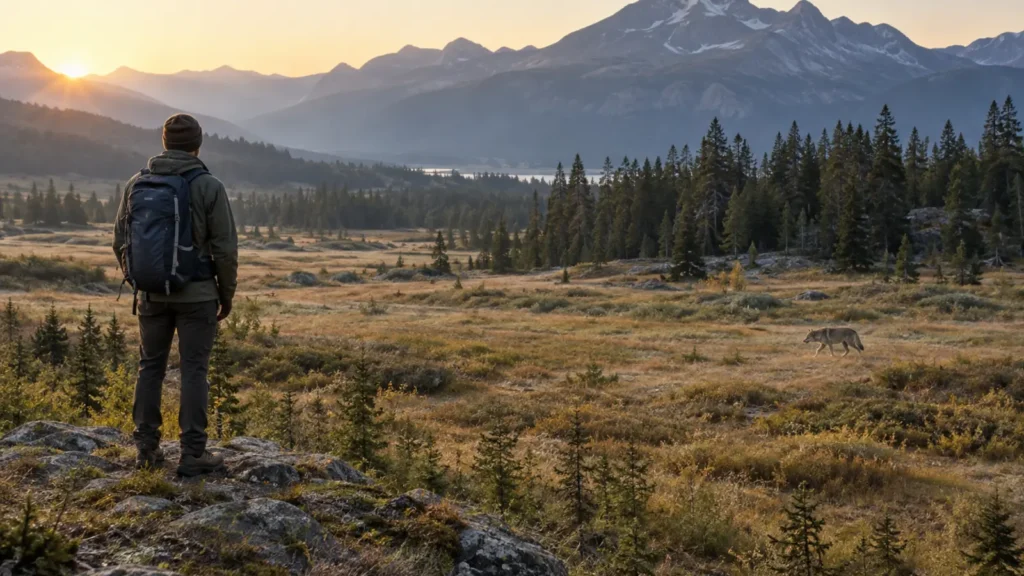
A wolf dream may reflect belonging, boundaries, alertness, independence, or fear of a group. The wolf’s behavior matters more than its reputation. A lone wolf watching from a ridge creates a different problem from a pack surrounding a house or a calm wolf walking beside you. Note whether the animal was alone or with a pack, how far away it stayed, what it actually did, and how you felt. The dream does not predict an attack or reveal that a person is untrustworthy.
Real wolves are not one simple symbol
Gray wolves are adaptable wild canids found across different habitats. The U.S. Fish and Wildlife Service describes them as predators with strong senses and the ability to travel long distances. Those facts can shape a dream image, but they do not create a psychological dictionary.
Stories often cast wolves as villains, guides, ancestors, protectors, or signs of wilderness. Your dream may borrow one of those stories. It may also come from a documentary, game, book, recent wildlife news, or memory of a dog. Begin with your own exposure before assigning a hidden meaning.
What dream research can and cannot say
No study shows that wolves always represent instinct, leadership, betrayal, or loneliness. Dreams can combine waking concerns, emotion, and memory, which means the same animal can play different roles for different people. The evidence supports looking for continuity with your life, not translating the wolf with a fixed code.
A wolf dream may help you think about group membership or boundaries. It cannot prove that your “intuition” has identified a dangerous person, and it cannot diagnose a fear disorder.
Use four clues: pack, distance, behavior, and feeling
- Pack: Was there one wolf, a pair, a family group, or a large pack?
- Distance: Was it across a valley, at the edge of camp, beside you, or inside your home?
- Behavior: Did it watch, howl, follow, chase, guard, play, or leave?
- Feeling: Did you feel afraid, calm, accepted, lonely, protective, or curious?

Twelve wolf dream scenarios compared
| Dream scene | Possible waking-life match | Question to ask |
|---|---|---|
| A lone wolf watches you | Distance, caution, independence, or mutual assessment | Who moved first? |
| A wolf pack appears | Belonging, group pressure, or coordinated action | Was I inside or outside the group? |
| Wolves chase you | Fear of a group, conflict, or a problem gaining ground | Where did I try to go? |
| A wolf protects you | Safety, loyalty, or a boundary you want to trust | What was it protecting me from? |
| A wolf follows quietly | A concern, skill, or relationship staying close | Did the following feel welcome? |
| You hear howling | Communication, distance, loneliness, or a call for contact | Did I answer? |
| A wolf enters your house | A wild or uncertain issue crossing a personal boundary | Which room did it enter? |
| You feed a wolf | Building trust or giving energy to something risky | What happened after I fed it? |
| A wolf is injured | Concern for strength, vulnerability, or a misunderstood threat | Could I help safely? |
| A wolf pup appears | Care, new responsibility, or an early-stage issue | Where was the pack? |
| You become a wolf | Shift in identity, group role, freedom, or aggression | What could I do in that form? |
| A wolf walks away | Reduced threat, separation, or respect for distance | Did I want it to return? |
A lone wolf is not automatically loneliness
Popular speech uses “lone wolf” to mean an isolated person, but the dream may not be making that claim. A wolf alone on a ridge can feel self-contained, cautious, excluded, or simply distant. Your feeling decides which options are plausible. Admiration may connect the scene to independence; sadness may connect it to separation.
If the wolf wanted to join a pack but could not, belonging may be the sharper issue. If it chose the ridge and looked calm, autonomy may fit better.
Pack dreams: belonging, pressure, and position
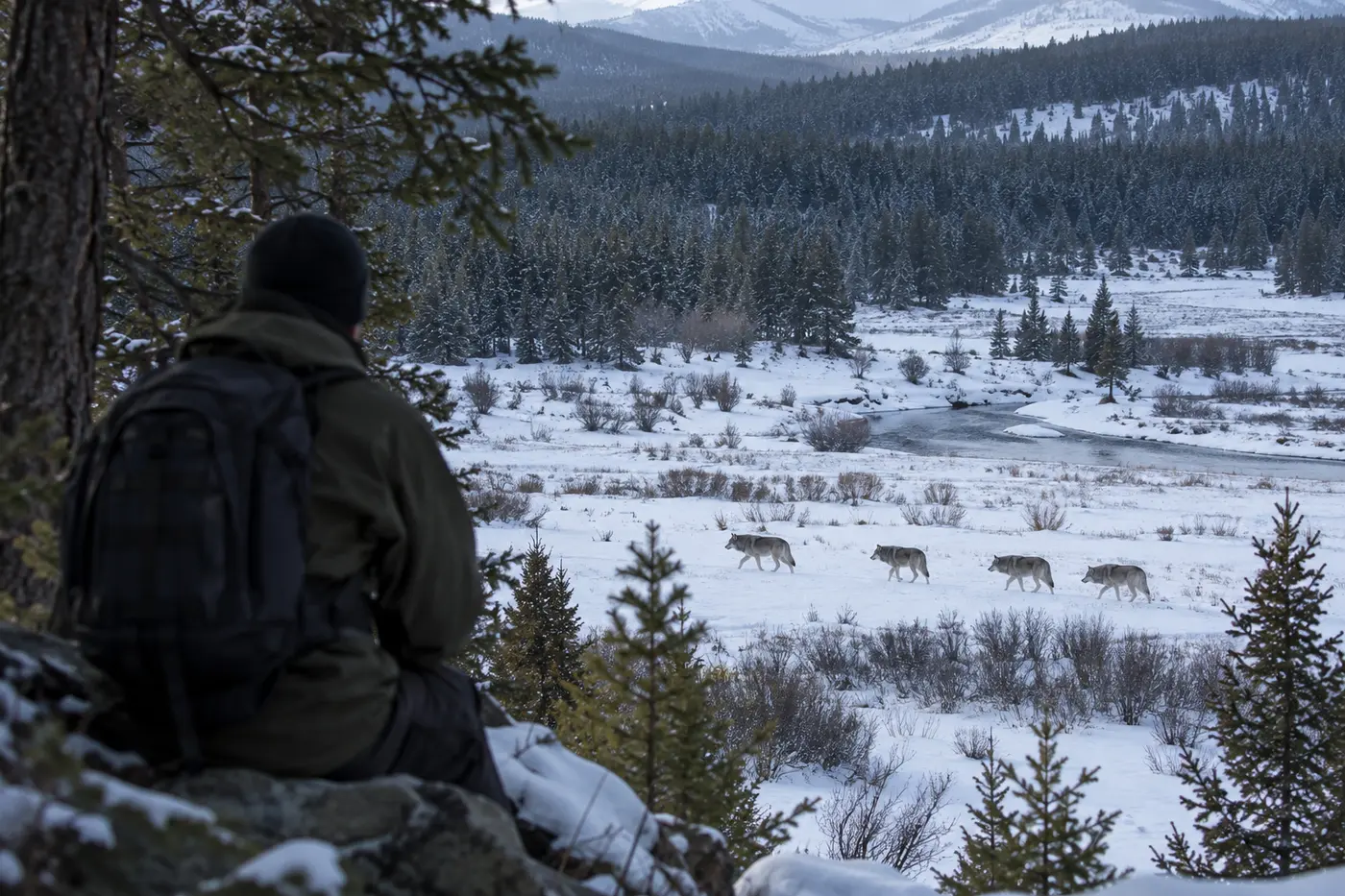
Do not reduce a pack to “family” or “coworkers” automatically. First find your position. Were you welcomed, tested, surrounded, leading, following, or watching from outside? A pack moving together may resemble useful cooperation. A pack closing in may resemble pressure from several people or demands.
Wolf, dog, or something in between?
Dream animals can shift. A pet dog may become a wolf, or a wolf may act like a familiar dog. That change can connect a known relationship with unfamiliar behavior, or turn something wild into something trusted. If the animal behaved mainly like a companion, compare our dog dream guide.
If being pursued drove the entire scene, the broader being chased guide may be more useful than focusing on species.
When wolves cross the boundary of a house or camp
A house, tent, fence, or ring of fire creates a visible boundary. If the wolves remained outside, the dream may be testing whether that boundary felt strong enough. If they entered, ask how: through an open door, after someone invited them, or by breaking through? The route can connect the scene to trust, privacy, or preparation.
Your response also matters. Locking every door can fit protection, yet it can also make fear the center of the dream. Opening a door calmly may show trust, but it could be reckless within the dream story. Avoid deciding that one action is always brave or always avoidant.
If the animal entered a particular room, use the room’s actual function. A wolf in a kitchen may affect care and routine; a wolf in a bedroom may affect rest or privacy. This approach is more grounded than assigning each room a universal spiritual code.
A worked example: the wolf outside the campsite
Suppose you dream that one wolf waits beyond the light of a campsite while your friends keep talking. You are afraid at first, then notice the wolf is watching the forest, not you. When something moves in the trees, it growls and your group becomes quiet.
The pack in the dream may be your human group, while the wolf stays separate. The distance remains outside camp. Its behavior changes from ambiguous to alert. Your feeling shifts from fear to attention. If you recently dismissed a quiet concern because others were relaxed, the dream may reflect the tension between group comfort and careful observation.
The waking response is to check facts and voice a specific concern. The dream does not prove that your suspicion is correct.
Cultural and spiritual meanings require context
Wolves appear in many European, Asian, and Indigenous stories, but the meanings are not interchangeable. Some traditions center kinship or protection; others focus on danger, appetite, exile, or wilderness. Do not borrow a living culture’s teaching and present it as a universal “wolf spirit” message.
If your own tradition uses the wolf, reflect within that context. Otherwise, a grounded question is enough: Where do I need cooperation, and where do I need distance?
What to do after the dream
- Record pack, distance, behavior, and feeling.
- Note recent wolf media, dog encounters, or group conflict.
- Identify whether the waking issue is belonging, pressure, caution, or independence.
- Verify concerns before labeling a person dangerous.
- Choose one boundary or conversation based on real evidence.
Track changes in a dream journal. Persistent nightmares that disturb sleep deserve support from a licensed mental health professional or sleep clinician.
Frequently asked questions
Is a wolf dream a warning?
It may express caution, but it does not predict danger. Check what the wolf actually did and what evidence exists while awake.
What does a friendly wolf mean?
It may fit trust, calm strength, companionship, or a feared subject becoming more familiar. It is not a promise of protection.
What does a wolf pack mean?
It can bring up belonging, coordination, exclusion, or group pressure. Your position relative to the pack matters.
What does hearing a wolf howl mean?
It may fit distance, communication, loneliness, or recognition. Note whether you answered and whether the sound frightened you.
Does a black or white wolf have a fixed meaning?
No. Color may affect mood or come from familiar stories, but it has no universal translation.
Keep story and evidence separate
A wolf dream meaning can help name a tension between group and independence, or caution and trust. It cannot identify a hidden enemy. Use the story to ask better questions, then use evidence to answer them.
When the dream repeats, track whether you move closer to the pack, strengthen a boundary, or hear the howl differently. Those changes can show how the dream story is evolving. They do not confirm that another person has changed, so keep real relationships grounded in conversation and observable behavior.