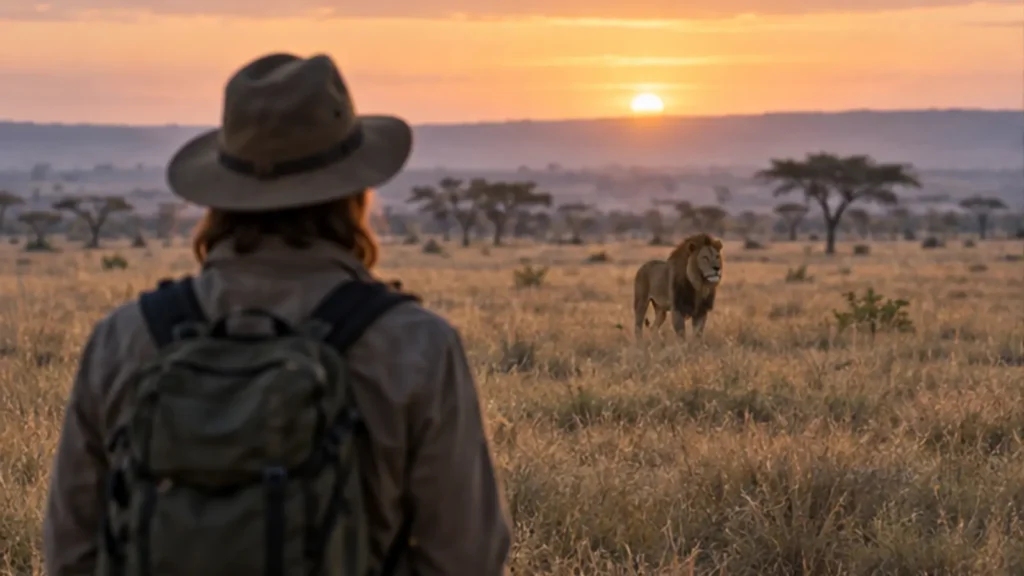
A lion dream may reflect courage, status, protection, group pressure, anger, or fear, depending on what the lion did and where you stood. It does not predict an attack, victory, promotion, or spiritual event. A lion resting beside you creates a different story from one chasing you through a house. Before choosing a meaning, record the setting, the lion’s behavior, your position relative to it, and the emotion that remained after waking. Those four details are more useful than a fixed lion-symbol dictionary.
Real lions complicate the usual symbol
Lions are often reduced to kingship or bravery, yet their real behavior is social. Smithsonian’s National Zoo describes them as the most social cats, living in prides that may include related females, cubs, and resident males. That fact does not determine a dream’s meaning. It does remind us to look beyond individual strength and ask about group position, shared work, protection, rivalry, and belonging.
A lion seen recently in a film, sports logo, game, zoo visit, or news story may also appear through ordinary memory. If the image was fresh, start there. A familiar source can explain the animal without erasing the emotion attached to the dream.
What dream research supports
No controlled study gives every lion dream one interpretation. Research on continuity between waking life and dreaming finds that current concerns, people, memories, and emotions often enter dreams in altered forms. A lion can therefore borrow from a real authority figure, a tense team, a protective parent, an admired trait, or a recent image.
The safest conclusion is specific and conditional: “This scene resembles the pressure I feel when I speak in front of my team.” It is less useful to claim that a lion guarantees success or reveals a hidden enemy. Dreams can suggest a line of reflection; they do not prove what another person intends.
Use four clues: setting, behavior, position, and emotion
- Setting: Was the lion in open country, a cage, your home, a workplace, or a place from childhood?
- Behavior: Was it resting, roaring, hunting, following, guarding, playing, or injured?
- Position: Were you approaching, hiding, leading, trapped, beside it, or watching from safety?
- Emotion: Did you feel awe, fear, pride, tenderness, anger, calm, or responsibility?

Twelve lion dream scenarios compared
| Dream scene | Possible waking-life match | Question to ask |
|---|---|---|
| A lion watches you | Feeling evaluated by a confident or high-status person | Did the gaze feel calm, judging, or protective? |
| A lion chases you | A confrontation, duty, or emotion you keep avoiding | What happened just before you ran? |
| A lion attacks | Conflict that feels direct and hard to contain | Where in life do I feel overmatched? |
| A friendly lion walks beside you | Growing comfort with authority, confidence, or support | Did I trust it or stay alert? |
| You feed a lion | Maintaining a demanding role, relationship, or ambition | Was the feeding chosen or forced? |
| A lion guards your home | Protection, boundaries, or a strong family role | What was being kept outside? |
| A lion enters your home | Public pressure or strong emotion entering private life | Which room did it enter? |
| You hear a lion roar | A demand to pay attention or speak clearly | Whose voice did the roar resemble? |
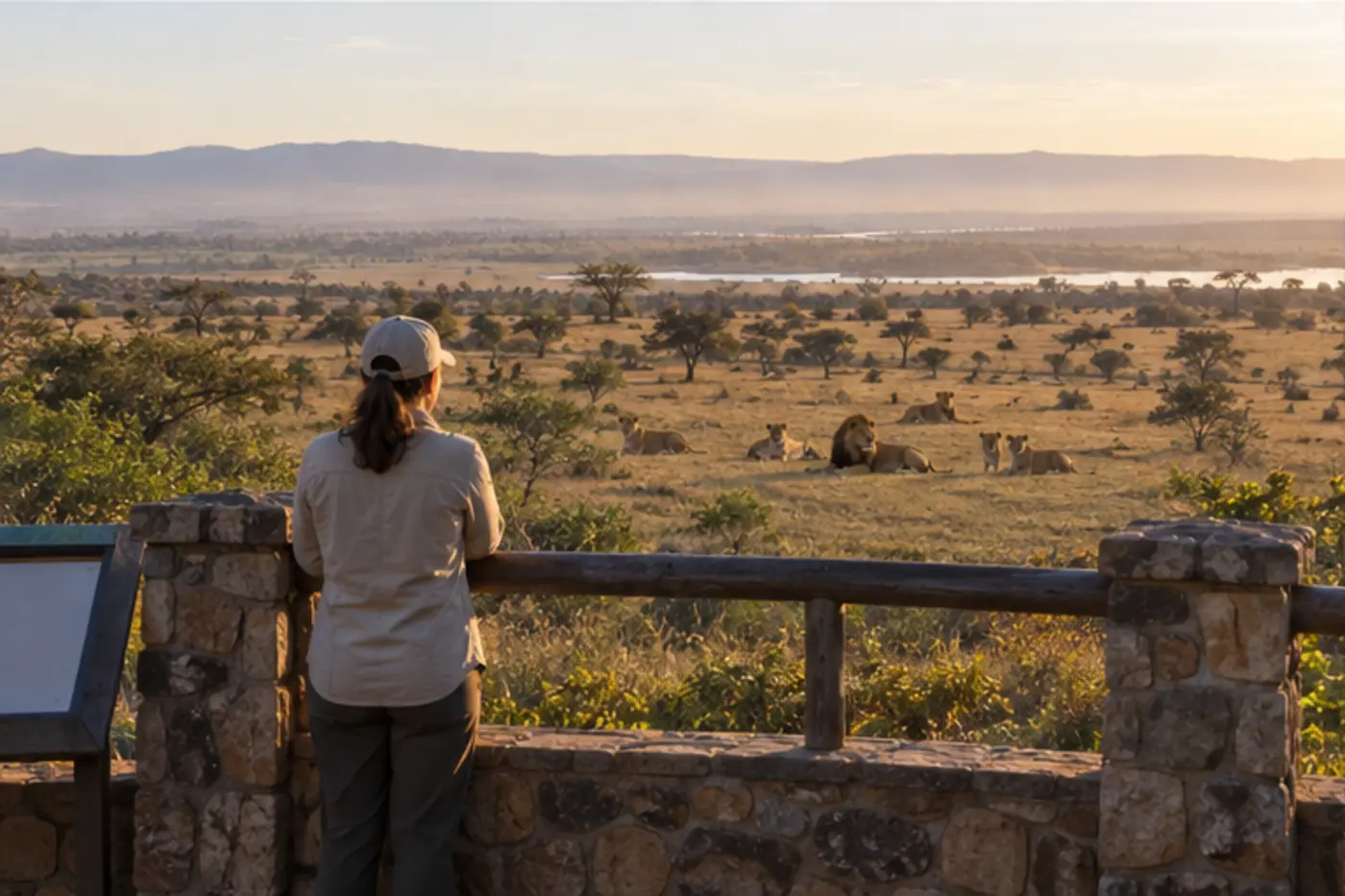
| You see a pride | Belonging, hierarchy, teamwork, or family strain | Was I inside the group or at its edge? |
| You protect a cub | Care for a new project, child, identity, or vulnerable part of yourself | What responsibility felt fragile? |
| An injured lion appears | Confidence, leadership, or protection under strain | Did I help, leave, or feel relieved? |
| You become a lion | Trying on a bolder voice, role, or form of defense | What could I do as the lion? |
A pride dream is often about position
When several lions appear, count less and locate yourself more carefully. Standing in the middle of a calm pride may fit security within a close group. Watching from outside may match exclusion, independence, or uncertainty about joining. Being pushed away can echo a real hierarchy, while choosing to leave can point to a need for space.
Real prides have social roles, but a dream is not a nature documentary. Use the group as a prompt to examine your own team or family. Who sets the tone? Who carries the work? Who is protected, and who is expected to prove themselves?
Roaring, silence, and the problem of voice
A roar may resemble a warning, a public announcement, or the wish to be heard. Notice whether the sound froze you, guided you, or gave you courage. If the lion opened its mouth but no sound came out, the dream may fit blocked expression or authority that looks impressive but has little effect.
Compare that with your current conversations. Are you holding back a clear boundary? Is someone else’s voice taking up too much room? A practical answer might involve one direct sentence, not a dramatic confrontation.
When the lion attacks or gives chase
A chase does not identify an actual enemy. It may stage the body feeling of urgency around a deadline, conflict, decision, or memory. Ask what started the pursuit and where you tried to go. Running toward a crowded place suggests a different need from hiding alone.
If you fought back, your action can show a wish for agency. If you stopped and the lion became calm, the shift may resemble facing a feared task. If you escaped and kept running after the danger ended, the dream may be more about sustained alertness than the lion itself.
A worked example: the lion outside the meeting room
Imagine dreaming that a lion lies outside a glass meeting room while your colleagues continue talking. You can leave through another door, yet you wait. The lion never growls. When the meeting ends, it stands and walks beside you. You wake tense, then oddly steady.
The setting connects the animal with work. Its behavior is watchful rather than aggressive. Your position changes from separated to beside it, and the emotion shifts from tension to steadiness. If you are about to present an unpopular proposal, the dream may fit the fear of visible authority and the wish to carry it calmly. It does not promise that the proposal will win.
Cubs, injured lions, and care
A cub can bring out tenderness, responsibility, or concern about something strong that is still developing. The key question is not “Does a cub mean good luck?” Ask what needed care and whether you had enough help. A cub locked in a small cage may fit restricted growth; a playful cub in your home may connect with a new role becoming familiar.
An injured adult lion can reverse the usual image of strength. It may resemble a tired leader, a parent who can no longer carry every task, or your own confidence after a setback. Relief at the injury deserves honest attention too: perhaps a demanding influence feels less dominant.
Spiritual and cultural readings need a named source
Lions appear in many religious, royal, literary, and national traditions. The meanings vary: guardianship, rule, danger, justice, pride, or sacred authority may all be present in different settings. Avoid blending them into one universal spiritual message. If a particular story, faith, family emblem, or cultural image matters to you, name that source and compare it with the actual dream scene.
A spiritual reading can support reflection, yet it should stay open. The dream does not prove divine approval, punishment, or a coming event.
What to do after the dream
- Write the setting, behavior, position, and strongest emotion.
- Note any recent lion image, team conflict, or authority issue.
- Ask whether the scene centered on courage, status, belonging, protection, or threat.
- Choose one waking action, such as stating a boundary or asking for support.
- Track repeats in a dream journal instead of forcing certainty from one night.
If repeated nightmares disrupt sleep, leave you afraid to rest, or follow a traumatic event, consider speaking with a qualified mental health or sleep professional. Evidence-based nightmare treatments exist.
Frequently asked questions
Is a lion dream a good or bad sign?
Neither label works without context. A calm guardian, a chasing lion, and an injured cub carry different emotions and possible waking links.
What does a lion chasing me mean?
It may fit a conflict, responsibility, or strong feeling you are avoiding. The location and the event that began the chase help narrow it.
What does a friendly lion mean?
It can match comfort with confidence, support, or authority. Your level of trust matters more than a fixed positive label.
What does a lion in my house mean?
The dream may bring a public role, strong emotion, or boundary issue into private space. Notice the room and who else was present.
Does a lion dream mean leadership?
Leadership is one possible theme, especially in work or group settings. It may also involve group pressure, family protection, fear, or a recent image.
Keep the interpretation close to the scene
A useful lion dream meaning might be, “I want to speak with more confidence, but I am worried about how the group will react.” That statement can be tested against your life. “A lion means I will gain power” cannot. Keep the reading tied to the dream’s action and your present context.