
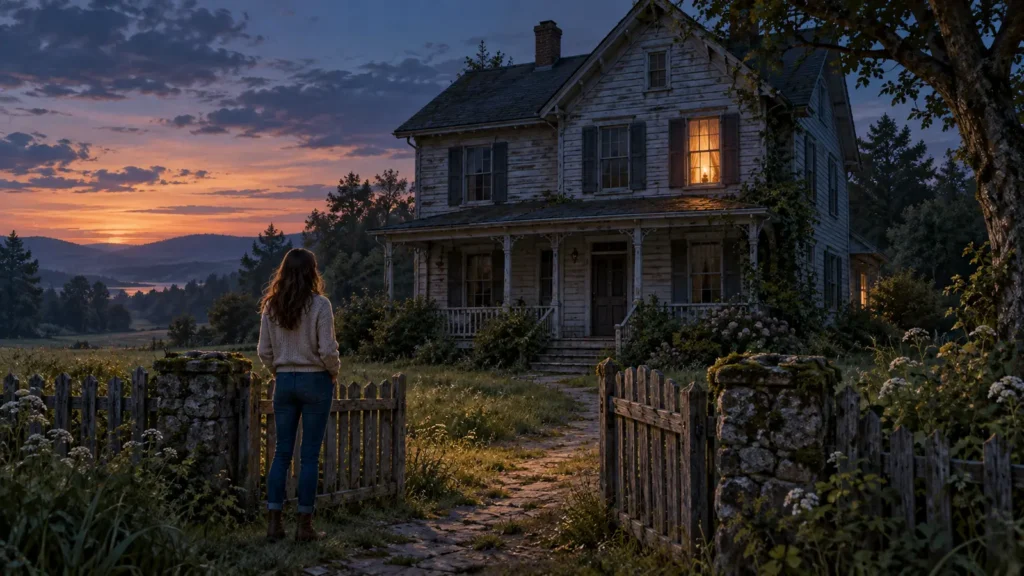
An old house in a dream often draws attention to something with history: a former role, an old routine, a neglected task, or memories stirred by a recent change. Its condition and your relationship to it matter more than age alone. A house you once lived in may be tied to personal memories; an unknown abandoned house may reflect curiosity, unease, or a concern left unattended. Renovating one can fit repair or reuse. The dream does not predict bad luck, death, financial loss, or a supernatural warning. Check whether the house was familiar, what needed attention, what you did, and how the visit ended.
What does an old house mean in a dream?
The image may come from memory, recent media, or a current situation that feels long-established. Start by asking why this particular house appeared now and why it looked the way it did.
A 2017 study asked 40 adults to connect seven days of dream reports with waking-life sources. The participants linked about 83% of their reports to at least one waking-life element. Some sources came from the previous day, while others were months or more than a year old. The authors also noted that dreams rarely replay an episodic memory exactly. That makes an old building a reasonable prompt to check both recent events and older memories, but it does not give the building one fixed meaning.
Other research supports the broader link between dreams and waking experience. A study of waking and dream activities found that time spent on waking activities was related to how often those activities appeared in dreams. A 2022 review of dream research describes memory and emotion as active questions and makes clear that much remains unsettled. A house tour, family conversation, repair project, property search, film, or photograph may supply the setting before any symbolic reading is needed.
First decide what kind of old house it was
“Old house” can describe several different scenes. Separating them prevents a vague answer from taking over.
- A house you once lived in: specific people, routines, and memories from that period may matter most.
- An old but cared-for house: history, continuity, craft, or something worth keeping may stand out.
- A neglected or abandoned house: disuse, uncertainty, isolation, or a task left alone may fit the mood.
- An unfamiliar house that only feels old: the dream may borrow age, dust, dark rooms, or worn materials to create a sense of history.
If it was your childhood home, treat it as a personal place before treating it as an “old” object. Who lived there, what age you were, and what has changed since then can carry more weight than cracked paint or antique furniture.
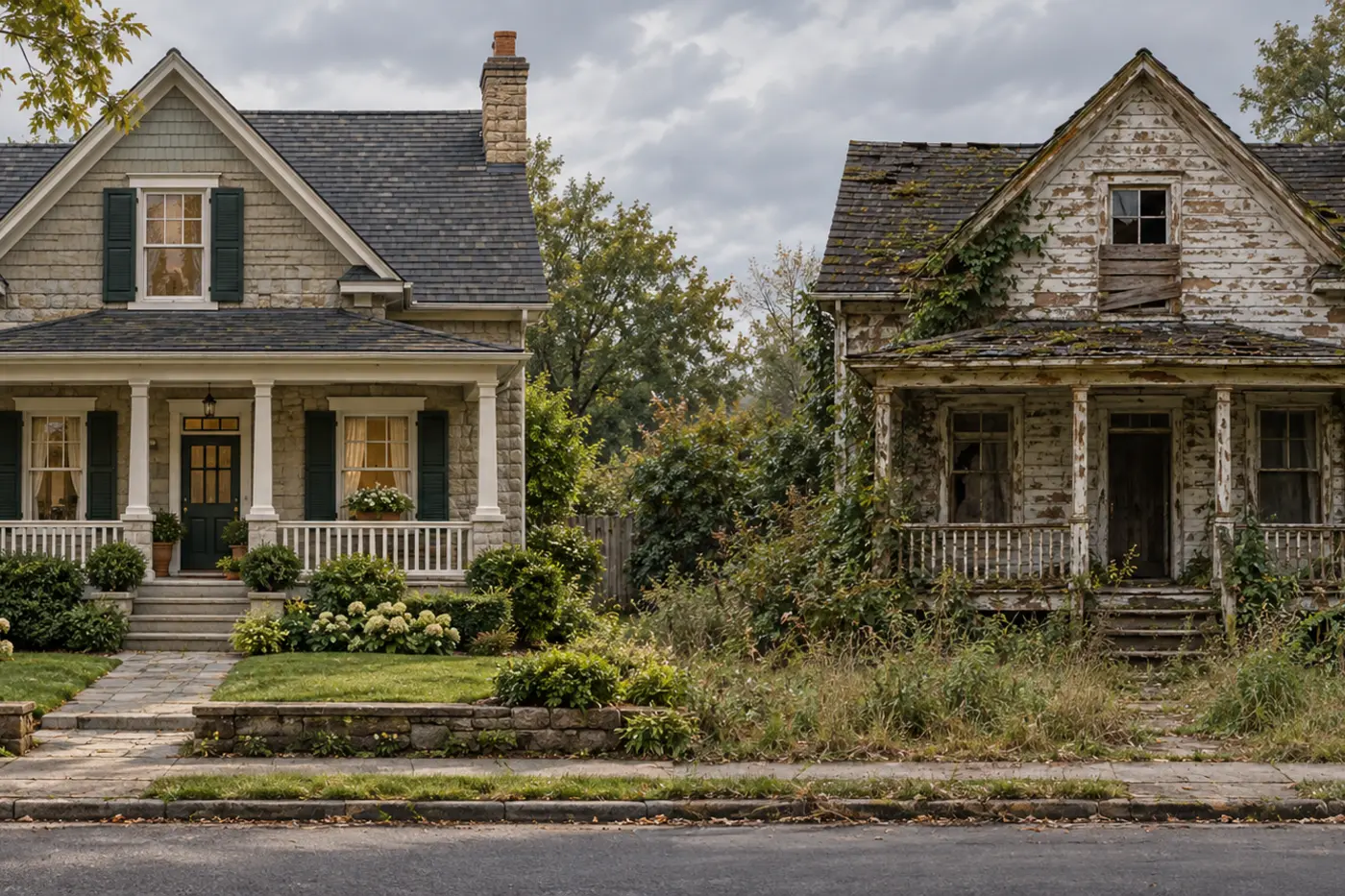
Use four clues: familiarity, condition, action, and ending
Write down four facts before choosing an interpretation.
- Familiarity: Was it your former home, a relative’s house, a real historic building, or a place you had never seen?
- Condition: Was it solid, renovated, dusty, empty, flooded, burning, or close to collapse?
- Action: Did you explore, clean, hide, buy, repair, escape, search for someone, or refuse to enter?
- Ending: Did you find a room, finish a repair, get trapped, leave safely, or wake before anything changed?
Then add the strongest emotion. Nostalgia and fear can occur in the same house, but they point to different concerns. Relief after leaving differs from sadness at seeing a familiar place decay. If the emotion changed during the dream, note the exact moment it shifted.
12 common old house dream scenarios
Use the table as a set of possibilities to test. The same scene can mean different things for a tenant, a renovator, someone clearing a relative’s estate, or a person who watched a haunted-house film before bed.
| Dream scenario | What it may reflect | Detail to check |
|---|---|---|
| Seeing an unfamiliar old house | Curiosity about something with a history, or unease about an issue you do not yet understand | Did you want to enter, keep your distance, or learn who owned it? |
| Entering an abandoned house | Exploring a neglected task, memory, relationship, skill, or part of your surroundings | Was the place truly empty, and what drew you inside? |
| Moving into an old house | Taking on an existing responsibility, family pattern, role, or project with a past | Did the house feel chosen, inherited, or forced on you? |
| Buying an old house | Considering a commitment whose history and repair costs are not fully known | What appealed to you, and what problem did you notice after agreeing? |
| Cleaning a dusty old house | Sorting memories, unfinished work, possessions, or routines that have built up | Did cleaning make the house usable or reveal more work? |
| Renovating or repairing it | Keeping what still works while changing a habit, role, relationship, or plan | What did you preserve, replace, or discover behind a wall? |
| An old house collapsing | Concern that an arrangement, belief, or responsibility can no longer support its current load | Were there warnings, and did you leave or try to hold it up? |
| Finding hidden or locked rooms | New information, overlooked memories, unused ability, or a question you have not opened yet | Who had the key, and what changed after the room appeared? |
| Being trapped or lost inside | Difficulty finding a way through an old problem or a complicated set of expectations | Did rooms repeat, doors move, or someone block the exit? |
| A house that feels haunted | Fear, grief, a vivid story, or a past event that still shapes the mood of a place | Did you see anyone, or did ordinary sounds and shadows create the fear? |
| An old house on fire or flooding | Urgency, strong emotion, or rapid change affecting something with history | What was damaged, what survived, and was there a real safety cue nearby? |
| Leaving or demolishing the house | Ending a commitment, rejecting an old method, or deciding what not to carry forward | Did leaving feel freeing, necessary, wasteful, or sad? |
None of these scenes predicts a property problem, family death, breakup, or financial loss. A dream is not evidence about an older building. Use an inspection or another practical check for a real concern.
A worked example: repairing one room and leaving the rest
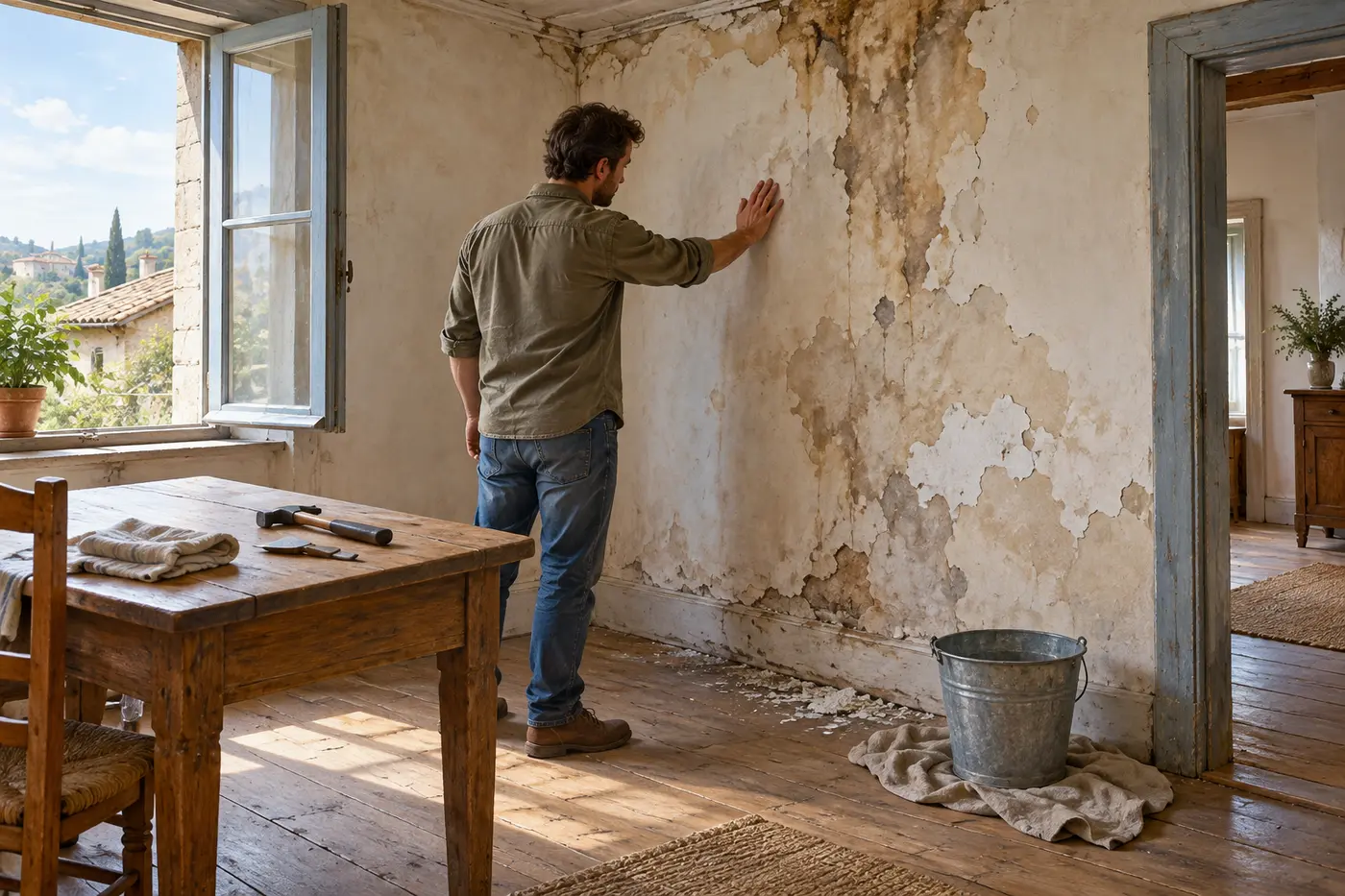
Suppose you dreamed of an unfamiliar old house with a sound roof but several dusty rooms. Rain had damaged the back room. You opened the windows, moved a table away from the wet wall, and decided not to explore the locked basement. The dream ended when daylight entered the room.
Familiarity is low, so there is no clear personal address to investigate. The mixed condition matters: most of the house is stable, while one room needs attention. Your response is limited and practical. You protect what is movable, let in light, and leave one area unopened. The ending improves visibility without completing the renovation.
A grounded reading might be that one part of an established situation needs care, but you do not need to solve everything at once. This could fit an old work process, a family obligation, or a home task that has become harder to ignore. If you recently dealt with a leak or watched a renovation program, the scene may simply reuse that material. The most useful next step could be naming the one issue that is both visible and manageable.
Old house, former home, or childhood home?
These searches overlap, but the details are not interchangeable. An anonymous decaying building puts more weight on condition and exploration. A former apartment may bring back a particular relationship or stage of adult life. A childhood home dream can connect with family roles, early routines, safety, conflict, or the person you were at that age.
Ask what you knew in the dream. Did you recognize the address? Did a room match reality? Were you your current age or a younger age? Was the house accurate, or did it combine several places? Dream research shows that waking-life material is often incorporated without being replayed exactly. A blended house can still be linked to memory without acting as a literal record.
Does a frightening old house mean it is haunted?
No. A dream can create footsteps, shadows, cold rooms, moving doors, or a strong sense that someone is present. Those details can reflect the dream’s threat story, recent media, grief, or an ordinary fear of an unknown space. They do not prove paranormal activity, a visitation, a curse, or a warning from the dead.
If an actual home feels unsafe, check ordinary causes first. Working smoke and carbon-monoxide alarms, secure doors, wiring concerns, water damage, and unusual noises deserve real-world attention. A dream is not a substitute for a safety inspection.
A five-minute reflection method
- Name the house precisely. Write “former home,” “unknown abandoned house,” “historic house,” or another exact description.
- Record the condition. List only what you observed, such as a solid roof, dust, one broken window, or a locked room.
- Mark your action. Note the first choice you made and the choice that changed the scene.
- Find one waking parallel. Look for a current task, memory, commitment, or recent image with a similar age, mood, or repair problem.
- Choose a proportionate response. Make a note, finish one task, ask a question, check a real safety issue, or leave the dream unexplained.
A dream journal can show whether the same room, damage, or ending returns. Record the dream before checking a symbol list so your own details stay visible.
When the dream keeps returning
A repeated old-house dream may reuse a stable memory, recurring concern, or familiar story setting. Repetition makes the pattern worth recording, but it does not make the dream prophetic. Track frequency, sleep disruption, recent reminders, and what changes from one version to the next.
If nightmares happen often, disrupt sleep, or cause distress during the day, consider speaking with a qualified health professional. The American Academy of Sleep Medicine position paper reviews treatments for nightmare disorder in adults. Dream interpretation cannot diagnose a sleep or mental health condition.
Frequently asked questions
Is dreaming of an old house a bad omen?
No. Age, darkness, and damage can make the scene feel ominous, but the dream does not predict death, loss, or bad luck. Check the house’s condition, your emotion, and whether you repaired, entered, escaped, or simply observed it.
What does an abandoned old house mean in a dream?
It may fit something neglected, unused, isolated, or left unfinished. It can also come from seeing an abandoned building, playing a game, or watching a film. What you found and why you entered provide better clues than “abandoned” alone.
What does renovating an old house mean?
Renovation may reflect updating something that still has value: a skill, routine, relationship, role, or plan. Notice what you kept. A careful repair differs from stripping the house down or discovering damage you could not manage.
Why do I keep dreaming of a house I used to live in?
A former home can act as a cue for the people, habits, and life stage connected with it. A current change may also resemble something from that period. The dream does not prove you should move back or that someone from your past will return.
Does an old house dream have a spiritual meaning?
Your beliefs may shape how the house feels and which stories come to mind. You can use that context for personal reflection, but the dream alone cannot prove divine instruction, a curse, a spirit’s presence, or a future event.
Related reading
- Dream Meanings Hub
- House Dream Meaning
- Being Lost Dream Meaning
- Fire Dream Meaning
- How to Keep a Dream Journal
References
- Vallat R, Chatard B, Blagrove M, Ruby P. Characteristics of the memory sources of dreams. PLOS ONE. 2017.
- Schredl M, Hofmann F. Continuity between waking activities and dream activities. Consciousness and Cognition. 2003.
- Scarpelli S, Alfonsi V, Gorgoni M, De Gennaro L. What about dreams? State of the art and open questions. Journal of Sleep Research. 2022.
- Morgenthaler TI, et al. Position Paper for the Treatment of Nightmare Disorder in Adults. Journal of Clinical Sleep Medicine. 2018.