

A dream about a child may bring up questions about care, responsibility, play, or your own younger years. Use those ideas only if they fit the scene. Start with who the child seemed to be: your child, someone unknown, or you at an earlier age. Then note what they could do and what they asked of you.
A child who talks back, chooses a game, or walks away creates a different scene from an infant who needs feeding. The dream cannot tell you that a real child is ill or unsafe, predict pregnancy, or prove a forgotten childhood event. Keep any interpretation separate from what you know while awake.
Who was the child?
| Child in the scene | A starting point | What the dream cannot establish |
|---|---|---|
| Your own child | Note their dream age and compare the scene with actual routines or memories. | Their health, safety, private thoughts, or future. |
| An unknown child | Record what they wanted and how you became involved. | That they represent a future child or a hidden part of you. |
| You at a younger age | Describe what you could choose, say, or do at that age in the scene. | A forgotten event, trauma diagnosis, or exact historical memory. |
This guide focuses on children who can speak, play, choose, or move through the scene on their own. If feeding, carrying, or caring for an infant was central, start with the baby dream guide. If the main event was labor or delivery, the giving birth dream guide is more specific.
Your own child, perhaps at a different age
Write down the age they seemed to be. You may dream of a grown child as a six-year-old, or see your young child doing something much older children do. Note whether the setting also belonged to another time.
Compare the scene with what you actually know: an old school routine, a recent visit, or a conversation about growing up. You might find a connection, but you do not have to explain the whole dream through it. An age change does not predict development or tell you what your child needs now.
In a 2021 online survey, Michael Schredl and colleagues asked 1,695 adults about dreams and waking experiences with their children. Parents reported both positive dreams and dreams involving conflicts or worries. These were adults’ self-reports. The survey did not test children’s health or assign a meaning to every child image.
If you want to check in with your child, ask about their day. Leave dream events out of any account of what they did or felt. Any real concern deserves attention because of the waking facts, not because a dream has confirmed it.
An unknown child who wants something from you
You may know the child is yours inside the dream while recognizing no one after waking. Keep those two observations separate. Dream certainty does not identify a real child or establish that you want to become a parent.
Start with the exchange. Did the child ask for directions, want you to watch a game, or insist on trying something alone? Write those details down before choosing a label such as innocence, vulnerability, or a new beginning.
If a label seems useful, turn it into a question. For example, if the child reminds you of a new project, ask which actual task needs patience or learning. If no task fits, leave that reading aside. An unknown child does not have to stand for something else.
Compare their request with your response
| Dream scene | Notice the exchange | A question to keep open |
|---|---|---|
| They ask for help with a task | Did you help, take over, refuse, or ask what they needed? | Was your help the kind they wanted? |
| They invite you to play | Were you interested, hurried, distracted, or unable to join? | Does the pace resemble anything in your current day? |
| They refuse your help | Could they explain what they wanted to do alone? | Was the difficult part their choice or your uncertainty? |
| They are quiet or hard to understand | What did you actually observe before deciding what they felt? | Which parts of the scene are still unknown? |
| You cannot find them | Where were you looking, and did the dream ever resolve? | Were you searching for a person, an answer, or a way to finish a task? |
| They appear older or younger than expected | Did you know them at that age, or did the age change mid-dream? | Is there a specific memory to compare without treating it as an explanation? |
These are reflection prompts, not findings about your personality or parenting. The same action can feel different in another setting. Being unable to help within a dream does not establish that you have failed someone.
A worked example: helping without taking over
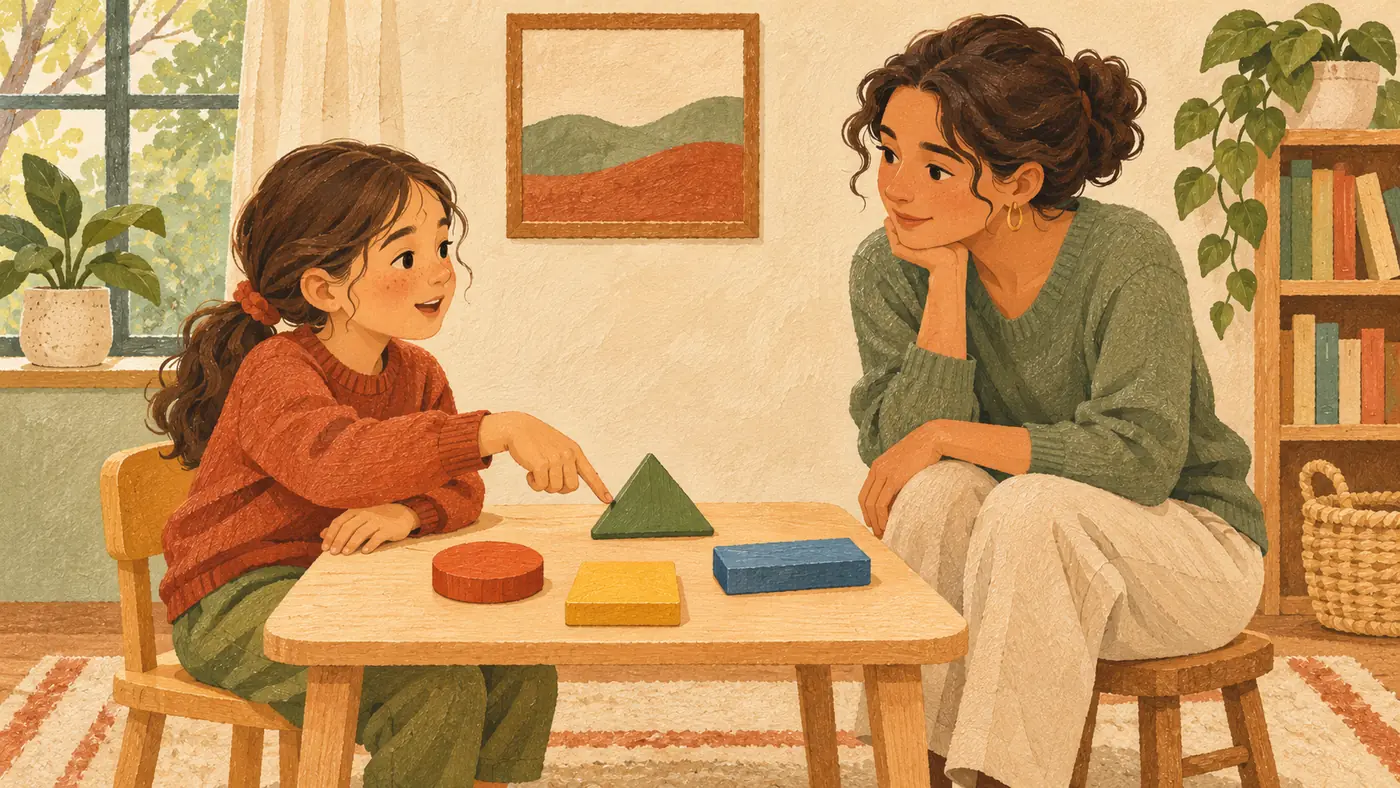
Imagine this dream. An unknown child is building a small bridge with wooden shapes. They ask you to hold one piece steady. You keep trying to finish the whole bridge, and the child pushes your hand away. Nothing dangerous happens; the disagreement is about how to help.
Record the exchange in plain terms: the request was to hold one piece; your response was to take over; the child refused. Have you recently offered more help than someone asked for? Leave that question open until you compare it with an actual event.
Perhaps a coworker wanted a quick review, and you began rewriting their work. If so, asking what kind of help they want could be useful. If you recently played with building blocks and no waking disagreement fits, the simpler memory link may be enough.
The example does not mean that a dream child always represents a colleague, or that helping is a problem. It shows how to consider one exchange and then check it against real life. You can discard the interpretation if it does not fit.
When you are the child in the dream
Notice whether you experienced the scene from a child’s point of view or watched a younger version of yourself. What could you do? Who listened? Did the dream place you in a real school or home, or somewhere unfamiliar?
You can reflect on needing help, having less say, playing freely, or wanting to try something without deciding that the scene is an exact memory. A vivid dream is not evidence that a forgotten event occurred.
You can use “inner child” as a metaphor for feelings or needs you associate with being young. Treat it as a personal reading, not a diagnosis or a required explanation. A child in a dream does not prove childhood trauma. You do not have to settle on that interpretation.
Worrying scenes and personal spiritual readings
If the child was missing, sick, hurt, or in danger, describe only what you remember. Waking before an ending does not establish that the worst happened. The scene is not a forecast or a way to assess a real child’s health.
You might explore a sense of responsibility or uncertainty if that fits your current life. You may also choose a spiritual reflection on care, patience, or play. Keep it personal rather than treating the child as a divine instruction, an unborn child making contact, or a universal good or bad sign.
If there is an actual safety or health concern, use the real situation and appropriate professional help. Dream interpretation should neither create a diagnosis nor dismiss a waking problem.
Frequently asked questions
What if I do not have or want children?
You do not have to read the dream as a wish for parenthood. Consider the role you had in the scene and any memories or interests that come to mind. Finding no useful connection is also a valid place to stop.
Does a boy or girl have a different dream meaning?
There is no single translation to apply from that detail alone. If the child’s gender or identity mattered within the scene, note your own association without turning it into a rule about personality, pregnancy, or future children.
What if the child dream keeps upsetting me?
Repeated dreams do not confirm a hidden danger or a diagnosis. If nightmares keep disrupting sleep or daily life, consider professional support. Mayo Clinic describes persistent distress and trouble functioning as important features of nightmare disorder. You do not need to decode a child symbol before getting help.
Note what the child actually asked
Write the child’s request beside what you did. If a waking exchange comes to mind, ask whether the comparison helps. If it does not, keep the note and leave the dream unexplained.
Related Reading
- Baby dream meaning for infants, feeding, carrying, and early care.
- Giving birth dream meaning for labor, delivery, and the arrival scene.
- Common dreams and meanings for other people and situations.
References
- Schredl, M., Cadiñanos Echevarria, N., Saint Macary, L., & Weiss, A. F. (2021). Dreaming About One’s Own Children: An Online Survey. Imagination, Cognition and Personality, 41(2), 222–237. DOI: 10.1177/02762366211017421.
- Mayo Clinic. Nightmare disorder: Symptoms and causes.