Quick answer: An itchy nose is traditionally associated with incoming news, a visitor, gossip, shifting luck, or attention from another person. In a common left-right reading, the left side is linked with receiving, private emotion, or unfavorable talk, while the right side is linked with action, welcome news, or praise. Folklore varies sharply, so use the sensation as a symbolic prompt—not proof that a particular event will happen.
The most useful interpretation comes from the whole moment: where the itch appears, when it happens, what you were thinking about, and whether it repeats. Below, we compare traditional superstition, modern spiritual symbolism, biblical claims, and cultural source evidence before giving a brief practical health check.
Nose Itching Spiritual Meaning at a Glance
| Where or when it itches | Common spiritual or folklore meaning | Reflection prompt |
|---|---|---|
| Left side | Receiving energy, emotional news, gossip, caution | What are you taking in from other people? |
| Right side | Action, favorable talk, opportunity, outgoing energy | What message or move are you ready to make? |
| Tip of the nose | A visitor, surprise, news, curiosity | What are you anticipating? |
| Inside the nose | An unspoken message or sensitive intuition | What feels present but has not been said? |
| Outside or bridge | Visibility, reputation, social attention | Are you unusually aware of how others see you? |
| At night | Private feelings, relationship thoughts, unresolved news | Who or what was on your mind? |
This table summarizes popular interpretations; it is not a prediction chart. Family and regional versions may use completely different meanings.
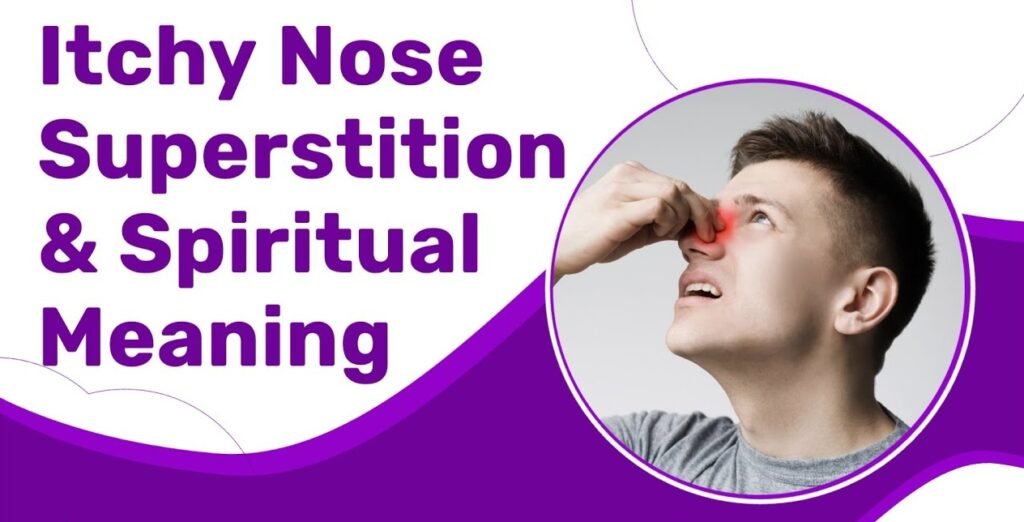
What Does an Itchy Nose Mean Spiritually?
Spiritually, an itchy nose is often interpreted as a sign that your attention is about to shift. Because the nose detects what is approaching before the eyes can see it, folklore turns the itch into a metaphor for sensing news, a person, an opportunity, or tension “in the air.” The symbolic theme is anticipation.
Actual folklore is far less tidy than viral lists suggest. The University of Detroit Mercy’s James T. Callow Folklore Archive preserves nose-itch beliefs involving a visitor, gossip, anger, lying, kissing a fool, or meeting someone unexpected. Contradictory outcomes are not an error to hide; they show that these meanings are community stories rather than a universal code.
7 Common Itchy Nose Spiritual Meanings
1. Someone is thinking or talking about you
One of the most searched interpretations links an itchy nose with attention from another person. A warm, pleasant feeling is often read as affectionate thought or praise; an irritating or persistent itch is sometimes read as gossip. The sensation cannot reveal another person’s mind, so treat the person who comes to mind as a clue to your emotional focus.
2. A visitor or unexpected meeting is coming
“An itchy nose means company is coming” appears in many English-language folk traditions. Some versions specify a stranger; others predict a friend or even a quarrelsome visitor. Symbolically, the itch can invite you to become open to contact, but it does not guarantee that someone will arrive at your door.
3. News or a message is near
The nose points forward and senses change, so modern spiritual readers often connect itching with incoming information. If you are waiting for a reply, interview result, or relationship message, the symbolism may reflect anticipation. Check the facts before deciding whether the news is favorable.
4. Your intuition wants your attention
“Something smells off” is already a metaphor for subtle detection. An itchy nose can therefore symbolize intuition, especially when it appears during a decision. Notice your first impression, then test it against evidence. Intuition is most helpful as an early question—not a final verdict.
5. Luck or money is shifting
Popular superstition lists sometimes promise money coming in, money going out, or a lucky opportunity. These meanings vary and have no reliable predictive value. A grounded spiritual use is to ask whether you have overlooked a practical opportunity or need to pay closer attention to spending.
6. A boundary or disagreement needs attention
Some archived variants connect the itchy nose with anger, lying, or a quarrel. Instead of expecting conflict, review what is already tense. Is something unsaid? Are you assuming motives? The best “warning” is one that encourages calm communication rather than suspicion.
7. Curiosity is pulling you toward change
The nose is associated with curiosity and exploration. An itch may symbolically appear when you are ready to investigate a new path, relationship, or idea. This is a modern reflective meaning, not an old rule, but it can be useful when the moment feels energetic rather than anxious.
Left vs Right Side Nose Itching Spiritual Meaning
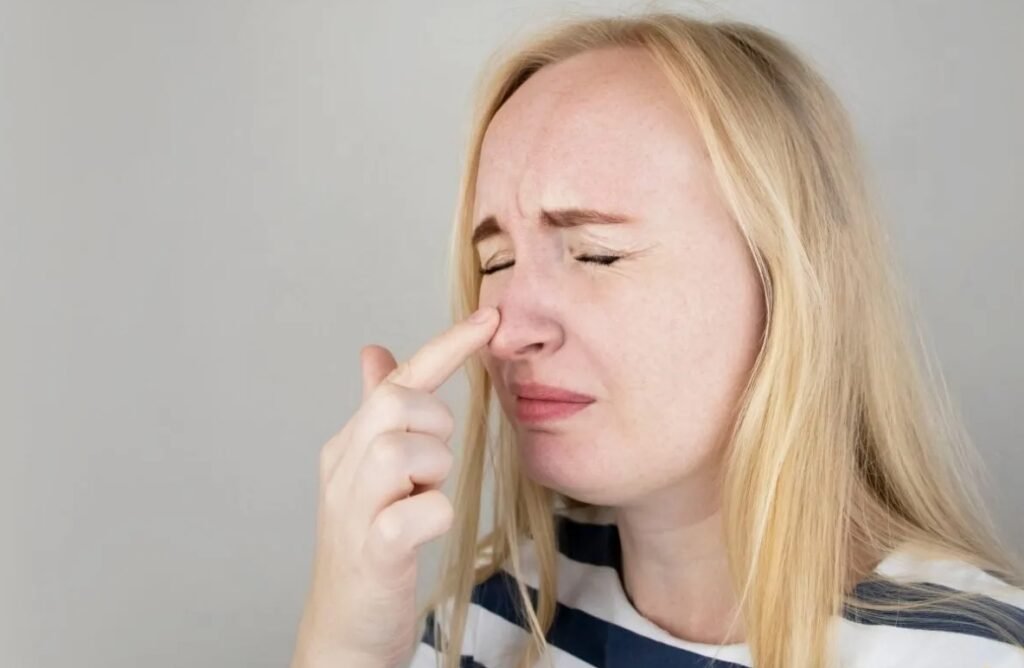
Left side of the nose itching
The left side is commonly associated with receiving, emotion, memory, and private life. An itch here may be interpreted as incoming attention, sensitive news, or a need for caution. One Callow Archive record specifically assigns unfavorable talk to the left side—but this is one collected version, not a global law.
Right side of the nose itching
The right side is often linked with expression, action, and the outer world. Popular meanings include good news, praise, a social invitation, or an opportunity to act. The same archive record assigns favorable talk to the right side; other traditions do not make this distinction at all.
Bottom line: Use left and right as reflection lenses. Do not let a side-based chart make you accuse someone, expect money, or avoid a decision.
Inside, Outside, Bridge, or Tip of Nose Itching
Itching inside the nose
Symbolically, an itch inside the nostril may represent an unspoken feeling, private intuition, or information you sense but cannot yet name. Because internal itching is also strongly associated with irritation or allergies, physical context deserves attention.
Itching outside the nose or on the bridge
The visible outside of the nose is sometimes linked with identity and reputation. An itch on the bridge may symbolize social pressure, self-consciousness, or the feeling that others are noticing you. Ask whether you are preparing to be seen, evaluated, or introduced.
Tip of the nose itching
The tip is most often connected with a visitor, surprise, new encounter, or playful curiosity. If the itch happens while you are anticipating a message or meeting, the symbolism may mirror that expectation. It does not determine who will arrive.
Nose Itching for Women and Men
Searches often ask for separate meanings “for females” and “for males,” but there is no stable historical rule that changes an itchy nose omen by sex. Modern spiritual systems may call the left side receptive or feminine and the right side active or masculine. These are symbolic qualities that anyone can experience; they are not biological predictions.
For a woman or a man, the same questions are more useful: What relationship or news were you thinking about? Did the moment feel welcome, tense, or neutral? What real-world action—if any—would be wise?
Nose Itching at Night, in the Morning, or by Time
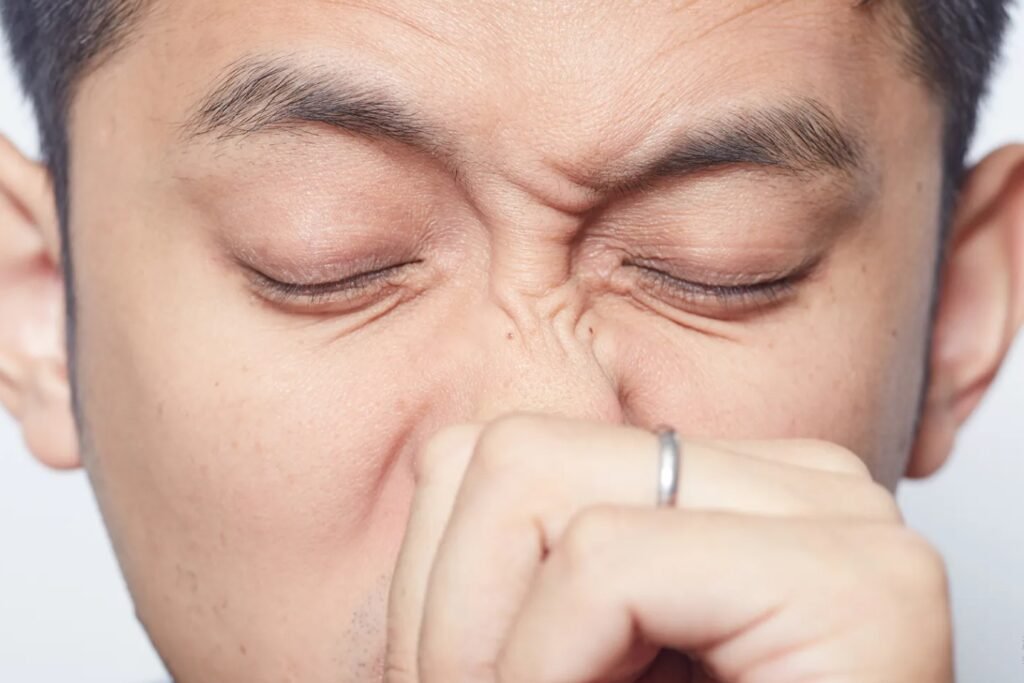
At night, an itchy nose is often read as private attention, relationship thoughts, or unresolved information because distractions are lower. In the morning, it may symbolize new plans, news, or social energy entering the day. If the itch occurs at a repeating hour, record the setting before consulting a time chart; dust, bedding, temperature, routines, and products can also create timing patterns.
Unlike some Chinese almanac traditions for sneezing, ear ringing, or ear heat, we have not found a single well-sourced classical “itchy nose by hour” table that can responsibly be presented as a universal Chinese rule. An online table without a named text and edition should be treated as modern internet folklore.
Western and Global Nose-Itching Folklore
Nose-itch superstition is not one national tradition. A historical Dictionary of Superstitions and Mythology preserves sharply different meanings across the English-speaking world and Europe. That makes a country-by-country comparison more useful than calling one viral chart “the ancient meaning.”
| Place or tradition | Recorded or common meaning | Modern spiritual theme |
|---|---|---|
| United States | An itchy nose can mean that the person is loved | Affection, attention, relationship awareness |
| Scotland | A letter or message is coming | News, communication, anticipation |
| Great Britain | Inside irritation means vexation; outside means pleasant news | Inner tension versus outward opportunity |
| Prince Edward Island, Canada | A stranger, foolish kiss, anger, or danger appears in a folk rhyme | Unexpected encounter or caution |
| Macedonian folklore | A warning of punishment or trouble | Review boundaries and consequences |
| Modern Western metaphysics | Intuition, “energy in the air,” manifestation, or incoming attention | Pause, sense the mood, then verify |
For Huluos’s main US, UK, Canadian, Australian, and European audience, the strongest shared motifs are therefore attention, incoming communication, a visitor, romance, and caution. Modern metaphysical language adds intuition and manifestation, but those should be labeled as contemporary interpretations rather than inherited rules from every Western culture.
Is an Itchy Nose Good Luck or Bad Luck?
It can represent either in folklore. Good-luck readings include a visitor, praise, money, romance, or welcome news. Warning readings include gossip, conflict, overspending, or a deceptive person. The emotional and situational context is more useful than the itch alone:
- Calm or excited: opportunity, connection, curiosity, welcome news.
- Irritated or uneasy: boundaries, social tension, fear of judgment.
- Neutral and brief: a small reminder to notice the moment, not a major omen.
- Persistent or physically uncomfortable: check ordinary causes rather than intensifying the spiritual story.
Biblical and Cultural Meanings
Biblical meaning of an itchy nose
The Bible does not say that an itchy nose predicts a visitor, money, gossip, or danger. Biblical passages use breath and the nostrils in larger images of life, spirit, and human dependence, such as Genesis 2:7. Applying those themes to personal reflection can be meaningful, but turning them into a fixed omen is not supported by the text.
Western folk traditions
Visitor, gossip, quarrel, romance, and unexpected-meeting beliefs appear in collected English-language folklore. The archive record matters because it preserves actual variants rather than repeating a single polished internet chart.
Chinese and cross-cultural claims
Chinese folk practice is diverse and changes by region, family, language, and source text. Many English pages label a left-right nose chart “Chinese” without citing a Chinese source. Huluos does not repeat that label as fact. Where a named classical source is unavailable, we identify the claim as modern cross-cultural internet folklore rather than ancient Chinese teaching.
What This Sign May Be Asking You to Notice
- Who or what came to mind at the first moment of the itch?
- Are you waiting for news, a visitor, approval, or a difficult conversation?
- Does the left-right symbolism match your situation, or are you forcing it?
- What physical trigger, location, product, or routine was present?
- What calm action would still make sense if the superstition were wrong?
For another traditional body-sign comparison, see ears burning spiritual meaning or left eye twitching meaning.
Common Causes and When to Seek Care
Allergies, dry air, smoke, perfume, weather changes, skincare products, and repeated rubbing can all cause an itchy nose. Itching with sneezing, congestion, a runny nose, or watery eyes may fit allergic rhinitis. See the MedlinePlus allergic rhinitis guide and the NHS overview for practical information.
Seek professional advice if itching persists, keeps returning, disrupts sleep, or comes with pain, swelling, sores, frequent bleeding, fever, facial pain, unusual discharge, or breathing difficulty. Sudden swelling of the face, lips, tongue, or throat with trouble breathing can be an emergency. Symbolic interpretation should never replace appropriate care.
Frequently Asked Questions
Does an itchy nose mean someone is thinking about me?
That is a common spiritual and folklore interpretation. It can prompt you to notice a relationship, but an itch cannot identify or confirm another person’s thoughts.
What does left-side nose itching mean spiritually?
The left side is often linked with receiving energy, emotion, gossip, or caution. One archived variant says unfavorable talk; other traditions differ.
What does right-side nose itching mean spiritually?
The right side is commonly linked with action, favorable attention, welcome news, or opportunity. It is a symbolic reading rather than a prediction.
Does an itchy nose mean a visitor is coming?
This is one of the oldest widely repeated nose-itch superstitions. Different versions predict a friend, stranger, or difficult guest, which shows why it should be enjoyed as folklore rather than forecast.
Is an itchy nose a sign of money or good luck?
Some popular lists say so, but others predict money leaving or conflict. There is no reliable financial signal; use it only as a reminder to notice opportunities and spending.
Sources and Editorial Note
- James T. Callow Folklore Archive: North American nose-itch beliefs
- James T. Callow Folklore Archive: left-right nose variants
- A Dictionary of Superstitions and Mythology: US, Canadian, British and European variants
- MedlinePlus: allergic rhinitis
- NHS: allergic rhinitis
Editorial note: Huluos separates documented folklore, modern spiritual interpretation, and health information. Symbolic meanings are offered for reflection, not as guaranteed predictions or diagnosis. Updated August 2026.