
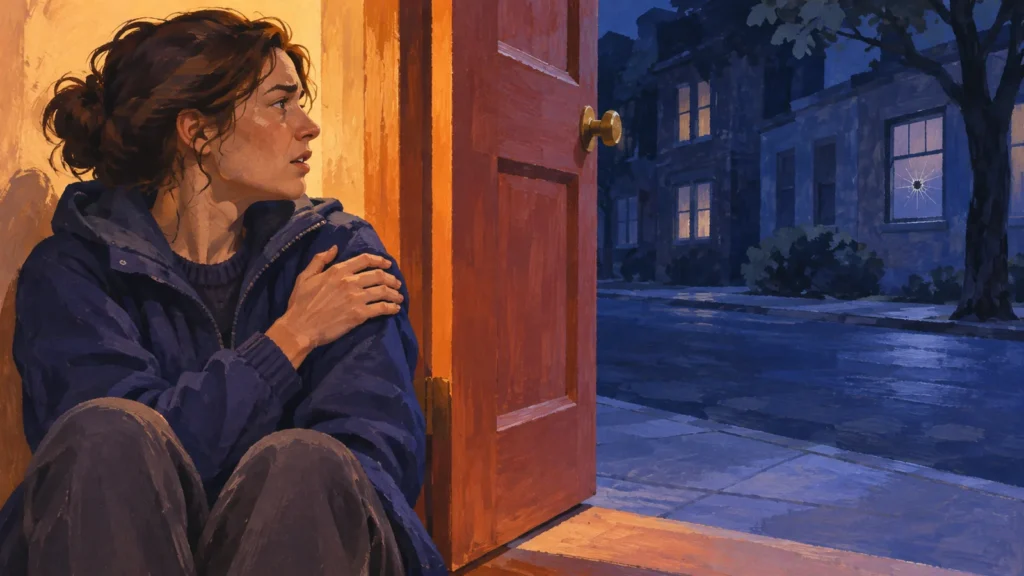
A dream about being shot may bring up questions about feeling threatened, hurt, or unable to protect yourself. It may also draw on a film, news story, memory, or recent worry. No single explanation fits every dream. Being shot in a dream does not predict an attack, reveal another person’s plans, or prove you have a mental health condition.
Notice who was there, what happened before the shot, and whether you could escape or get help. Surviving, waking at the shot, and watching the scene from outside your body are different endings. Start with what you remember, without filling in missing details.
Separate the dream from real-world evidence
A familiar face in a frightening dream can make it tempting to connect the danger to that person. The dream is not evidence that they intend to hurt you. Consider their real actions separately. For a knife attack in a dream, the being stabbed dream guide compares trust concerns with real-world evidence.
If there is an actual threat, abuse, injury, or immediate danger, respond to those facts and seek appropriate local help. A symbolic reading cannot assess safety. Likewise, pain or other symptoms that continue after waking need real-world attention, rather than a meaning assigned to a dream wound.
To reflect on the dream, describe the scene without the weapon. You might write, “Something happened before I could respond,” or “I asked for help and nobody came.” That gives you a specific feeling or problem to compare with waking life.
Common shooting-dream scenes to compare
These questions offer possible ways to reflect. They do not assign a universal meaning to a shooter, body part, or ending.
| Dream scene | Detail worth recording | Reflection question |
|---|---|---|
| Shot at but not hit | You hide, freeze, run, or find a way out. | What am I bracing for, and what options can I actually check? |
| Shot by someone you know | Their behavior before and after the shot. | Does this resemble a real conflict, a fear, or a recent story? |
| An unknown or unseen shooter | Whether the threat has any clear source. | Am I trying to give a face to an uncertain worry? |
| Shot in the back | You cannot see what is happening behind you. | Is the useful detail surprise, lack of information, or feeling unable to respond? |
| Shot in the head or chest | The feeling and events matter more than a body-part code. | What felt threatened in the scene, in my own words? |
| Shot but you survive | Who helps and what you can do afterward. | What would recovery or support look like in the situation I am considering? |
| Shot with no pain or blood | Whether you feel numb, calm, confused, or afraid. | Did the dream emphasize the shock, the danger, or the aftermath? |
| Someone else is shot | Your role as witness, helper, or person trying to escape. | What responsibility did I feel, and was it within my control? |
Who shoots you in the dream?
A friend, partner, or family member
Check for a specific link before concluding that the dream is about the relationship. Was there a recent argument, an upsetting comment, or a scene from something you watched together? You might find a connection, or none at all.
If you do find a real disagreement, discuss the actual words or behavior that troubled you. Accusing someone because they appeared as the shooter adds a claim the dream cannot support.
A stranger or someone you never see
An unseen shooter tells you very little about a person. Record what is clear: where you are, whether there is a warning, and how you try to get safe. You can consider uncertainty or lack of control without inventing a hidden enemy.
If pursuit fills most of the scene, the being chased dream guide may help you examine escape, hiding, and what happens when you turn around.
Being shot but not dying
Survival may bring up thoughts about getting through a difficult event. Look at how it happens. You might find shelter, receive help, or simply continue the dream as if nothing happened. Those endings do not all tell the same story.
Ask what changed after the shot. Being able to leave may matter more than surviving the impact. If you stay trapped, a reading about confidence or resilience may not fit. You are allowed to record an unresolved or frightening ending.
Waking before you know the outcome is also different from surviving within the dream. Leave that gap blank. Neither ending promises protection or predicts harm in real life.
Head, chest, back, or stomach: avoid a fixed code
You may have personal associations with a body part. A chest wound might make you think of heartbreak; a head wound might bring up thoughts about judgment. These are associations to test, not medical or psychological facts about the dream.
A shot in the back does not prove betrayal. If surprise was the strongest detail, explore that first. If the dream centers on being unable to see the shooter, lack of information may be the more useful question.
No pain, no blood, or an impossible recovery can be part of the scene you remember. They do not prove emotional numbness, spiritual protection, or a hidden injury. Record the absence without giving it a diagnosis.
What research says about threatening dreams
In a 2014 study by Robert and Zadra, 572 participants kept dream logs for two to five weeks. Researchers examined 253 nightmares and 431 bad dreams reported by 331 of them. Physical aggression was the most frequent nightmare theme in that sample. An attack dream fits within that broader group of threatening dreams. The study does not establish a symbolic meaning for being shot.
Mayo Clinic lists stress, trauma, sleep loss, and frightening media among possible nightmare contributors. That gives you several things to check. It does not tell you which caused your particular dream.
Start with recent material before reaching for a deeper explanation. Did you watch a shooting scene, hear upsetting news, or discuss violence? A connection is worth noting, but it still does not prove why the dream took this form.
Can the dream have a spiritual meaning?
You can use the dream for personal spiritual reflection without treating it as a warning from outside yourself. A question about what deserves protection, what hurt needs care, or where you want more choice may fit your beliefs.
Keep the question open. The dream does not establish a curse, a spiritual attack, or another person’s harmful energy. It also does not require confrontation, forgiveness, or contact with someone who has hurt you.
If a religious or cultural reading matters to you, check a named source in its own context. Avoid treating a modern gun scene as if every tradition has one ancient, shared interpretation. The dream symbols guide explains how to compare a symbol with your circumstances.
A worked example: compare two explanations
Imagine this dream: you are shot at outside a familiar building, find the front door locked, then escape through a side door. You wake before seeing the shooter. This is a hypothetical example, not a reader report.
One possible reading is “I need more options in a situation that feels threatening.” The locked door and successful exit fit that reading. Another is “I recently watched a similar scene.” Check your recent viewing or conversations before deciding the dream is about work or a relationship.
“Someone at that building plans to attack me” adds a fact the scene cannot establish. A familiar location does not identify a real threat.
For your own dream, write two possible explanations and one detail that would weaken each. Choose a small waking step based on real needs, such as asking what a tense comment meant or taking a break from upsetting media. Keep an uncertain interpretation uncertain.
After you wake: settle first, interpret later
Orient yourself to your current room. Notice where you are and that the dream has ended. If writing helps, make a short note of the scene and leave the analysis until you feel ready. You do not need to replay the most upsetting details to use a dream journal.
If dreams replay real violence, or sleep problems are affecting your life, seek professional support. The VA National Center for PTSD explains that trauma-related nightmares can replay events and that sleep-focused treatment can help. A shooting dream alone does not diagnose PTSD, and you do not need a diagnosis before asking for help.

Frequently asked questions
Does dreaming of being shot mean I will be shot?
The dream is not evidence of a future shooting. Respond to actual threats or unsafe situations based on waking facts, not on who or what appeared in the dream.
Why did I feel the shot so clearly?
A vivid sensation can make the dream feel convincing, but its intensity does not establish a cause or prediction. If pain remains after you wake, treat it as a real symptom and seek appropriate care.
What does it mean if I die in the dream?
Record what you remember about the ending: fear, calm, a changed viewpoint, or waking abruptly. Dream death does not forecast real death. The death dream guide explores endings and change without treating them as omens.
Why do I keep dreaming about being shot?
The repeating scene alone cannot identify the reason. Note changes in stress, sleep, media exposure, or reminders of an upsetting event. If it keeps disrupting sleep, speak with a health professional rather than searching for a more frightening interpretation.
Keep the next step separate from the dream’s storyline. Write “What I know while awake” beside “What I only saw in the dream.” Use the first column for decisions; use the second for reflection if it helps.
Related Reading
- Browse the Dream Meanings hub
- Being chased, hiding, and finding an exit
- Death dreams and fear of an omen
References
- Robert G, Zadra A. Thematic and content analysis of idiopathic nightmares and bad dreams. Sleep, 2014;37(2):409–417.
- Mayo Clinic. Nightmare disorder: symptoms and causes.
- VA National Center for PTSD. Sleep Problems and PTSD.