
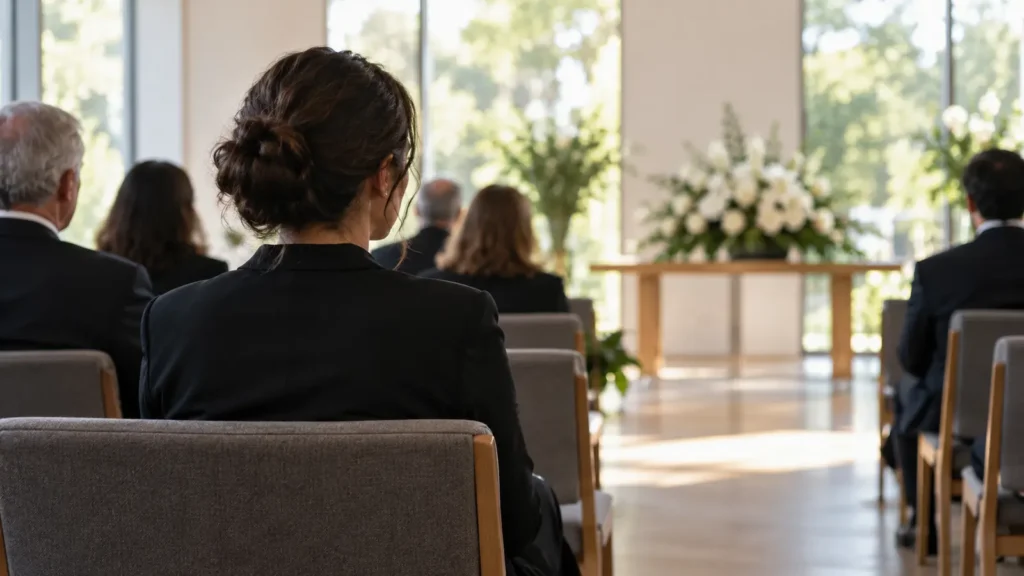
A funeral dream can draw on grief, fear, change, or a recent reminder of death. It does not predict that someone will die. The person being mourned, what happened during the service, and how you felt afterward matter more than any fixed symbol. A funeral for someone who has died may connect with remembrance and mourning. One for someone living may express fear of losing them or a change in the relationship. Your own funeral can raise questions about identity, visibility, or a chapter of life that is ending. Reflect on the dream, but do not treat it as a warning, diagnosis, or message about another person’s fate.
Why funeral dreams can feel so real
A funeral puts separation, memory, family roles, ritual, and other people’s reactions in one setting. That setting may appear after a real loss, an anniversary, difficult news, a health scare, a move, a breakup, or a quieter change in how you see yourself.
Dream research often finds links between waking concerns and dream content. One study comparing waking and dream activities supports that general continuity. A small longitudinal study of 28 people also found associations between psychological well-being and the emotional tone of dreams. These findings do not create a dictionary for funeral dreams. They support starting with your recent life rather than assuming a prediction.
Recent exposure may be enough. You might have attended a memorial, heard about a death, sorted family photos, watched a funeral scene, or worried about someone. Dreams can combine that material with older memories and current pressure.
First, separate the dream from a death prediction
A vivid funeral can feel like a warning after you wake. The fear is real, but the warning is not evidence. A dream cannot tell you when or how someone will die, prove that a living person is in danger, or diagnose illness.
| Dream detail | A grounded question | What it does not prove |
|---|---|---|
| A living person has died | Am I afraid of losing them, or is our relationship changing? | That their death is near |
| You attend a funeral for someone deceased | What memory, date, or unfinished feeling is active now? | That the person sent the dream |
| You see your own funeral | Which role or version of myself feels finished or unseen? | How or when you will die |
| No one mourns or attends | Where do I feel overlooked, unsupported, or disconnected? | That nobody cares about you |
| The service is calm or beautiful | Am I finding a way to remember, accept, or mark a change? | That loss is complete or grief is over |
If you have a concrete reason to worry about someone’s health or safety, respond to the waking evidence: check in appropriately, contact a professional, or use emergency help when needed. The dream itself is not the evidence.
Use the Person–Ritual–Aftermath check
Before choosing a meaning, make three short notes.
- Person: Who was being mourned, and what is your actual relationship with them? If the person was unknown, what role or quality did they seem to carry?
- Ritual: What happened at the funeral? Notice who spoke, who stayed away, whether the ceremony felt familiar, and what went wrong or brought comfort.
- Aftermath: What feeling followed you out of the dream—fear, relief, guilt, anger, numbness, closeness, or confusion? What is happening in your life that feels similar?
This check helps separate grief from fear, and fear from a changing relationship. The same scene can affect a recently bereaved person, someone preparing to move away, and someone who watched a funeral on television before bed in very different ways.

12 common funeral dreams
Attending the funeral of someone who has died
This dream may bring back memories, the circumstances of the death, or the support and tension that surrounded the real funeral. An anniversary is one possible cue, but so are a familiar song, a family gathering, a new loss, or a life event the person is missing.
In a survey of 278 bereaved people, 58% reported dreams of a deceased loved one, and participants described both comforting and upsetting themes. The study recorded how people understood their dreams; it did not prove that dreams complete grief or provide contact with the dead. Your response may be comfort, sadness, anger, or nothing clear.
A living family member’s funeral
A dream about the funeral of a living parent, partner, child, sibling, or friend can put the fear of losing them into a scene. It can also appear when the relationship is changing: a child leaves home, a parent needs more care, a friendship fades, or an old family role no longer fits.
Check the waking facts before acting. If nothing suggests immediate danger, the dream is not a reason to alarm the person. You can still ask yourself whether you want more time together, a clearer boundary, or a conversation you have delayed.
Your own funeral
Seeing your own funeral often raises questions about mortality, identity, or how other people see you. Look closely at the audience. Did they understand you, misremember you, ignore you, or say something you needed to hear?
It may also fit a change that feels final: leaving a job, ending a relationship, giving up a role, or becoming responsible for something new. It does not predict your death. If the dream connects with thoughts of harming yourself or not wanting to live, treat that as a waking support need and contact a qualified crisis or health service now.
A stranger’s funeral
An unknown person can give you some distance from a difficult subject. Notice their age, role, clothing, and what others said about them, but do not assume the face belongs to someone you will meet. Your own part in the funeral—as witness, speaker, mourner, outsider, or the only person who knows what happened—may be the better clue. The stranger dream guide offers more ways to examine an unfamiliar figure without turning them into a prediction.
A funeral where the person is still alive or wakes up
This reversal can bring relief, shock, embarrassment, or suspicion. It may fit a situation you thought was over but has returned: a relationship resumes, an old duty comes back, or a decision is reopened. If the person is alive in waking life, the scene can also express a wish that feared loss be undone.
The dream does not show that someone will recover from illness, escape danger, or return from death. Medical and safety decisions need waking information from appropriate professionals.
Being late for or missing a funeral
Missing the service may connect with regret, lack of control, or fear that you failed to show up. Perhaps you missed a real goodbye, live far away, felt excluded from a family decision, or could not grieve in the way others expected.
Ask what you were trying to reach. The dream may be less about the ceremony than about an apology, a last conversation, or a need to mark the loss in your own way. A private ritual, letter you do not send, or conversation with a trusted person may be more useful than searching for a hidden warning.
Crying at a funeral
Tears can match grief, but they can also accompany relief, anger, love, exhaustion, or the release of pressure. Who comforted you—and whether you accepted that comfort—may matter more than how hard you cried.
If the tears were the main feature, compare the crying dream guide. Dream crying does not measure how much you loved someone, and not crying does not mean you are cold or finished grieving.
No one attends the funeral
An empty service may stage a fear of being forgotten, unsupported, or misunderstood. If it was your funeral, consider where you feel invisible now. If it was someone else’s, the dream may reflect concern that their life or loss is not being recognized.
The scene is not a census of who cares. Compare it with recent events: being left out, carrying grief privately, losing touch with friends, or taking on work that no one notices.
A crowded funeral or unexpected guests
A large crowd may bring up public attention, family politics, social duty, or surprise at how many parts of life connect to one person. Unexpected guests can put different periods of your life in the same room. Notice whether the crowd helped or overwhelmed you. A supportive gathering and a chaotic public spectacle raise different questions; neither tells you how a real funeral will unfold.
Speaking at the funeral or carrying the coffin
Giving a eulogy may bring up what needs to be said, remembered, or corrected. Carrying the coffin can feel like duty, closeness, weight, or being assigned a role by the family. These are possible emotional readings, not universal symbols.
Recall the exact responsibility. Were you prepared? Did anyone help? Did your words sound true? The answers may connect with a current burden, a wish to honor someone, or anxiety about speaking for other people.
A funeral that feels peaceful or celebratory
A calm service may match comfort, affectionate memory, acceptance, or relief after a hard period. If funerals familiar to you include music, food, storytelling, or other forms of shared remembrance, the dream may borrow those details. Peace in the scene does not mean you have finished grieving or should stop feeling pain. Comfort and sorrow can coexist. Avoid imposing one culture’s funeral customs on another person’s dream.
A funeral that becomes chaotic, frightening, or violent
Conflict, a missing body, the wrong person in the coffin, or a service that will not begin may grow from confusion, family tension, disturbing memories, or a sense that something remains unresolved. Recent horror media can also supply the imagery.
Keep the interpretation proportionate. One frightening dream does not diagnose trauma or a sleep disorder. If nightmares repeat, disrupt sleep, or replay a traumatic event, a qualified clinician can help you consider support beyond dream interpretation.
Worked example: your living mother’s funeral
Suppose you dream that you arrive at your mother’s funeral after everyone else. You cannot find your seat, and no one will tell you what happened. You wake frightened and want to call her with a warning.
Using the three-part check:
- Person: Your mother is alive. You care about her, and you have spoken less since starting a demanding job.
- Ritual: The dream centers on arriving late, being excluded, and not knowing what happened.
- Aftermath: The strongest feeling is not certainty about death. It is fear that time is moving without you.
A grounded response might be to call because you want contact, not because the dream predicted danger. If she has a real health concern, address it through ordinary conversation and medical care. The guide to dreams about your mother can help you compare family roles, memory, and current contact.
When the dream follows a real loss
Dreams of funerals and deceased people can be comforting, upsetting, or mixed. In the survey of 278 bereaved people noted above, 60% of respondents felt that dreams affected their bereavement. That is a report of personal experience, not proof that every bereavement dream has a healing function.
You do not need to force a lesson from the dream. It may help to record what felt accurate, what felt strange, and what you needed after waking. If the dream brought comfort, you can value that comfort without claiming certainty about its source. If it brought distress, you do not have to treat it as a message.
People experience loss differently; the NIH Clinical Center notes that there is no right or wrong way to grieve. Consider support from a grief counselor, clinician, faith leader you trust, or community service when sleep or daily life is becoming hard to manage.

Spiritual, religious, and cultural readings
Start with the funeral customs and beliefs you know from your own family or community. You might understand the dream through prayer, ancestor traditions, scripture, or community ritual, or see it as memory and emotion during sleep. Do not assign a belief to someone from outside their background.
A spiritual interpretation can remain personal: the dream may prompt remembrance, prayer, gratitude, repair, or reflection on mortality. It cannot verify a divine warning, an ancestor’s request, a curse, or a date of death. No universal biblical rule makes one funeral image mean the same thing for every person.
Be cautious when anyone uses a frightening dream to demand money, obedience, secrecy, or a risky act. Fear does not turn an interpretation into evidence.
What to do after a disturbing funeral dream
- Write the dream in plain language before details fade.
- Mark what came from waking life: a person, anniversary, news story, illness, argument, or recent change.
- Name the strongest feeling and the moment it appeared.
- Separate a useful action from a predicted outcome. “I want to call my brother” is an action; “my brother is going to die” is an unsupported forecast.
- Choose one proportionate step: make ordinary contact, attend to a real concern, create a private remembrance, rest, or seek support.
The dream-journal guide provides a simple way to track repeated themes without turning each dream into a verdict.
When recurring funeral dreams need more support
Occasional funeral dreams can be unpleasant without signaling a disorder. Look for waking impact: repeated sleep loss, panic at bedtime, daytime impairment, or dreams tied to trauma. The American Academy of Sleep Medicine’s position paper on nightmare disorder recommends imagery rehearsal therapy for nightmare disorder and PTSD-associated nightmares. It also reviews other treatments a clinician may consider. The paper addresses nightmare treatment, not symbolic funeral meanings.
Seek urgent local help if the dream connects with an immediate risk of self-harm, harm from someone else, or a medical emergency. A dream cannot diagnose the cause, but waking danger deserves action.
Frequently asked questions
What does it mean to dream about a funeral?
It may connect with grief, fear of loss, a changing relationship, a life transition, or recent exposure to death-related material. The person, ceremony, and feeling after waking matter more than a fixed symbol.
Does a funeral dream mean someone will die?
No. A dream cannot predict a death or prove that someone is in danger. Respond to real health or safety evidence, not the dream as a forecast.
Why did I dream of a living person’s funeral?
You may fear losing them, be adjusting to a change in the relationship, or have recent reminders of mortality. The dream does not reveal their fate.
What does dreaming of my own funeral mean?
It can raise questions about mortality, identity, how others see you, or a role that feels finished. Who attended and how you felt may provide useful context. It does not predict your death.
Why did I dream of a funeral after someone died?
Memory, anniversaries, family contact, and ongoing grief can all bring loss into dreams. Bereavement dreams may feel comforting, painful, or both. You do not have to give the dream one final meaning.
What if the deceased person spoke at the funeral?
Record the words and compare them with your memories, concerns, and beliefs. You may value the experience personally, but the dream cannot verify contact with the dead or require you to obey a message.
Is a peaceful funeral dream a sign of closure?
It may fit comfort or acceptance, but “closure” is not a test you must pass. Grief can change while love, sadness, and memory continue.
What does an empty funeral mean?
It may reflect feeling forgotten, unsupported, excluded, or worried that a loss is not being recognized. It does not prove that no one cares.
Can a funeral dream have a spiritual meaning?
You may reflect on it through your own faith or culture. Keep the interpretation personal and avoid claims that the dream proves a warning, curse, command, or date of death.
Why do I keep having funeral dreams?
Repeated dreams may track ongoing grief, stress, trauma reminders, family conflict, or repeated exposure to the topic. Keep a short record. Seek professional support if the dreams regularly disrupt sleep or daily life.
What to carry into waking life
A funeral dream can gather loss, change, and relationship worries into one intense scene. Ask whom you miss, what feels different, what needs attention, or where you need support. Leave the prediction behind. Any next step should still make sense when you judge it by waking facts.
Related reading
- Dream Meanings hub
- Death Dream Meaning: 13 Scenarios, Grief, and What Research Suggests
- Crying Dream Meaning: 12 Scenarios and What the Tears May Reflect
- Dream About Your Mother Meaning
- Dream About Your Father Meaning
- How to Keep a Dream Journal
References
- Schredl M, Hofmann F. Continuity between waking activities and dream activities. Consciousness and Cognition. 2003;12(2):298–308.
- Pesant N, Zadra A. Dream content and psychological well-being: a longitudinal study of the continuity hypothesis. Journal of Clinical Psychology. 2006;62(1):111–121.
- Wright ST, Kerr CW, Doroszczuk NM, et al. The impact of dreams of the deceased on bereavement: a survey of hospice caregivers. American Journal of Hospice and Palliative Care. 2014;31(2):132–138.
- Morgenthaler TI, Auerbach S, Casey KR, et al. Position Paper for the Treatment of Nightmare Disorder in Adults. Journal of Clinical Sleep Medicine. 2018;14(6):1041–1055.
- National Institutes of Health Clinical Center. Loss, Grief and Bereavement.