
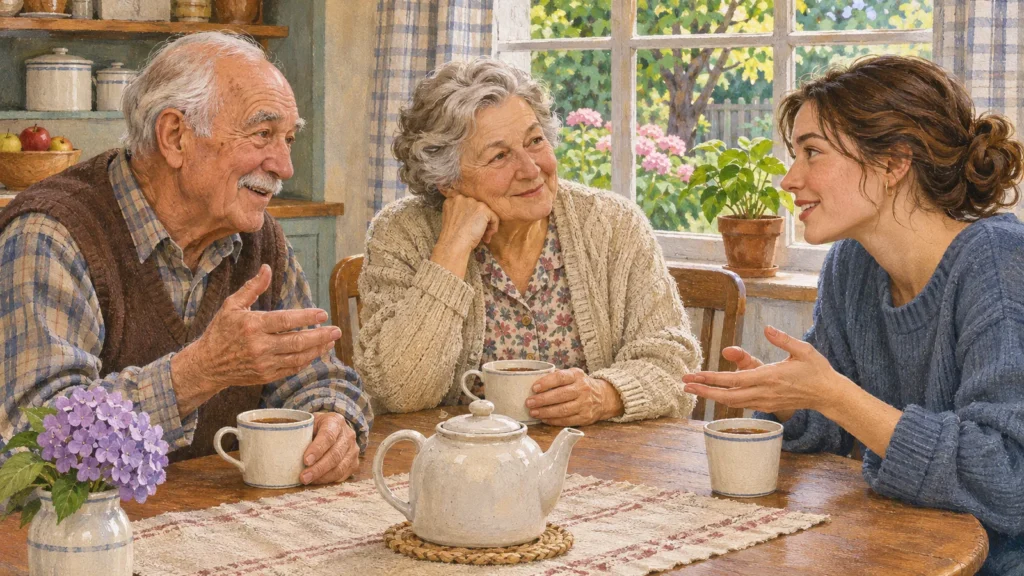
A dream about your grandfather or grandmother may bring a family memory, a familiar place, or a question about care into focus. Start with your own relationship and what happened in the scene. Your questions will depend on whether you were close, distant, or never met. There is no single meaning that fits them all.
If your grandparent has died, the dream is not proof of a visit or a message. If they are alive, it does not predict their health or future. You can value the experience while keeping dream details separate from facts you know about their life.
Start with the relationship you actually had
Was this a person who raised you, someone you saw on holidays, or a relative you knew through other people’s stories? Describe that relationship before reaching for ideas such as wisdom, protection, or family roots.
A grandfather does not have to stand for authority, and a grandmother does not have to stand for comfort. Use the traits and memories you associate with this person. If the relationship was strained, there is no need to make the dream warm or forgiving.
Also note whether you were your current age or a child. Being back in a grandparent’s kitchen, garden, or house gives you a place to explore. It does not make the dream an accurate record of what happened there.
When a deceased grandparent is alive in the dream
Record what the meeting was like: an ordinary visit, a conversation, a meal, or a reunion after a long absence. Then note how you felt after waking. Those two accounts do not have to match. You might enjoy the meeting and still find waking up difficult.
A 2026 review by Mamat and colleagues found themes of comfort, guidance, and continued connection in research on dreams of deceased loved ones. Much of the literature was qualitative. These reported experiences do not establish that a particular dream carries a message from someone who has died.
If you find the dream comforting, you can keep that comfort without proving where it came from. If it felt cold, strange, or upsetting, it is not a verdict on your bond with your grandparent or on how well you are grieving.
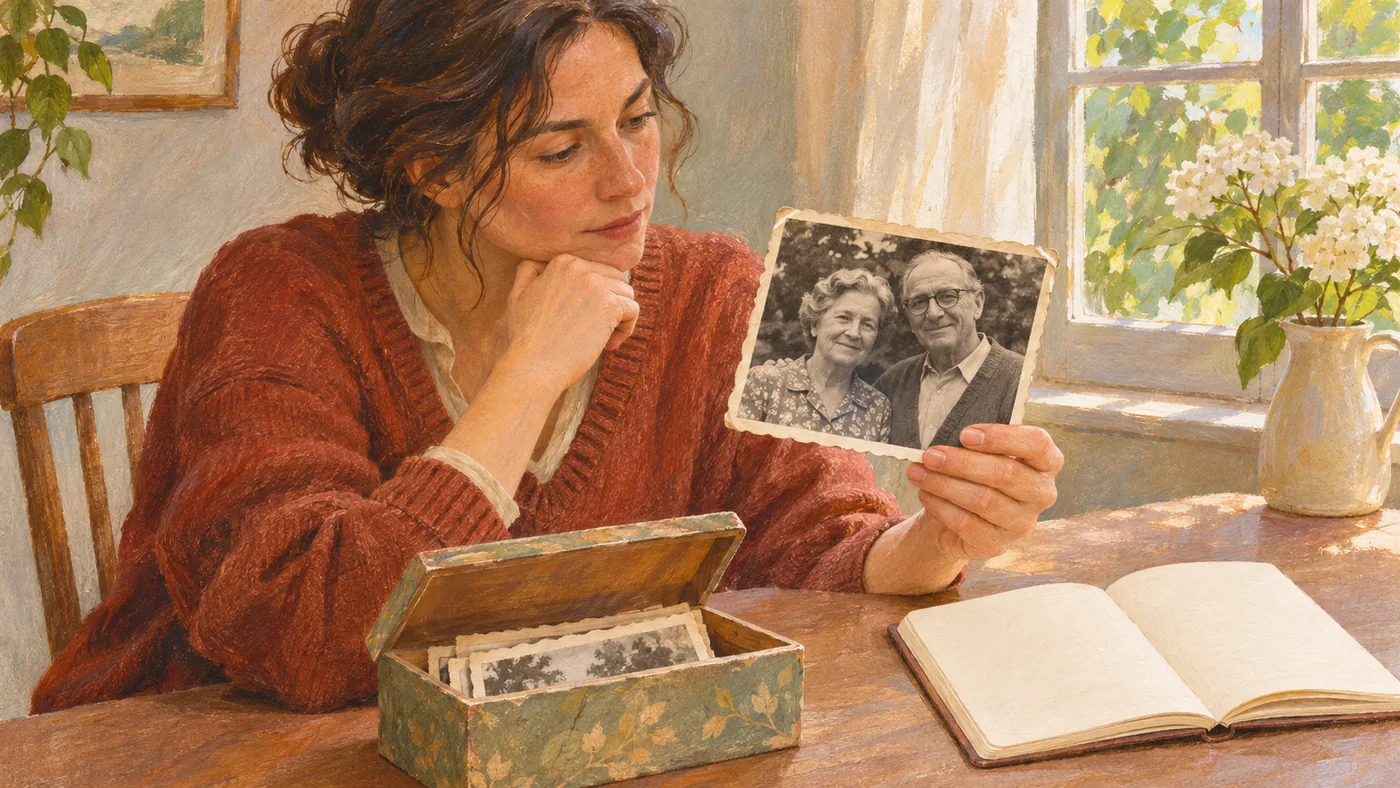
Keep dream words separate from remembered words
Use two short notes. In one, record what you remember from the dream. In the other, record what you already knew while awake. If a detail appears only in the dream, leave it in that first note.
This is especially useful when a grandparent speaks clearly, gives advice, or tells a story you do not recognize. Describe it as something they said in the dream, rather than a real quotation from their life. The dream-journal guide can help you keep that record brief.
What to do with a vivid scene
These checks are prompts for reflection. They do not assign fixed meanings to a smile, a gift, or an old house.
| Dream detail | A useful next step | What remains unknown |
|---|---|---|
| A smile, hug, or shared meal | Record what felt welcome and any memory you already connect with it. | The scene cannot establish what your grandparent thinks now or whether they approve of a choice. |
| Silence, anger, or being turned away | Describe the interaction before judging yourself. Check whether a real conflict needs attention. | A dream expression is not evidence of punishment, blame, or a demand for forgiveness. |
| Advice, a gift, money, or a key | Write down the detail and check any practical question through ordinary records or conversation. | It does not promise money, reveal an inheritance, or settle a major decision. |
| A request to follow or stay | Record where you were going and how the request felt. | It is not an instruction you must obey or a forecast of death. |
| A familiar home that looks different | Separate the dream setting from the rooms and events you actually remember. | The altered house does not supply missing family history. |
A worked example: the key to an old house
Imagine a dream in which your grandmother hands you a key to a house the family sold years ago. You wake wondering whether you should try to buy it back.
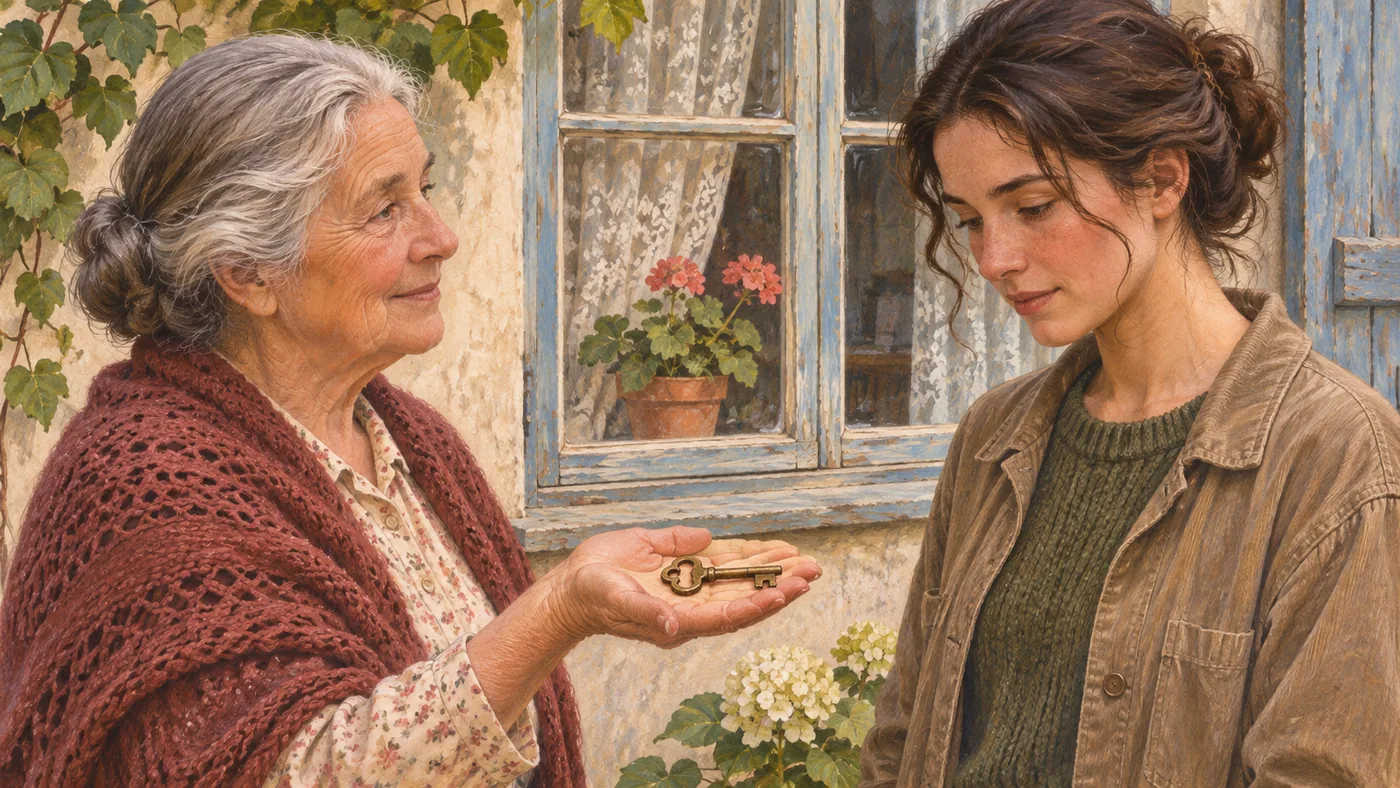
The dream note can say, “She handed me a key, and I felt eager to go inside.” The fact note can say, “The house was sold. I do not know who owns it now.” Neither note shows that buying the house is possible, wise, or something your grandmother wanted.
A smaller response might be to ask a relative for a photograph, if that would be welcome, or to write about one visit you remember. Any property decision needs current facts and a separate financial judgment. This example is an exercise, not a universal reading of keys.
If your grandparent is alive
A dream of illness, injury, or death is not a health report. If you have an actual reason to be concerned, respond to that information. If you simply want to say hello, a normal call or visit does not need a warning based on the dream.
A scene in which you are caring for them can also prompt a practical check: is there a real task to discuss, and who has agreed to do it? Keep the request specific. Do not assume you must take on a duty because you had the dream.
For the broader question of frightening loss scenes, see the death-dream guide.
Frequently asked questions
Was it a visitation dream?
You may understand the dream through your own faith or personal beliefs. Its vividness alone cannot verify a supernatural visit. You can describe what it meant to you without presenting that interpretation as a fact that others must accept.
Why did my grandfather or grandmother look young?
Note whether that appearance resembles a photograph, a story, or a version of them you remember. If there is no clear match, leave it uncertain. Looking young in a dream does not establish their condition after death or a hidden fact about their life.
What if I never knew this grandparent?
Separate what relatives have told you from details that appeared only in the dream. You might want to ask a factual question about their life, but the scene does not prove a family secret or give you a recovered memory.
Does not dreaming about them mean I did not love them?
No. Having, remembering, or not recalling a dream is not a test of love. You do not need a dream to keep a photograph, share a story, or choose a private way to remember someone.
Choose what to keep from the dream
End your notes with one detail you want to preserve and one thing you cannot confirm. Then decide whether any action is needed. Keeping a memory, asking a real question, or leaving the dream in your notebook are all options.
If nightmares regularly affect your sleep and daily life, the NHS recommends speaking with a doctor.
Related Reading
References
- Mamat, Z., Owaisi, R. B., Alrai, S., Goktepe, A. K., White, J., Bayley, P. J., & Elzamzamy, K. (2026). Dreams of the deceased: A scoping and mixed-methods systematic review. Sleep Medicine, 140, 108787. DOI: 10.1016/j.sleep.2026.108787.
- NHS. Night terrors and nightmares. Reviewed November 24, 2025.