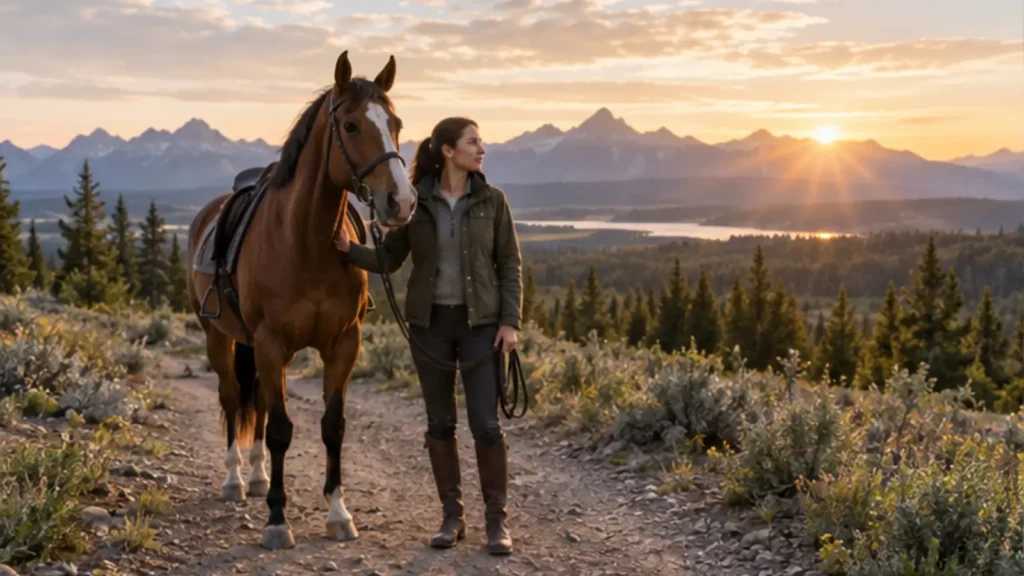
A horse dream may reflect momentum, freedom, responsibility, trust, physical energy, or fear that events are moving faster than you can manage. It does not predict travel, romance, wealth, or loss. The same horse can feel like a partner, a duty, an escape route, or an animal that needs care. Start with four concrete details: who was riding, the horse’s pace, how control was shared, and the horse’s condition. Then compare those details with your current life and recent choices.
The horse may be partner, vehicle, or responsibility
A car dream usually separates driver from machine. A horse dream is different because the movement comes from a living animal with its own response. That can make trust, communication, care, and control part of the scene. Yet your personal experience matters. A lifelong rider, someone frightened by horses, and a person who saw one movie yesterday will bring different associations.
Check for memory before symbolism. Riding lessons, a farm visit, a sports event, a book, an old photograph, or a conversation about work can supply the image. A recent source does not make the dream meaningless; it tells you where the material came from.
Research supports context, not a universal meaning
Dream research does not identify one code for horses. Continuity studies instead find that waking concerns, activities, and relationships often appear in dreams after being reshaped. A horse may therefore fit a project gaining speed, a relationship that requires trust, a wish for open space, or a body sensation that became movement.
Real horses also differ from the romantic image of solitary freedom. Smithsonian’s page on Przewalski’s horses, a wild relative of domestic horses, describes social groups with mares, offspring, and stallions. Animal facts can widen the questions we ask, but they do not assign meaning to a dream.
Use rider, pace, control, and condition
- Rider: Were you riding, walking beside the horse, watching someone else, or seeing an empty saddle?
- Pace: Was the horse standing, walking, galloping, refusing, stumbling, or running away?
- Control: Did you guide gently, pull hard, lose the reins, follow the horse, or work together?
- Condition: Did the animal look healthy, exhausted, injured, neglected, young, or well cared for?
Twelve horse dream scenarios compared
| Dream scene | Possible waking-life match | Question to ask |
|---|---|---|
| You ride a calm horse | Steady progress built on trust and skill | Where did we choose to go? |
| The horse gallops too fast | Momentum that feels exciting or hard to manage | Did I want speed or fear it? |
| You fall from the horse | A setback, loss of confidence, or broken coordination | What happened before the fall? |
| The horse refuses to move | Resistance, fatigue, caution, or a plan that lacks agreement | Was I listening or forcing? |
| A horse runs free | Desire for space, release, or movement without supervision | Did I follow, watch, or try to catch it? |
| A horse chases you | A duty, drive, or relationship asking for attention | Why did I not want contact? |
| You feed or groom a horse | Care for the support behind your progress | Did the work feel warm or burdensome? |
| An injured horse appears | Reduced energy, interrupted plans, or concern for a helper | Could I offer useful care? |
| A white horse appears | A striking personal, cultural, or recent visual association | What did the color change for me? |
| A black horse appears | Unknown direction, privacy, elegance, or a recent image | Was darkness threatening or calm? |
| You see a herd | Group movement, belonging, pressure, or shared direction | Was I with the herd or outside it? |
| A horse gives birth | A new capacity, project, or responsibility entering life | Who protected the new arrival? |
Pace reveals the kind of pressure
Speed by itself is not freedom. Galloping across open ground while choosing the route may feel expansive. Galloping toward a cliff with no response from the reins may resemble a schedule, argument, or habit that seems hard to slow. A horse that walks when you demand speed may represent healthy caution, low energy, or frustration with a plan.
Notice whether the pace changed. A frightened horse that settles when you loosen the reins might echo a situation improved by less force. A calm walk that suddenly becomes a race may match pressure introduced by comparison or competition.
Control can be shared, lost, or imposed
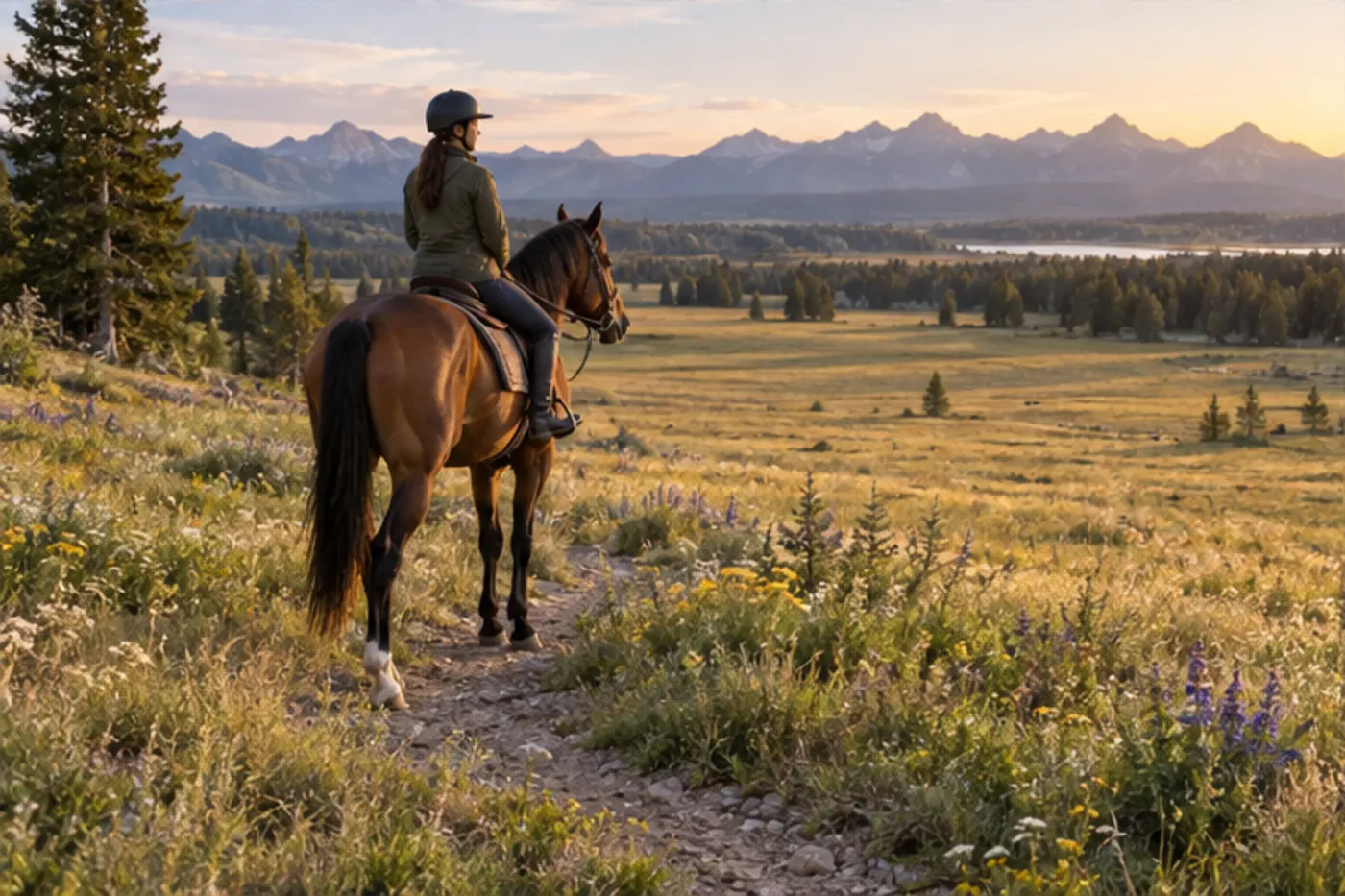
A skilled ride is coordinated; it is not the same as domination. In a dream, gentle guidance and mutual response may fit cooperation in work or a relationship. Pulling the reins until the horse panics can resemble overcontrol. Having no reins may feel liberating in one dream and terrifying in another.
If another rider controlled the horse while you sat behind, ask whether you trusted their direction. If an empty saddle moved past you, the dream may center on a missed role, an absent person, or an opportunity that seems to continue without you.
Free horses and the wish for space
A horse running without a rider can fit the wish to move without constant evaluation. Your reaction separates admiration from anxiety. Trying to catch it may reflect a need to restore structure, or it may show reluctance to let a plan change. Opening a gate yourself can represent permission, while discovering a broken gate may feel like lost control.
Compare this scene with the flying dream guide. Both images can involve freedom, yet a horse dream keeps effort, ground, care, and relationship in view.
A worked example: the horse that stops at the bridge
Suppose you dream of riding toward a narrow wooden bridge. The horse stops, though you can see people waiting across the river. You pull once, then get down and notice a broken plank. You lead the horse along the bank and wake relieved.
You are the rider, but the horse changes the plan. The pace stops at a real obstacle. Control becomes cooperation when you dismount, and the horse’s condition remains calm. If colleagues are pushing a fast launch while you have noticed a missing safeguard, the scene may support checking the route. It does not guarantee that your real plan will fail.
Injured, tired, or neglected horses
A horse that cannot carry weight can turn attention toward the cost of movement. Are you asking too much of your body, a coworker, a partner, or a system? Were you responsible for the animal, or did you discover neglect caused by someone else? Guilt, anger, and tenderness suggest different directions.
If the dream follows real concern about an animal, take practical action in waking life. Dream interpretation should never replace appropriate veterinary advice or animal welfare reporting.
Color and spiritual meaning
White, black, red, and pale horses appear in many stories, religions, artworks, and modern media. Their meanings are not interchangeable across cultures. A white horse may recall a wedding, a game character, a sacred story, or a childhood toy. A black horse may feel unknown, elegant, feared, or familiar.
Name the source before using a cultural reading. A symbol from your own faith or family history can be relevant, while a borrowed chart may flatten a complex tradition. The dream does not prove a prophecy or spiritual command.
What to do after a horse dream
- Write rider, pace, control, and condition.
- Mark every point where speed or direction changed.
- Compare the scene with one current project, relationship, or energy limit.
- Choose a concrete response: slow down, ask for agreement, care for the support system, or change route.
- Use a dream journal if the same horse or route returns.
Seek professional support when nightmares repeatedly disturb sleep, follow trauma, or produce lasting daytime distress. Symbolic reflection and clinical care can coexist.
Frequently asked questions
Is a horse dream a good sign?
It depends on the scene. A cooperative ride, exhausted horse, runaway herd, and blocked bridge point to different concerns.
What does riding a horse mean?
It may fit progress, trust, skill, or responsibility. How the horse responded and whether you chose the route matter.
What does a running horse mean?
Running can express freedom, urgency, escape, or group momentum. Your position and the destination narrow the reading.
What does falling off a horse mean?
It may resemble a setback, loss of coordination, or fear that skill will fail under pressure. Look at the cause and what you did next.
Does a white horse have a spiritual meaning?
It can within a specific tradition or personal memory, but there is no single meaning shared by every culture or dream.
Keep the reading grounded
A useful interpretation might be, “I want this project to move, but I need agreement on the pace.” That ties movement and control to a real choice. A claim that the horse guarantees travel or success goes beyond the evidence.
Related reading
- Travel Dream Meaning
- Flying Dream Meaning
- Being Lost Dream Meaning
- Cow Dream Meaning
- How to Keep a Dream Journal