
A monkey dream often points to curiosity, imitation, play, distraction, or the strain of reading a social group. Start with what the monkey did and how you responded. A playful monkey may fit harmless experimentation. A monkey copying you may raise a question about influence or self-consciousness. Chasing, biting, stealing, or a noisy troop can fit pressure that feels hard to contain. Treat these as prompts for reflection. They do not predict events. A dream cannot prove that someone will betray you, that a spirit sent a warning, or that an event is about to happen.
Start with the monkey’s action
Before assigning a symbol, write one plain sentence about the scene. “Three monkeys fought over my bag while I tried to leave” gives you more to work with than “monkeys are mischievous.” Record the action, the setting, your response, and the ending.
That order matters because the same animal can carry a different tone from one dream to another. Interest may feel welcome in a playful scene. In a bedroom, it may feel intrusive. A group may feel supportive when the monkeys groom one another. It may feel draining when they shriek and crowd you.
A four-part Monkey Scene Check
Use these four questions together:
- Action: Was the monkey playing, copying, grabbing, grooming, chasing, biting, watching, or escaping?
- Group: Was it alone, caring for a baby, part of a calm troop, or caught in conflict?
- Your response: Did you laugh, freeze, protect something, join in, hide, or set a boundary?
- Outcome: Did the scene settle, repeat, become dangerous, or end when you changed your response?
The ending can tell you more than the opening image. If closing a door stopped the monkey from grabbing your things, the dream may be testing a limit. If you followed it and became lost, curiosity may have pulled you away from what mattered.
12 common monkey dream scenarios
| Dream scene | Possible theme | Question to ask |
|---|---|---|
| Playful monkey | Experiment, humor, or distraction | Did play restore your energy or derail a task? |
| Monkey copying you | Imitation, influence, or self-consciousness | Whose habits or opinions are shaping your choices? |
| Monkey chasing you | A nuisance, impulse, or social problem you keep avoiding | What became harder each time you ran? |
| Monkey attack or bite | Conflict, crossed limits, or fear of consequences | What happened immediately before the attack? |
| Monkey stealing something | Attention, time, credit, privacy, or control | What was taken, and why did it matter? |
| Monkey in your house | Curiosity or disruption entering private life | Which room did it enter, and did you welcome it? |
| Many monkeys | Group pressure, noise, rivalry, or belonging | Were you inside the group or observing it? |
| Baby monkey | New curiosity, dependence, or a demanding small task | Did you feel protective, burdened, or amused? |
| Friendly monkey | Flexible problem-solving or social ease | What did the interaction help you do? |
| Monkey in a cage | Restricted energy, boredom, or a boundary | Did the enclosure feel protective or unfair? |
| Injured or dead monkey | Playfulness, connection, or an old habit losing energy | What felt absent when the monkey stopped moving? |
| Feeding a monkey | Care, reinforcement, or a habit you keep rewarding | Did feeding it calm the scene or make demands grow? |
Play, interest, and distraction
A playful monkey can fit a wish to try something without being judged. That may help when life feels too fixed. Look at the result, though. Did the play lead to discovery, connection, or relief? Or did it scatter your attention and leave a mess?
A monkey jumping between branches may resemble quick shifts between ideas, conversations, or tasks. That comparison comes from the dream’s movement, not from a fixed meaning. If the jumps felt skilled and planned, the ability to adjust may be the stronger theme. If they felt frantic, the dream may echo a packed schedule or restless mind.
Copying, teasing, and embarrassment
Monkeys can bring copying to mind because people often link them with imitation. In a dream, a monkey copying your voice or movements may fit concern about being mocked, watched, or influenced. It could also show you trying a new habit before it feels like your own.
Ask who had the power in the scene. Were you embarrassed in front of a group, or did you enjoy the imitation? Did the copy expose a habit you had not noticed? Your response separates playful copying from social threat.
Chasing, attack, and bite dreams
A chasing monkey can fit an annoying problem that feels hard to take seriously until it gets close. Identify the first moment of tension. You may have guarded food, a phone, a child, a doorway, or your place in a group. That detail points toward the boundary under pressure.
A bite makes the conflict immediate. Consider where you were bitten and what you tried to do next. A hand may connect with action or control because hands perform tasks. A leg may matter because the injury changed your movement. These links are practical prompts based on the scene; they are not universal codes.
The dream does not prove that a dishonest person is targeting you. It cannot diagnose anxiety or another condition. Use it to name a concern you already recognize, then check that concern against waking evidence.
A monkey stealing your bag, food, phone, or keys
The stolen object often carries the useful detail. A phone may involve access, attention, or communication. Keys may involve entry and control. Food may connect with resources or competition. A work bag may point to duties or your role at work.
Then look at your response. Chasing the monkey for the entire dream may fit a minor disruption consuming too much effort. Trading, waiting, or asking for help may show another way of handling it. The object and your response matter more than the animal alone.
Many monkeys and group pressure
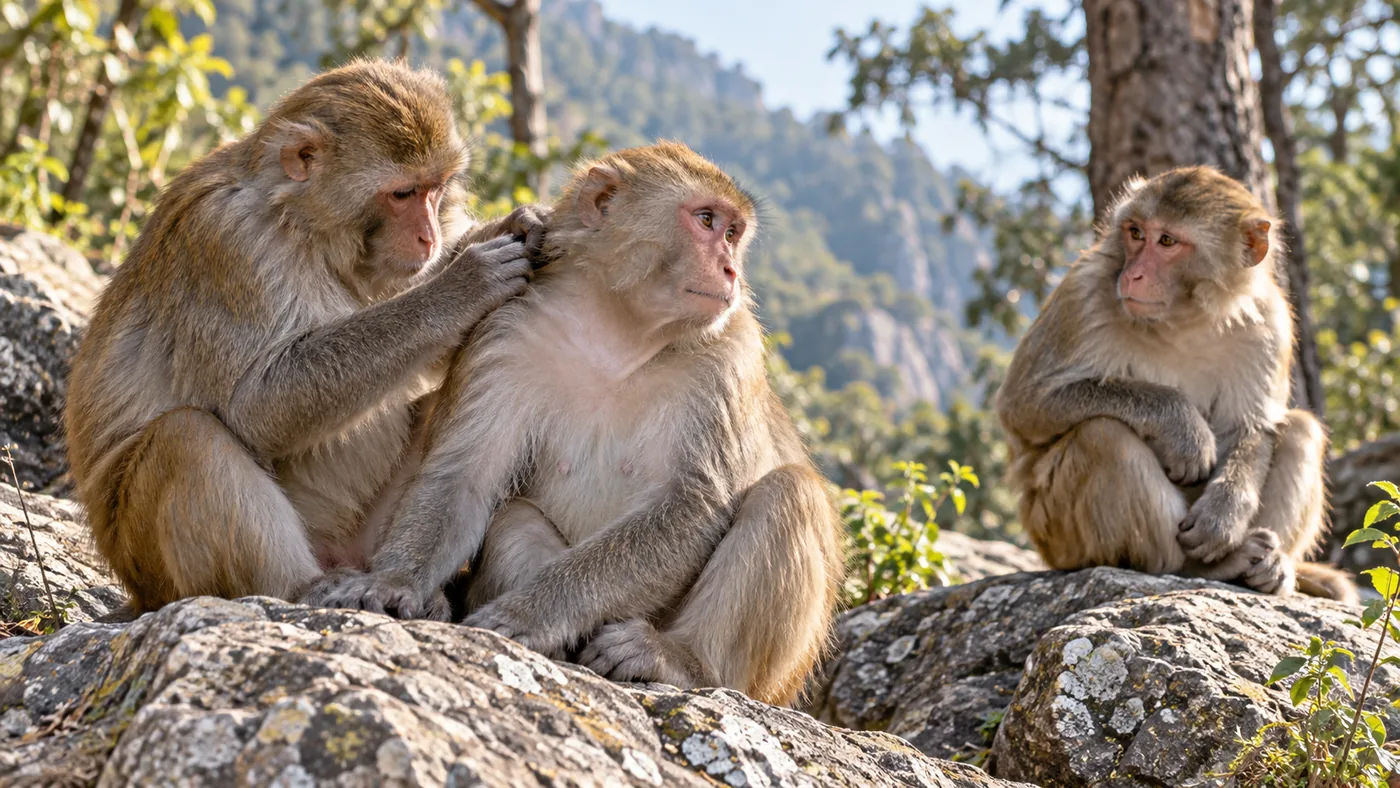
A troop can bring up belonging, rank, alliances, noise, or rivalry. Real monkey species vary, so the article does not treat one behavior as a rule for every monkey. Japanese macaques, for example, use grooming for hygiene and to reinforce social bonds. Smithsonian reporting on macaques also describes alliances, cliques, and social hierarchy. Those facts can help you notice group roles in the dream. They do not decode it for you.
Compare the dream group with a current team, family, class, or online space. Who received attention? Who watched from the edge? Could you move freely, or did you keep checking the group before acting? A calm troop may fit teamwork. A loud or fighting troop may echo rivalry, divided loyalties, or too many demands arriving at once.
Baby monkey dreams
A baby monkey may point to a small but active duty. The dream could fit a new idea, bond, habit, or task that needs steady care. Your response is the better clue. Protecting the baby may reflect care. Losing sight of it may fit worry about keeping up. Feeling annoyed may show the cost of a duty that others call cute or easy.
Do not assume that a baby monkey predicts pregnancy, a child, or good news. Check what recently required patience, supervision, or room to learn.
Monkey in the house, bedroom, or workplace
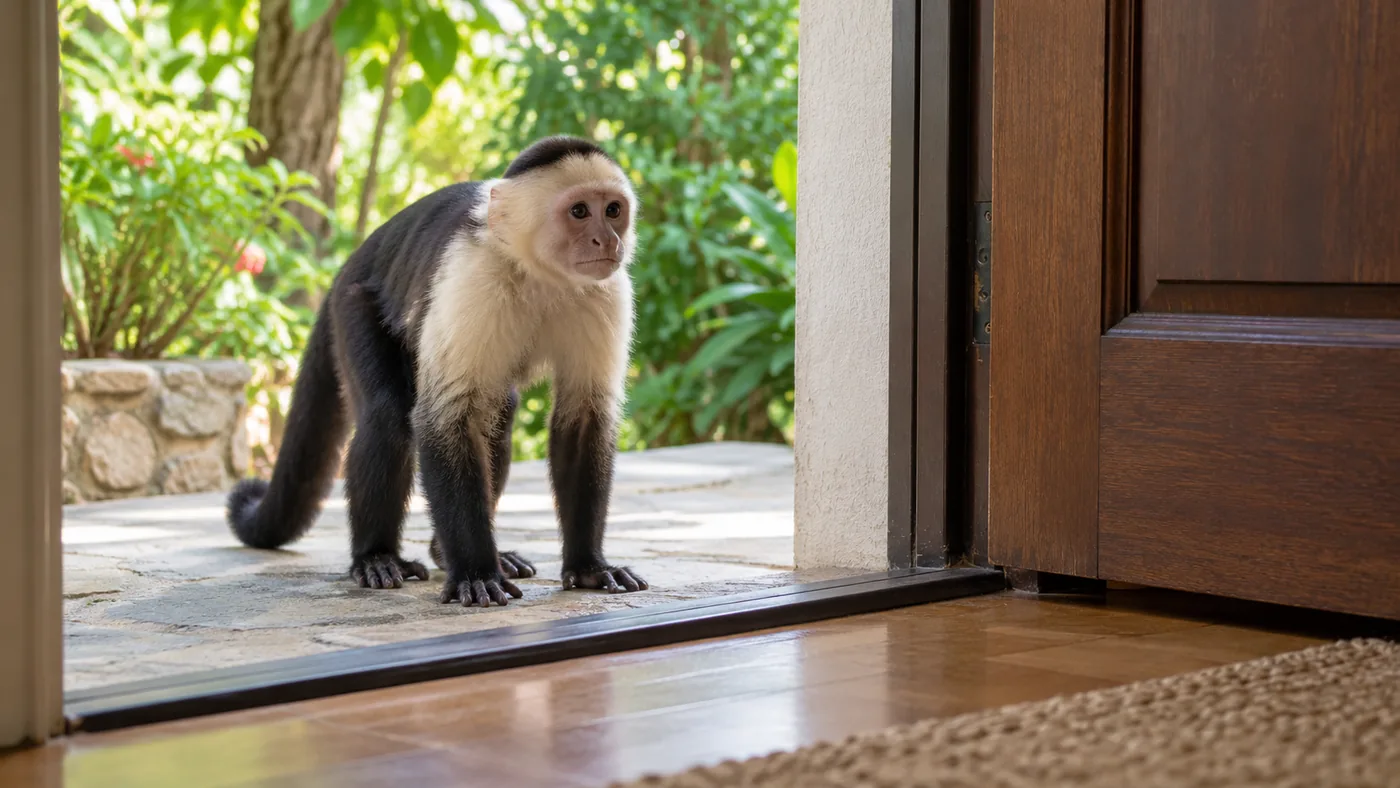
Settings show where the issue feels active. A monkey at the front door may raise a question about access: what are you considering letting into your life? A monkey loose in the kitchen may fit resources, care, or daily routines. One in a bedroom can make the scene more private, while one at work may fit interruptions, copying, or group politics.
Notice whether the monkey entered by force, was invited, or simply appeared. Also note who was responsible for removing or caring for it. These details can separate an unwanted visit from interest that needs a safe place.
Caged, injured, or dead monkeys
A cage can feel protective in one dream and restrictive in another. If the monkey was dangerous and everyone became safer, the cage may fit containment. If a healthy animal paced in a small space, it may reflect boredom or unused energy. Your judgment during the dream matters.
An injured or dead monkey may mark concern about lost play, social connection, or flexibility. It could also reflect an image you recently saw. Grief in the dream deserves attention without turning the scene into an omen. Ask what changed when the animal could no longer act.
Monkey, gorilla, or chimpanzee?
Use the animal you actually saw. “Monkey” covers many species, while gorillas and chimpanzees are apes. Readers often use the words loosely, so focus on body size, tail, movement, and group behavior.
- A small, quick monkey may keep attention on interest, grabbing, copying, or restless movement.
- A gorilla may shift the scene toward physical presence, protection, authority, or pressure. See the gorilla dream meaning guide.
- If you only remember “a primate,” keep your notes broad. Do not invent a species after waking.
What dream research can support
Dream research finds links between waking concerns, daily actions, and dream content. One long-term study found that waking states and concerns can appear in dreams. Another study found that daily actions can appear in dream scenes, although the relationship is not a perfect copy.
This gives you a sound place to start. Review recent events that involved distraction, comparison, copying, group tension, humor, or a boundary. It does not create one fixed monkey symbol. It also cannot reveal what another person secretly thinks.
Cultural and spiritual readings
Monkey imagery changes across traditions. The Metropolitan Museum of Art documents monkeys within the twelve-animal East Asian zodiac and preserves an eleventh-century Chinese monkey zodiac figure. The British Museum holds works depicting Hanuman, the monkey figure associated with strength and the Ramayana in Hindu traditions.
Each example comes from a specific culture and time. A person may know the zodiac, Hanuman, the Monkey King, or a local story. That link may then appear in a dream. The dream may include a temple, named figure, artwork, festival, or story. Research that exact context. A generic monkey dream does not prove divine guidance or a supernatural warning.
Is there a biblical meaning of a monkey dream?
The Bible does not provide a standard dictionary meaning for monkey dreams. Some modern websites attach betrayal, temptation, or spiritual attack to the image, but those claims are interpretations rather than a biblical rule. If faith is important to you, reflect on the dream alongside the text and teaching of your own tradition without treating fear as proof.
A worked example
Suppose you dream that two monkeys enter your office. One copies every movement you make while the other takes your notebook. You laugh at first, then become frustrated. The dream ends when you put the notebook in a drawer and close the door.
The Monkey Scene Check gives you four clues:
- Action: copying and taking an object;
- Group: two monkeys dividing your attention;
- Response: amusement changes to frustration;
- Outcome: a clear boundary ends the disruption.
A useful waking question would be: “Where am I treating repeated distractions as harmless even though they now affect my work?” You can test that question against real events.
A five-minute reflection
- Write the scene in two factual sentences.
- Circle the strongest action: copying, grabbing, grooming, chasing, playing, watching, or escaping.
- Name the main feeling and the moment it changed.
- Connect the setting or stolen object with one current concern.
- Choose one small response you can test, such as protecting focus time, checking an assumption, or making room for play.
A dream journal can help you compare repeated details instead of forcing a meaning from one night.
If the dream keeps returning
Record what stays the same and what changes. The monkey may get closer, the group may grow quieter, or your response may become more direct. Those shifts can help you track your response to the concern.
Occasional vivid dreams are common. If recurring nightmares cause significant distress, disrupt sleep, or affect daytime functioning, consider speaking with a qualified health professional. A dream article cannot diagnose the cause.
Frequently asked questions
Is a monkey dream good or bad?
Neither label works on its own. Play and care can feel constructive. Working together may also feel safe. Chasing, biting, theft, or crowding may point to strain. Use the action, your response, and the ending.
What does a monkey chasing me mean?
It may fit an irritating problem, impulse, or social situation you keep avoiding. Note what the monkey wanted and what became harder while you ran.
What does a monkey bite mean in a dream?
A bite can bring conflict or a crossed boundary into focus. Check what happened before the bite, where you were bitten, and how the injury changed your actions.
What does a monkey in my house mean?
The house can place interest or disruption inside private life. The room, method of entry, and whether you welcomed the monkey are more useful than a fixed house symbol.
What does dreaming of many monkeys mean?
A troop may fit group pressure, comparison, noise, hierarchy, or belonging. Look at whether the group cooperated, fought, ignored you, or pulled you in.
Does a monkey dream mean someone will betray me?
No. A dream cannot prove another person’s motives. If the dream raised concern, check behavior and evidence in waking life before drawing a conclusion.
Keep the meaning tied to the scene
A useful reading names a current question without predicting an answer. A monkey dream may help you notice interest, copying, social pressure, or distraction. It may also point to a boundary that needs care. Keep the details you remember and compare them with waking events. Discard any reading that depends on fear or false certainty.
Related reading
References
- Pesant and Zadra: continuity between waking states and dream content
- Schredl and Hofmann: continuity between waking and dream activities
- Primate Info Net: Japanese macaque behavior and grooming
- Smithsonian’s National Zoo: macaque social relationships
- The Metropolitan Museum of Art: Chinese zodiac monkey figure
- British Museum: Hanuman plaque
- Mayo Clinic: nightmare disorder symptoms and support boundary