
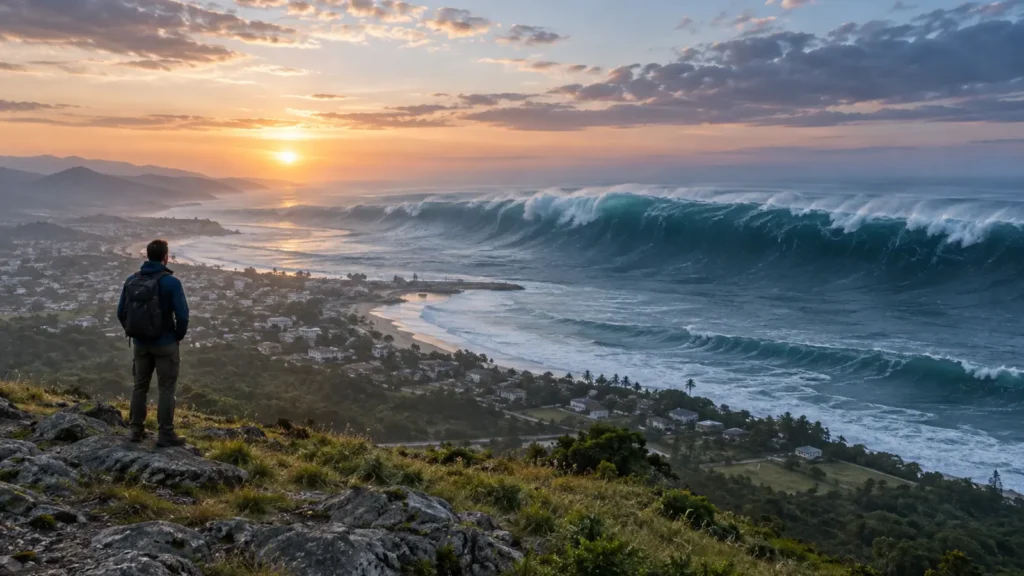
A tsunami dream often captures pressure that feels huge, fast, and difficult to contain. The wave may fit an approaching deadline, conflict, major change, or the fear that several demands will arrive at once. The meaning depends on where the wave began, whether it reached you, what shelter was available, and what happened afterward. Surviving, reaching high ground, or seeing calm water after the wave creates a different dream from being trapped underwater. A tsunami dream does not predict a natural disaster.
Separate a dream image from a real warning
NOAA defines a tsunami as a series of long waves caused by sudden displacement of the ocean. Scientists cannot predict the exact time and place of the next tsunami, though warning systems can issue alerts after potentially generating events are detected. A dream is not part of that system.
If you are near a coast and receive an official alert, feel strong or long earthquake shaking, or observe a natural warning such as a sudden unusual change in sea level, follow local emergency instructions and move to safety. Do not wait for a dream—or dismiss an alert because you assume it came from one.
Why a giant wave can show up in a dream
Dreams often draw on waking concerns, recent media, memories, and emotion. A person who watched disaster footage may dream about a wave without the image carrying a personal symbol. Someone facing a sudden move, caregiving crisis, or unstable workload may use the same image to represent scale and limited control. These are possibilities, not scientific translations.
Dream research supports examining continuity with waking life, but it does not show that a tsunami has one universal meaning. The best question is not “What do tsunamis always symbolize?” It is “What in my life currently feels similar to the pace, distance, and aftermath in this dream?”
Use four clues: distance, direction, shelter, and aftermath
- Distance: Was the wave a line on the horizon, already at the shore, or surrounding you?
- Direction: Did it approach, pass beside you, pull water away first, or return in several waves?
- Shelter: Did you run uphill, enter a building, help someone, freeze, or have nowhere to go?
- Aftermath: Did you survive, search for people, find damage, see calm water, or wake before impact?
Twelve tsunami dream scenarios compared
| Dream scene | What it may reflect | Question to ask |
|---|---|---|
| A wave forms far away | Anticipation, a known change, or worry that has not arrived | How much is known, and how much am I imagining? |
| The tsunami approaches fast | Time pressure or several demands converging | What feels as if it is closing the distance? |
| You run from the wave | Urgent self-protection or avoidance of an overwhelming issue | Was I moving toward safety or only away? |
| You reach high ground | Preparation, perspective, or a workable boundary | What helped me gain distance? |
| You are trapped in a building | Limited options inside a role, system, or responsibility | Which exit was blocked? |
| The wave sweeps you away | Loss of control, sudden transition, or strong emotion | What remained under my control? |
| You survive the tsunami | Recovery, endurance, or recognition that a feared change is survivable | What did I do after the water passed? |
| You save someone | Care, responsibility, or fear of failing to protect others | Was the rescue possible without losing myself? |
| Your family is separated | Concern about connection during change | Who was I searching for, and why? |
| A city is covered | A problem that affects many roles or parts of daily life | Which part of the city mattered most? |
| Several waves arrive | Repeated demands, aftershocks, or fear that relief will not last | What happens between the waves? |
| The sea becomes calm afterward | Relief, grief, assessment, or a chance to rebuild | What was still standing? |
Running, freezing, and reaching higher ground
Running from a wave is not automatically avoidance. In an actual hazard, moving to safety is appropriate. In a dream, the route tells you more. Running uphill can fit a clear protective choice. Running in circles may resemble effort without a plan. Stopping to collect objects while the wave approaches may bring attention to competing priorities.
Freezing can reflect the dream’s sense of limited options. It does not prove that you will freeze in an emergency or that you are weak. Ask what information, help, or route was missing. That question can turn a frightening scene into a practical reflection about preparation.
Being swept away versus being underwater
If the wave carried you, focus on control and aftermath. Were you tumbling, floating, holding onto something, or able to breathe? Being carried can resemble a rapid transition in which events set the pace. Holding a fixed object may represent the routine, value, or person you rely on when circumstances change.
If the underwater experience was the center of the dream, compare our drowning dream guide. If you watched ordinary waves rather than a disaster-scale surge, the ocean waves guide is likely a closer match.
Surviving and the scene after the water
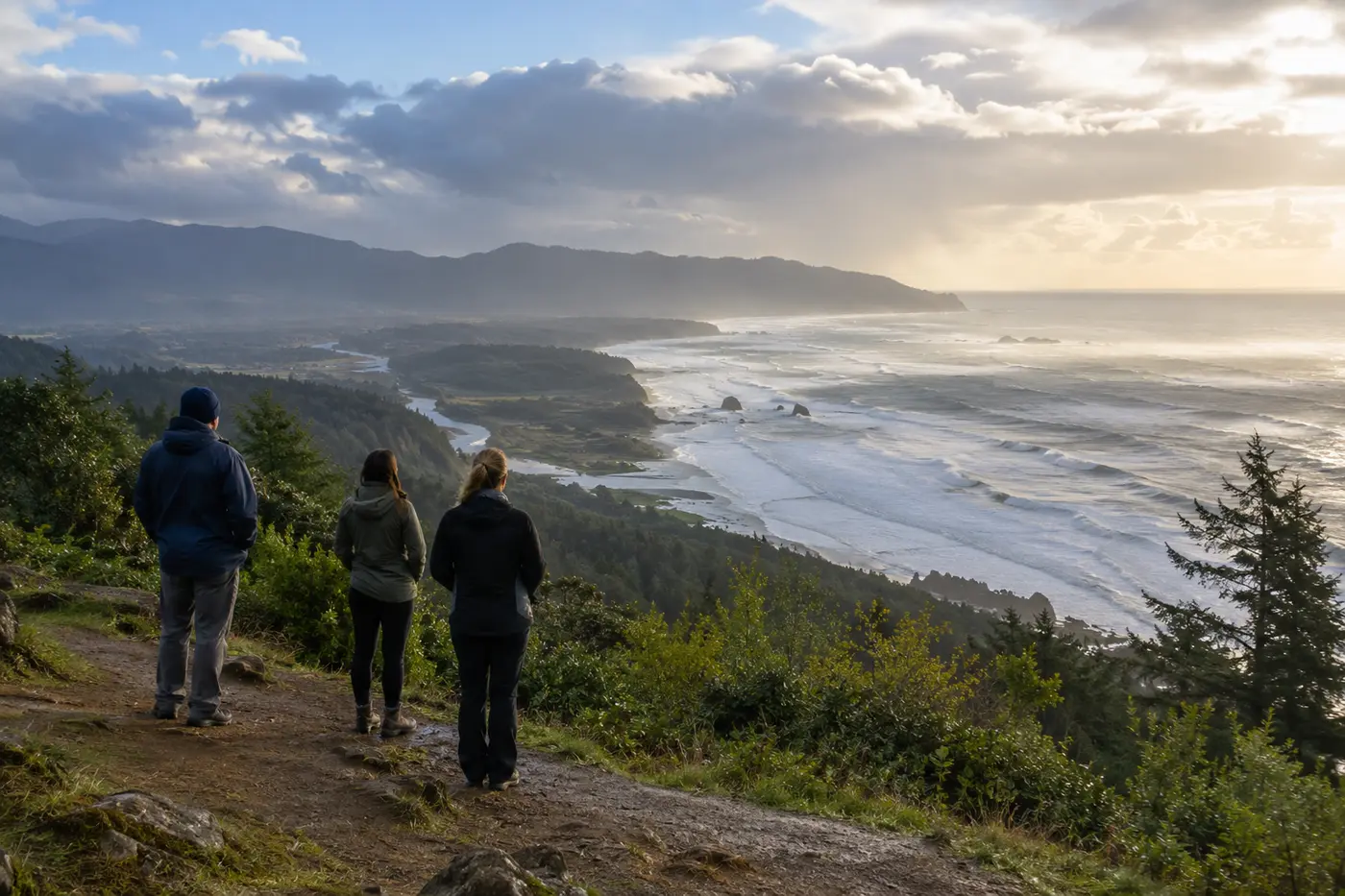
Many interpretations stop at the wave, but the aftermath often contains the useful material. Searching for family can bring connection to the center. Checking a damaged home can make stability the main concern. Seeing strangers cooperate can point toward support. Standing alone in silence may bring up grief, relief, or uncertainty about what comes next.
Survival does not promise that a real problem will end well. It may show that the dream imagined a path through the feared event. Record what helped: a hill, a warning, another person, a strong building, or your own decision to move.
A worked example: three waves during a move
Suppose you dream that you are packing in a coastal apartment when the ocean pulls back. You warn your partner, climb a hill, and watch three waves cover the street. Your apartment is damaged, but both of you are safe. You wake sad rather than terrified.
The distance gave you time to notice the change. The direction included a clear approach and repeated waves. The shelter was high ground reached with another person. The aftermath mixed loss and safety. If you are moving homes and expect several rounds of disruption, that context fits without requiring a mystical warning.
The waking action may be practical: plan the move in stages, protect essential documents, and agree on who handles each task. The dream helps name the scale and sequence of the stress; it does not predict a flood.
How tsunami, flood, and ocean-wave dreams differ
These themes overlap, but the main action can help you choose the right lens:
- Tsunami: a sudden, large surge moving toward land; distance, warning, and escape often matter.
- Flood: water rises or spreads through a home, street, or area; accumulation and boundaries may matter more.
- Ocean waves: the sea may be rough, calm, beautiful, or repetitive without a disaster-scale event.
- Drowning: breathing, submersion, rescue, and bodily fear are usually central.
See the separate guides for flood dreams, ocean-wave dreams, and drowning dreams rather than forcing every water dream into one meaning.
Spiritual meanings without treating the dream as an omen
Water and destructive waves appear in many religious stories and cultural memories. Depending on the tradition, people may connect them with chaos, cleansing, judgment, grief, or renewal. These readings are not interchangeable, and no tradition gives a private dream a scientifically verifiable message.
If a spiritual lens matters to you, ask what value guided your action in the dream: protection, courage, care, surrender, or rebuilding. Keep real-world decisions tied to evidence, official information, and the people affected.
What to do after a recurring tsunami dream
- Write the distance, direction, shelter, and aftermath.
- Note recent disaster news or media that may have supplied the image.
- Name one waking demand that feels large or fast.
- Separate what you can prepare for from what you cannot control.
- Choose one support, boundary, or next action.
Track changes with a dream journal. If repeated nightmares interfere with sleep, cause fear of bedtime, or follow a disaster or traumatic event, consider speaking with a licensed mental health professional or sleep clinician.
Frequently asked questions
Does dreaming about a tsunami mean one will happen?
No. Dreams do not predict tsunamis. Follow official alerts and natural warning signs, not dream content.
What does surviving a tsunami in a dream mean?
It may fit recovery, preparedness, or recognition that a difficult change is survivable. The action you took and the aftermath are more informative than survival alone.
Why do I dream about running from a huge wave?
The scene may resemble time pressure, escalating demands, or an urgent need for distance. It may also reflect recent media. Ask whether you found a route and what you were trying to protect.
What does saving family from a tsunami mean?
It may reflect care, responsibility, or fear of not protecting people you love. It does not predict danger to them. Notice whether the responsibility felt shared or impossible.
Is a tsunami dream always negative?
No. The dream can be frightening, yet reaching safety, cooperating, or rebuilding may introduce relief and resilience. Avoid labeling the whole dream from the wave alone.
Keep the image in proportion
A tsunami dream meaning should be smaller than the spectacle. “This move feels as if several changes will arrive at once” is a useful, testable conclusion. “A disaster is coming” is not. Use the dream to identify pressure, support, and preparation, then rely on real information for real decisions.