
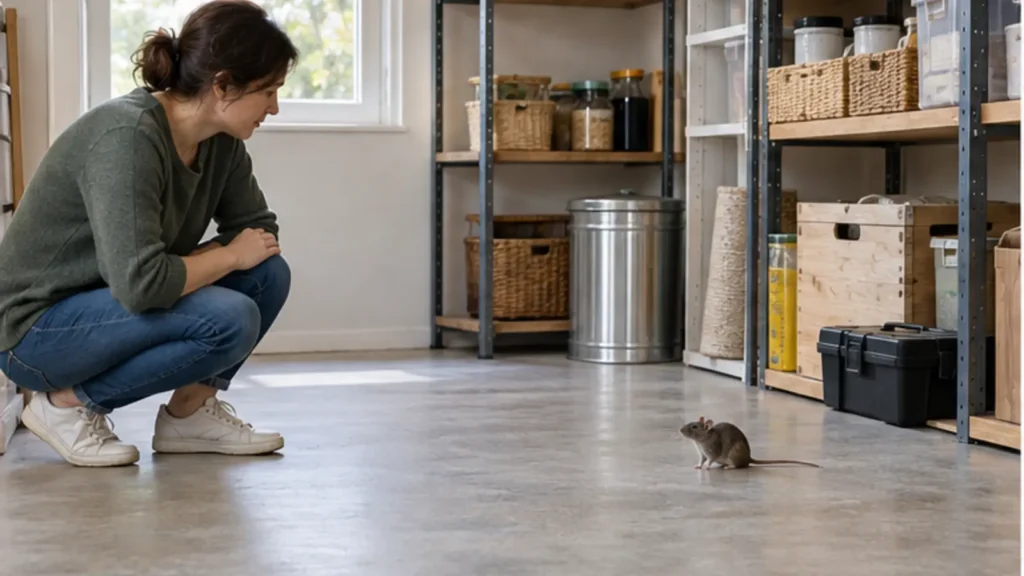
A rat dream may reflect intrusion, crowding, disgust, resourcefulness, secrecy, or a practical concern that has entered your private space. It does not predict betrayal, disease, financial loss, or bad luck. A pet rat in your hand creates a different story from many wild rats inside a kitchen wall. Before choosing a symbolic meaning, record the location, number of rats, their behavior, and your reaction. Then check whether any real signs, recent images, or current boundary problems match the scene.
Check waking reality before interpreting the animal
If you have heard scratching, seen droppings, noticed gnaw marks, or found damaged food packages, treat those as practical evidence. The CDC advises checking for droppings and gnaw marks and addressing food, water, and shelter that support an infestation. Follow current public-health guidance or contact a qualified pest professional; a dream cannot confirm or rule out a real problem.
If there are no waking signs, consider recent media, a pet, a laboratory setting, a city sighting, or a conversation. Rat imagery can enter a dream through memory without carrying a hidden warning.
Real rats are more varied than the insult
Rats are often used as shorthand for dirt, betrayal, or fear. Smithsonian’s National Zoo describes Norway rats as adaptable foragers that live in many environments, communicate, and form social groups. They can be pests around human food, and domesticated rats can also be pets and research animals.
That range matters because personal experience changes the dream. Someone who cares for pet rats, someone dealing with an infestation, and someone who only knows the word as an insult will not begin from the same association. Biology does not determine the meaning, but it prevents a one-sided symbol.
Use location, number, behavior, and reaction
- Location: Was the rat in a kitchen, bedroom, wall, workplace, street, cage, laboratory, or outdoor field?
- Number: Was there one animal, a pair, a nest, or a crowd that kept increasing?
- Behavior: Did it hide, bite, steal food, follow, escape, help, play, or simply watch?
- Reaction: Did you freeze, chase it, protect it, clean, call for help, feel curious, or feel disgust?

Twelve rat dream scenarios compared
| Dream scene | Possible waking-life match | Question to ask |
|---|---|---|
| One rat watches you | A small concern, curiosity, or feeling of being noticed | Was it hiding or waiting? |
| Many rats fill a room | Crowding, multiplying tasks, disgust, or a real pest concern | What made their number increase? |
| A rat appears in the kitchen | Concern about resources, contamination, care, or household control | Was any food damaged? |
| A rat is in your bed | A boundary issue entering rest, privacy, or intimacy | Who else was present? |
| A rat bites you | A conflict, violation, or fear becoming immediate | What contact came before the bite? |
| A rat chases you | A small issue gaining urgency because it is avoided | Where was I trying to go? |
| You catch a rat | Containing a problem, proving something, or regaining control | What did I do after catching it? |
| A rat escapes | An unresolved detail, lost control, or relief from responsibility | Was I frustrated or relieved? |
| You feed a rat | Care, habit, reciprocity, or sustaining an unwanted cycle | Was it a pet or a hidden visitor? |
| A friendly pet rat appears | Affection, curiosity, misunderstood traits, or a real pet memory | Did others judge the animal? |
| An injured rat appears | Mixed compassion and disgust, or concern for a rejected part of a situation | Could I help safely? |
| You become a rat | Feeling judged, overlooked, adaptable, secretive, or focused on survival | What could I access or avoid? |
Location shows which boundary feels crossed
A rat outdoors may be part of the environment. The same animal in a pantry, bed, bag, desk drawer, or baby’s room feels different because the boundary has changed. Name what the place is for: food, rest, work, privacy, money, care, or memory. That function often points toward the waking concern.
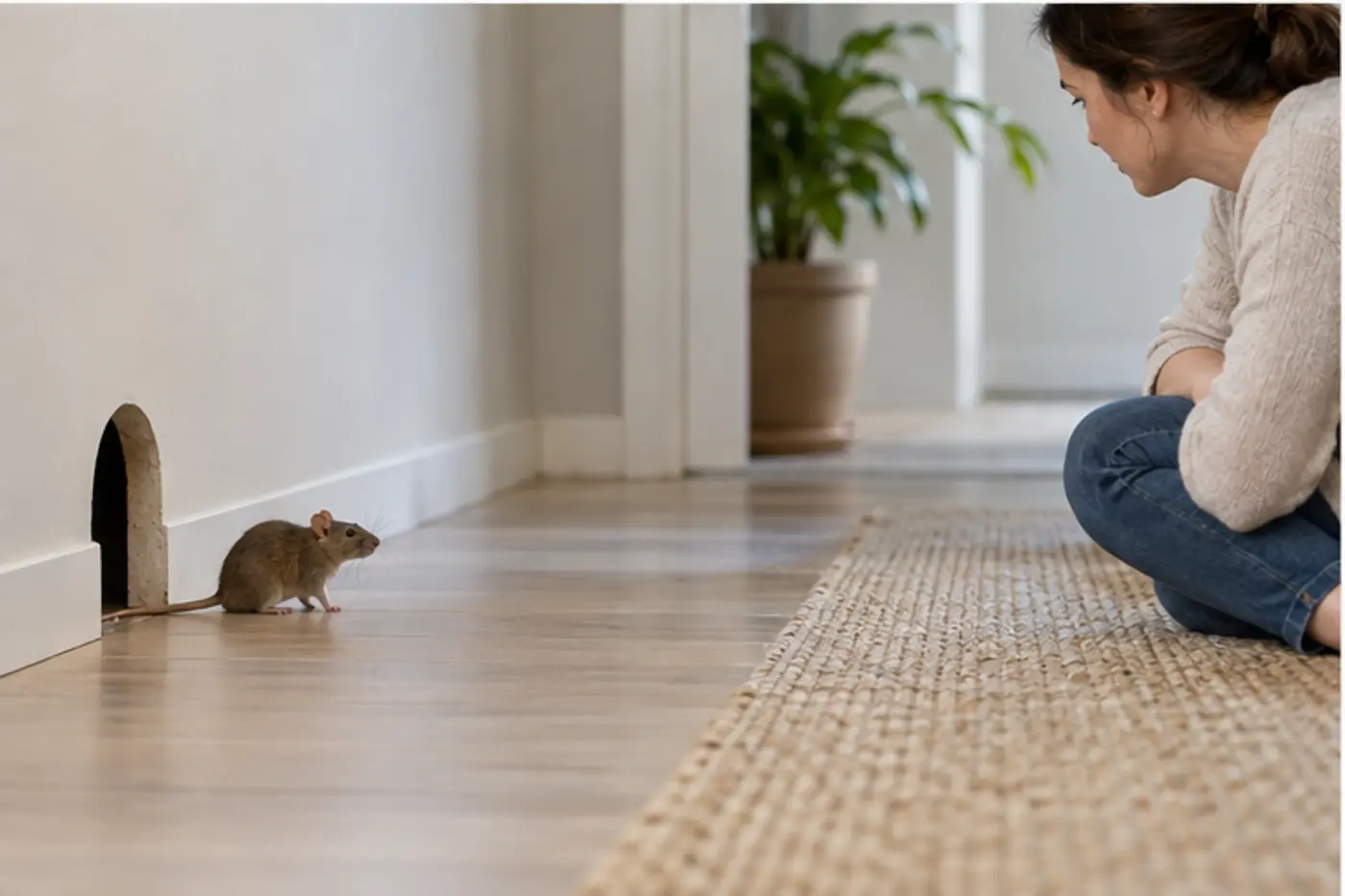
A hole in a wall or floor makes access part of the story. Ask whether you tried to block it, watched it, widened it, or discovered that the rat knew another route. The dream may be about an entry point you have not addressed, whether practical or social.
One rat and many rats create different problems
One rat can hold attention on a single detail, person, fear, or practical sign. A crowd can represent multiplication: one missed task becomes many, one rumor spreads, or one household concern feels out of control. The number may also come from a real colony image in media.
If the rats disappeared when the light came on, the scene may fit uncertainty reduced by checking. If they multiplied while you cleaned, it may resemble an effort that never feels finished. Notice the point where the number changed.
Disgust is information, not proof
Disgust can protect people from contamination, but in dreams it can also attach to shame, social stigma, clutter, or behavior you reject. Feeling disgusted by a person turning into a rat does not prove that person is untrustworthy. It shows your reaction and should be compared with actual behavior.
Compassion toward an injured or pet rat can reveal a different conflict: you may care about something others dismiss. Mixed feelings are common. Record both instead of choosing the emotion that fits a familiar symbol.
A worked example: the rat behind the pantry door
Imagine dreaming that you hear scratching behind a pantry door. One rat appears and carries a sealed packet toward a small hole. You close the cupboard, call your roommate, and together move the food into containers. The rat waits outside the room rather than attacking. You wake alert but capable.
The location concerns shared resources. The number stays at one. The rat’s behavior is opportunistic, and your reaction becomes cooperative problem-solving. If you and a roommate have avoided discussing shared expenses or chores, that context may fit. Still, if waking evidence of rodents exists, address it as a real health and housing issue.
Bites, chasing, and fear of contamination
A bite makes the boundary physical. Ask what happened immediately before it. Did you corner the rat, pick it up, protect food, or get surprised? The sequence can distinguish fear of confrontation from guilt about forcing contact.
Dream injuries are not diagnoses. If you are bitten or scratched by a real wild rodent, seek current medical and public-health advice. If contamination fears remain intense without evidence and interfere with daily life, a licensed mental health professional can help assess the anxiety.
“Rat” as a label for betrayal
Language can shape dreams. Calling someone a rat, watching a crime story, or worrying about confidential information may turn social distrust into an animal scene. Do not reverse that process and use the dream as evidence. Check observable actions, agreements, and communication.
A rat stealing an object can help identify what you fear losing: credit, time, money, privacy, food, or a message. The object and setting are more precise than the animal stereotype.
Cultural and spiritual claims need limits
Rats appear as pests, survivors, companions, zodiac animals, sacred attendants, and comic characters in different cultures. These roles should not be blended into one spiritual rule. A tradition that is meaningful to you can add a lens, especially if the dream echoes a known story.
The dream still does not prove betrayal, illness, a curse, wealth, or a coming event. Keep cultural interpretation beside practical evidence, not in place of it.
What to do after a rat dream
- Record location, number, behavior, and reaction.
- Check waking spaces for real signs without assuming they exist.
- Identify the resource or boundary connected with the location.
- Separate disgust or suspicion from evidence about a person.
- Use a dream journal if the scene repeats.
For a real infestation, follow current CDC cleanup and exclusion guidance or consult a qualified professional. For recurring nightmares that impair sleep, discuss the sleep problem with a clinician.
Frequently asked questions
Does a rat dream mean betrayal?
No. The association may come from language or stories, but the dream cannot prove that another person is dishonest.
What do many rats in a dream mean?
They may fit crowding, multiplying tasks, disgust, social pressure, or a real pest concern. The location and your response narrow it.
What does a rat in the house mean?
It may reflect a practical concern or a boundary issue in private life. Check for real evidence, then consider the room’s function.
What does a rat bite mean?
It may resemble sudden conflict, violation, or fear of contamination. It does not predict a real bite or illness.
Can a friendly rat have a positive meaning?
Yes. It may connect with affection, adaptability, curiosity, or defending something others misunderstand, especially if rats are familiar pets.
Check the room before judging the rat
A useful reading might be, “I feel that a small shared-house problem is entering my private space, and I need a direct plan.” That conclusion joins place, action, and evidence. “Rats mean betrayal” ignores both the actual dream and the waking facts.
Related reading
- House Dream Meaning
- Cat Dream Meaning
- Snake Dream Meaning
- How to Keep a Dream Journal
- Scorpion Dream Meaning