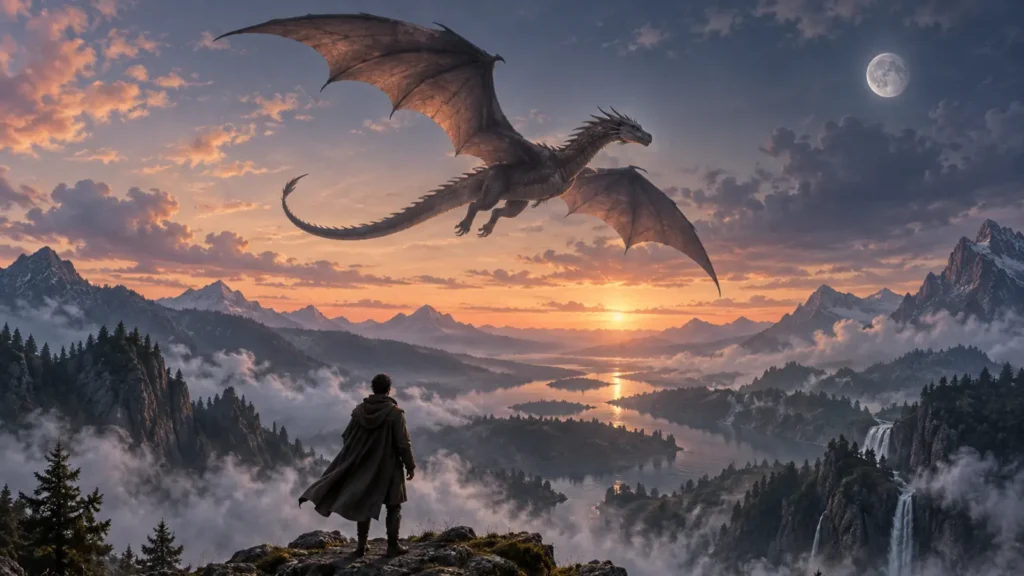
A dragon dream may reflect power, ambition, anger, protection, or a challenge that feels larger than ordinary life. Watch the dragon before choosing a meaning. If it hunts you, pressure or fear may be the point. Riding one can fit confidence and control. A dragon guarding a door may represent a goal with a cost, while a friendly dragon may reflect strength you trust. The dream does not predict victory, wealth, pregnancy, disaster, or a supernatural message. Start with who had power, what the dragon did, how you responded, and how the scene ended.
What does a dragon dream mean?
Dragons combine traits that do not occur together in a real animal. They may fly, breathe fire, speak, guard treasure, live underwater, or change size. That makes them useful dream characters when a concern feels powerful, hard to classify, or beyond normal limits.
Recent films, games, novels, family stories, festivals, and works of art can also supply the image. A study of waking and dream activities found that time spent on waking activities was related to how often those activities appeared in dreams. A 2022 review of dream research describes memory and emotion as central questions while noting that many parts of dreaming remain unsettled. Neither source assigns a fixed meaning to one dream image.
Your scene gives you better evidence than a claim that dragons always mean fortune or danger. A dragon you admire from a cliff is a different experience from one that burns your home. Even the same dream can hold excitement and fear at once.
Use a power map, not a symbol list
Four questions can narrow the meaning without forcing it:
- What role did the dragon take? It may act as a hunter, guardian, guide, mount, captive, parent, or distant spectacle.
- Who controlled the movement? Notice whether you ran, hid, followed, rode, fought, negotiated, or simply watched.
- Where was the power stored? Size, fire, flight, speech, treasure, water, or a locked place may carry the tension.
- What changed at the end? Escape, cooperation, injury, a new route, or waking before contact can shift the reading.
Then name the strongest feeling. Awe may point toward ambition or imagination. Fear can fit danger, conflict, or being outmatched. Calm beside a huge dragon may suggest that power itself is not the problem. You may be learning how close you can stand to it.
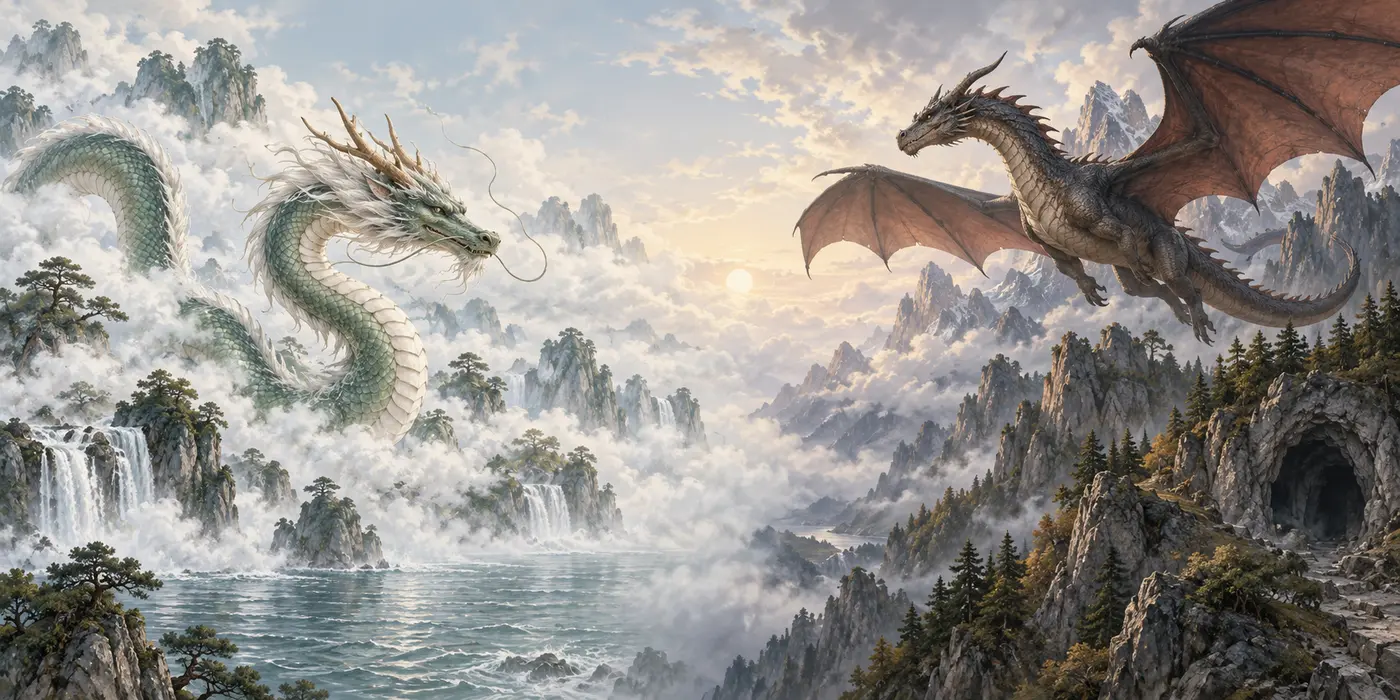
12 common dragon dream scenarios
Use each row as a question to test against your life. None of these readings predicts what another person will do.
| Dream scenario | What it may reflect | Detail to check |
|---|---|---|
| Watching a dragon from far away | A large goal, distant risk, or powerful idea you are still studying | Did you want to approach, hide, or keep watching? |
| Being chased or attacked | Pressure, conflict, or a problem that feels stronger than your current response | What started the chase, and where were you trying to go? |
| Fighting a dragon | A demanding conflict, a test of courage, or resistance to authority | Were you defending something or trying to prove yourself? |
| Killing or defeating a dragon | Ending a threat, mastering a difficult task, or wanting a clean victory | Did the result bring relief, grief, or another danger? |
| A friendly or protective dragon | Trusted strength, imagination, or support that feels unusual but safe | What did the dragon protect, teach, or allow you to do? |
| Riding a dragon | Confidence, momentum, or trying to direct a force larger than yourself | Could you steer, land, and choose the destination? |
| A dragon flying overhead | A goal, threat, or source of authority that affects you without direct contact | Did its shadow frighten you or make you look up? |
| A fire-breathing dragon | Anger, urgency, destructive speech, or rapid change | What did the fire damage, reveal, or clear away? |
| A dragon guarding treasure or a door | A valued goal with a barrier, price, rule, or fear attached | Did you need to steal, earn, ask, or find another route? |
| A baby dragon or dragon egg | New power, a growing responsibility, or an idea that needs careful handling | Were you protecting it, afraid of it, or waiting for it to hatch? |
| A dragon in water | Power mixed with emotion, uncertainty, or something hard to see clearly | Was the water calm, deep, dirty, or moving fast? |
| Many dragons | Competing demands, several strong personalities, or a world that feels intense | Did they cooperate, fight one another, or focus on you? |
A dragon can be frightening without representing a real danger. It can also be exciting without promising success. Look for the waking situation that shares the same balance of power, choice, and emotion.
A worked example: the dragon blocking a bridge
Suppose you dreamed of walking toward a stone bridge. A dragon rested across the middle. It did not attack. You waited, noticed a narrow path beside the river, and reached the other side without fighting.
The bridge suggests a transition with a clear destination. The dragon is an obstacle, yet its lack of aggression matters. Waiting shows caution rather than helplessness. Finding another path turns the ending into a choice about method.
A grounded reading might be that you face a powerful barrier but do not need a direct contest to move forward. This could fit a difficult approval process, a dominant colleague, or a goal that needs a different route. If you recently played a fantasy game with a bridge encounter, that memory may explain the scene just as well. Keep both possibilities open until one fits your waking life.

Does the dragon’s color change the meaning?
Color changes the mood, not the certainty. A red dragon may make fire, anger, speed, or danger stand out. A black dragon can feel hidden, severe, elegant, or difficult to read. A white dragon may seem exposed, cold, peaceful, or strange. Gold can draw attention to status, value, reward, or display. Blue and green may connect with water, sky, nature, calm, or a recent fictional character.
Check whether the color came from a specific book, game, flag, sports team, family tradition, or artwork. Do not use color alone to predict money, death, romance, pregnancy, or another person’s intentions.
Culture changes the dragon before the dream begins
There is no single dragon tradition. The Metropolitan Museum of Art catalogs a nineteenth-century Chinese Qing-dynasty Dragon Robe. The Smithsonian’s National Museum of Asian Art describes the Japanese folding screens Dragons and Clouds, made by Tawaraya Sōtatsu in the seventeenth century. These are specific objects from different places and periods. They do not turn every East Asian dragon into the same symbol.
Christian readers may think of the dragon in Revelation 12, where it plays an adversarial role within that text. A film, novel, or game may give its dragon still another role, from destroyer to companion. The image in your dream may borrow from any of these sources.
A cultural or religious reading is strongest when you can name the exact story, artwork, passage, or family teaching that shaped it. A dragon dream cannot prove divine approval, demonic attack, hidden ancestry, or a future event.
A short way to reflect on the dream
- Write the power map. Record the dragon’s role, your movement, its source of power, and the ending.
- Mark the turning point. Find the moment when fear rose, control shifted, or a new route appeared.
- Match one waking situation. Choose a goal, conflict, responsibility, or creative project with a similar balance of power.
- Check recent media. Include games, films, books, art, festivals, and conversations.
- Choose a useful response. Prepare, set a boundary, ask for help, try another route, or leave the dream unexplained.
A dream journal can show whether the same dragon, place, or ending returns. One vivid night does not require a fixed answer.
When a recurring dragon dream disrupts sleep
Record how often the dream occurs, what happens before sleep, whether it wakes you, and how long distress lasts the next day. Repetition can show that an image or concern remains active; it does not make the dream prophetic.
If nightmares are frequent, impair sleep, or cause daytime distress, consider speaking with a qualified health professional. The American Academy of Sleep Medicine position paper reviews treatments for nightmare disorder in adults. Dream interpretation cannot diagnose a sleep or mental health condition.
Frequently asked questions
Is dreaming of a dragon good or bad?
It is not automatically either. A protective dragon, a successful flight, and a destructive attack create different experiences. Your fear, degree of control, and the ending are more useful than a fixed good-luck or bad-luck label.
What does a dragon chasing me mean?
A chase may fit pressure, conflict, or a task that feels too powerful to face directly. Check what began the chase and where you hoped to reach. The dream does not prove that a real enemy is pursuing you.
What does riding a dragon mean in a dream?
Riding may reflect confidence, ambition, freedom, or an attempt to guide strong energy. Control is the key detail. A smooth flight differs from clinging to a dragon you cannot steer or land.
What does a black dragon dream mean?
A black dragon may make power feel hidden, severe, elegant, or unknown. Black has no universal dream meaning. Your response to the color and any recent source image provide better clues than a prediction about death or danger.
Does a dragon dream have a biblical or spiritual meaning?
It can carry personal religious meaning when it connects with a specific text or tradition. Revelation 12 uses a dragon in a particular symbolic narrative, but that does not make every dragon dream a message about evil. The dream cannot prove a blessing, attack, prophecy, or supernatural contact.
Related reading
- Dream Meanings Hub
- Snake Dream Meaning
- Fire Dream Meaning
- Flying Dream Meaning
- Being Chased Dream Meaning
- How to Keep a Dream Journal
References
- Schredl M, Hofmann F. Continuity between waking activities and dream activities. Consciousness and Cognition. 2003.
- Scarpelli S, Alfonsi V, Gorgoni M, De Gennaro L. What about dreams? State of the art and open questions. Journal of Sleep Research. 2022.
- The Metropolitan Museum of Art. Dragon Robe. China, Qing dynasty, nineteenth century.
- Smithsonian National Museum of Asian Art. Dragons and Clouds.
- Revelation, chapter 12. New Revised Standard Version Updated Edition.
- Morgenthaler TI, et al. Position Paper for the Treatment of Nightmare Disorder in Adults. Journal of Clinical Sleep Medicine. 2018.