
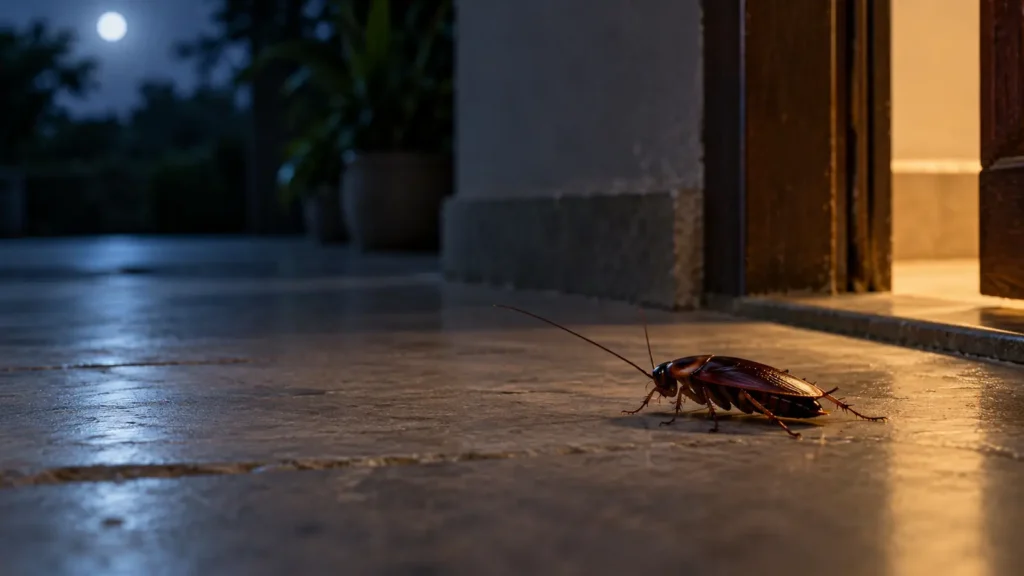
Cockroach dream meaning often centers on a reaction you want to avoid: disgust, alarm, loss of control, or the sense that a small problem keeps returning. It can also bring up adaptability, an association reinforced by the hardiness of some household species. The scene matters more than the insect alone. Note how many appeared, where they were, what they did, and whether you froze, fled, cleaned, watched, or killed one. Then compare those details with recent stress, pest exposure, or media. A cockroach dream does not prove your home is dirty or infested, reveal illness, predict bad luck, or deliver a certain spiritual message.
Start with the scene, not a fixed symbol
Write down what happened before deciding what it meant. “Three cockroaches came through a kitchen doorway, and I shut the door” is useful evidence. “The dream warned me that my family is unsafe” adds a conclusion the dream did not establish.
- Your strongest feeling: Was it disgust, fear, embarrassment, anger, curiosity, pity, or calm?
- The cockroach’s movement: Did it hide, scatter, fly, crawl toward you, keep returning, lie still, or escape?
- Location and number: Was there one or a swarm? Did it appear in a kitchen, bed, bathroom, workplace, food, bag, or unfamiliar room?
- Your response: Did you run, freeze, clean, call for help, trap it, kill it, protect it, or simply watch?
- Waking evidence: Have you recently seen a pest, discussed hygiene, felt invaded, postponed a task, watched disturbing media, or dealt with a stubborn problem?
Dream research supports some continuity between waking experience and dream content. The link is not exact, and emotional involvement affects what carries into a dream. That makes current concerns worth checking, but it does not create a universal cockroach code.
Why a cockroach can feel so powerful in a dream
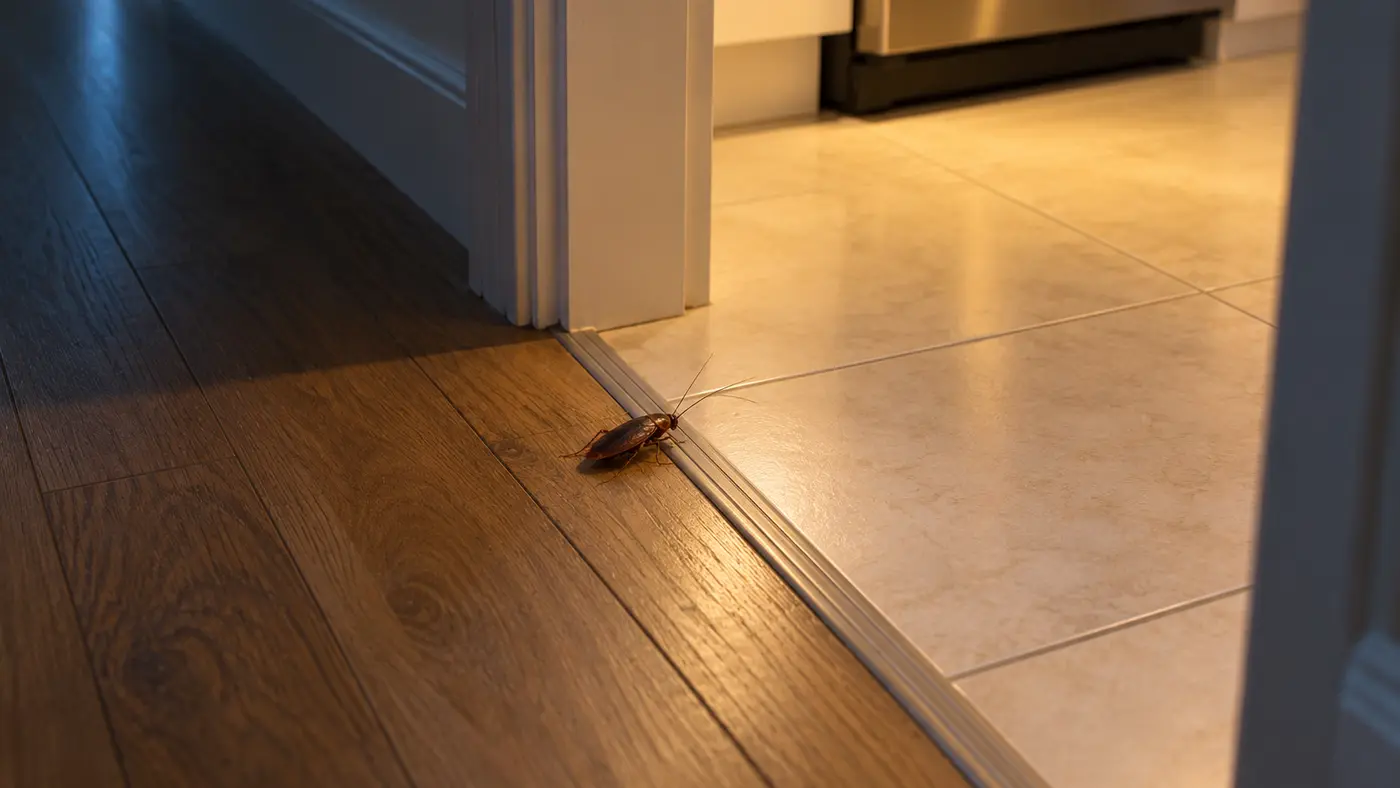
The image combines two strong ideas: contamination and persistence. Research describes disgust as an emotion linked with avoiding possible contamination. That helps explain why a cockroach can make a dream feel urgent even when the insect does little. Feeling disgusted in a dream, however, does not prove that you were exposed to disease or that something is physically unclean.
Real cockroaches are also flexible survivors. NC State Extension notes that German cockroaches feed on many household foods, can resist starvation, and adjust their nutrient intake when better food becomes available. Their nighttime activity, quick hiding, and tendency to gather in protected areas make them easy material for a dream about a problem that stays out of sight or returns after you thought it was handled.
Those facts explain why people may associate a cockroach with endurance, adaptation, secrecy, or recurrence. They do not tell you what your dream means. Your own history matters more. A person who recently dealt with pests has a different starting point from someone who saw a cockroach in a film, works in pest control, keeps exotic insects, or has never seen one in real life.
Disgust, recurrence, survival, or overload?
Disgust and a crossed boundary
A cockroach on your skin, pillow, plate, or clothing can fit the feeling that something has entered a space you consider private or safe. The waking issue may involve privacy, unwanted contact, a rude demand, a messy conflict, or information you wish you had not learned. The useful question is not “Who is contaminated?” It is “Which boundary felt crossed, and what evidence supports that feeling?”
Avoid turning disgust into a judgment about another person. Dreams can borrow a strong body reaction without making a fair claim about anyone’s character, home, culture, or health.
A small problem that keeps returning
A cockroach that escapes, reappears, or multiplies may match a task you keep postponing. It can also fit an issue that seems minor alone but becomes tiring through repetition: repeated fees, unanswered messages, small repairs, low-grade conflict, or an old habit.
Count what changed in the dream. One insect becoming many may reflect a fear of escalation. Many insects shrinking to one may fit a problem becoming manageable. Neither scene predicts what will happen. It shows how the problem felt while you slept.
Adaptation under difficult conditions
If you watched the cockroach survive, find another route, or emerge after damage, the dream may draw attention to endurance. This is not automatically praise. Adapting can mean using limited resources well, but it can also mean tolerating conditions that should change.
Ask whether survival is the goal or merely the current phase. If you have been proud of “getting through” a hard period, identify what recovery would require next: rest, support, a safer plan, or a more stable routine.
Loss of control and rapid spread
A swarm, infestation, or room full of cockroaches can turn one concern into a scene of overload. It may fit too many demands arriving at once, fear that a hidden issue has grown, or shame about being unable to keep everything in order. The location narrows the question. A workplace scene points somewhere different from a childhood bedroom.
Do not use the dream as evidence that your home is dirty or that a real infestation exists. If you are worried when awake, look for physical evidence and use reliable pest guidance. The dream alone is not evidence.
Cockroach dream scenarios at a glance
Use these possibilities to form a question. They are not predictions, diagnoses, or facts about another person.
| Dream scene | Possible focus | Detail that changes the reading | Question to ask |
|---|---|---|---|
| One cockroach watching or hiding | A concern kept at the edge of attention | Whether you felt curious, disgusted, or threatened | What small issue keeps returning to mind? |
| Many cockroaches or an infestation | Overload, escalation, loss of control | Where they came from and whether their number changed | Which separate problems am I treating as one crisis? |
| Killing a cockroach | Decisive action, anger, ending a nuisance | Relief, guilt, repeated attempts, or an escape | Did I solve a problem or only stop seeing it? |
| Dead cockroach | An ended stressor, exhaustion, a problem losing power | Who killed it and whether it moved again | What has ended, and what cleanup remains? |
| Cockroach crawling on you | Invasion, discomfort, unwanted closeness | The body area and whether you could remove it | Where do I need a clearer boundary? |
| Flying cockroach | A problem behaving in an unexpected way | Its direction, speed, and whether it landed | What changed faster than I could adjust? |
| Cockroach chasing you | Avoidance, fear, a persistent demand | What began the chase and where you tried to go | What becomes harder each time I avoid it? |
| Cockroach in a bed | Rest, privacy, intimacy, or safety disturbed | Whose bed it was and whether you could sleep | What is following me into time meant for rest? |
| Cockroach in food | Rejection, trust, standards, or loss of appetite | Who prepared the food and whether you noticed in time | What offer or situation now feels unacceptable? |
| Cockroach in a house | A private problem, household stress, hidden maintenance | The room, occupants, damage, and available help | Which part of home life needs direct attention? |
| Giant cockroach | A small concern made emotionally large | Whether its size gave it real power | What facts would put this fear back in scale? |
| White or unusual cockroach | Something familiar appearing strange or newly visible | Color, lighting, molt-like appearance, and your reaction | What changed in how I see this issue? |
What does dreaming of many cockroaches mean?
Many cockroaches often make the number more important than the species. A swarm can mirror overload: several deadlines, repeated interruptions, mounting clutter, or one concern that seems to reproduce whenever you address it. Notice whether the insects arrived together, poured from one crack, or were already everywhere. A single source suggests one root issue. Several entry points may fit unrelated pressures that have been grouped together.
Use a practical split. List each waking concern on its own line, mark what is urgent, and choose one action for the next 24 hours. The dream cannot tell you which task matters most, but it may show that your mind is treating the whole pile as unmanageable.
Killing, crushing, or finding a dead cockroach
Killing a cockroach may fit relief, firm action, anger, or the wish to remove something unpleasant quickly. The ending matters. If one strike worked and you felt calm, the scene may match confidence about handling a nuisance. If you kept striking or the insect returned, the dream may reflect frustration with a solution that has not reached the cause.
A dead cockroach can suggest that a stressor has ended or lost influence. It can also raise the less dramatic question of what remains after a problem is over. Relief, cleanup, repair, and trust do not always arrive at the same time. The dream does not guarantee victory or mean that an enemy has been defeated.
Flying, chasing, or crawling on your body
A flying cockroach breaks the expectation that it will stay low and hidden. In a dream, that shift can fit surprise, sudden visibility, or a problem reaching a place you thought was safe. A chase adds avoidance and urgency. If the pursuit was the main feature, compare the broader being chased dream guide.
A cockroach on your body often makes personal space central. Record where it touched you, whether you could move, and what you did next. A hand may connect with work or control because that is how you experienced the scene; a face may bring up visibility or embarrassment. These are prompts, not body-based codes. The dream cannot diagnose a skin problem, allergy, infection, or mental health condition.
Kitchen, bed, bathroom, workplace, or another location
The setting tells you which area of life the dream used. A kitchen can involve care, food, work, or shared standards. A bed can involve rest, privacy, intimacy, or vulnerability. A bathroom can bring up privacy, release, or embarrassment. A workplace may point toward tasks, reputation, or conditions you cannot fully control.
Do not assume the room has one fixed meaning. Your kitchen may be a place of comfort, conflict, paid work, or recent pest exposure. Ask what normally happens there and who had access. The contrast between the room’s purpose and the insect’s presence is often more useful than a dictionary definition.

Read your own dream with four short notes
Use four short notes rather than searching for a verdict.
- Feeling: Name the strongest emotion and rate it from 0 to 10.
- Action: Write what the cockroach did and what you did in response.
- Place: Note why that setting matters in your actual life.
- Waking match: List one recent event that shares the same feeling or pattern, then write one fact that does not fit.
The final step prevents a neat story from becoming false certainty. If no waking match is convincing, keep the dream as an odd memory. You do not need to force every dream into a lesson.
A worked example
Suppose you dream that one cockroach appears beside a kitchen trash bin. You spray it, but it slips under a doorway. Three more come out in the hall. You close the kitchen door, then wake feeling embarrassed because guests are due.
Feeling: embarrassment is stronger than fear. Action: the quick fix fails, and the problem spreads beyond one room. Place: the kitchen is tied to hosting and being judged. Waking match: you have postponed a small repair before visitors arrive. Fact that does not fit: there are no physical signs of pests in the home.
Here, a manageable task has become wrapped in fear of judgment. The dream does not show an infestation or prove that guests will criticize you. A grounded next step is to inspect the repair, set a realistic plan, and separate what visitors might notice from what you imagine they will think.
Dream image or real pest concern?
A dream is not a home inspection. Do not treat it as proof of cockroaches, poor hygiene, disease, or danger. If you saw no insect, droppings, egg cases, shed skins, or other waking evidence, the dream adds no physical evidence.
If you do find real signs, respond to what you observe. EPA guidance recommends lower-risk pest management steps such as removing food and water sources, cleaning spills, storing food in sealed containers, and closing cracks. Cockroach body parts, droppings, and certain proteins in saliva and feces can trigger allergies or asthma in some people. That is a reason to address a verified pest problem, not a reason to fear a dream.
Use qualified local pest-control or public-health guidance when needed, especially if a problem persists or someone in the home has asthma. Avoid unsafe pesticide use. The dream does not identify a species, locate a nest, or tell you which treatment is appropriate.
When the dream repeats
Repetition does not make a dream prophetic. Track whether the number, room, movement, and ending change. Also note recent pest exposure, disturbing media, stress, sleep loss, medicines, alcohol use, and major life changes. A dream journal can reveal a pattern without forcing one.
People can favor dream interpretations that fit beliefs they already hold, and those interpretations can affect later choices. Do not accuse someone, leave a home, discard food, use pesticides, spend heavily, or make a medical or spiritual decision because of a cockroach dream. Check direct evidence.
Mayo Clinic advises talking with a healthcare professional when nightmares recur, disrupt sleep, create fear of going to bed, or interfere with daily life. If the dream connects with trauma or causes lasting distress, mental health support may help. The cockroach image itself is not a diagnosis.
Frequently asked questions
Is a cockroach dream a bad sign?
No. It may feel unpleasant, but it cannot predict bad luck, illness, betrayal, or an infestation. Use the dream’s feeling, action, setting, and waking context to decide whether any reflection is useful.
Does dreaming of cockroaches mean my house is dirty?
No. A dream provides no evidence about cleanliness or pests. Recent media, memory, stress, or a strong disgust response can supply the image. Inspect only if you have a real-world reason to do so.
What does it mean to dream of cockroaches in bed?
The scene may focus on disturbed rest, privacy, intimacy, or vulnerability. Ask what has followed you into time meant for recovery. It does not prove that insects are present in the bed.
What does killing cockroaches in a dream mean?
It may fit decisive action, anger, relief, or a wish to end a repeated nuisance. Whether the insect died, escaped, or multiplied shows how effective the action felt. It does not guarantee success in waking life.
What is the spiritual or biblical meaning of a cockroach dream?
There is no reliable universal spiritual code for this dream. Personal faith may shape how you reflect on endurance, neglect, or renewal, but the dream itself cannot prove a divine message, spiritual attack, curse, or future event. Keep any faith-based reflection consistent with your tradition and with real-world evidence.
Why did the cockroach dream feel so real?
Nightmares can be vivid and can leave strong fear or disgust after waking. Vividness does not make the scene factual or predictive. If such dreams often disrupt sleep or daytime functioning, discuss them with a healthcare professional.
Choose one action that waking evidence supports
Name the strongest pattern: crossed boundary, repeated nuisance, difficult adaptation, or overload. Then choose one modest action you can verify—finish a delayed task, set a limit, separate one problem into smaller parts, ask for help, inspect a real concern, or record the next dream. Keep interpretations that improve clarity. Drop any reading that creates certainty, stigma, fear, or a major decision without evidence.
Related reading
- Dream Meanings
- Dream Symbols Guide
- Flies in Dream Meaning
- Ant Dream Meaning
- Rat Dream Meaning
- Being Chased Dream Meaning
- How to Keep a Dream Journal
References
- Schredl and Hofmann: Continuity Between Waking Activities and Dream Activities
- Schredl: Characteristics and Contents of Dreams
- Morewedge and Norton: When Dreaming Is Believing
- Davey: Disgust, Disease Avoidance, and Its Dysfunctions
- NC State Extension: Biology and Behavior of the German Cockroach
- US EPA: Cockroaches, Other Pests, and Asthma
- US EPA: Integrated Pest Management Principles
- Mayo Clinic: Nightmare Disorder