
Elephant dream meaning often turns on strength, family ties, memory, or a responsibility that feels too large to ignore. The scene matters more than the animal alone. A calm herd protecting a calf raises different questions from an elephant chasing you, blocking a road, entering your home, or struggling in a trap. Notice the elephant’s behavior, your position, the available space, and how the dream ended. Use those details to examine current life. An elephant dream can support reflection, but it does not predict luck, pregnancy, death, or future events, reveal another person’s thoughts, diagnose a condition, or prove a spiritual message.
Start with the scene, not a fixed symbol
Describe what happened before choosing a meaning. “A large elephant stood across the road while my family waited in the car” preserves useful details. “The elephant warned me not to travel” adds a conclusion the dream cannot establish.
Four clues usually narrow the possibilities:
- Size: Did the elephant feel impressive, reassuring, overwhelming, or out of place?
- Social position: Was it alone, with a calf, inside a herd, separated from others, or facing you?
- Movement: Was it approaching, charging, following, carrying, crossing, trapped, or standing still?
- Outcome: Did you find a route, receive help, escape, reconnect, or wake before anything changed?
Dream research offers a limited reason to compare a dream with waking life. A diary study found links between daily activities and dream content. Another study found that people can read dreams in ways that fit existing wishes and beliefs. Neither finding supplies a universal symbol dictionary. Instead of asking what every elephant means, ask what in this scene resembles something you are carrying, protecting, avoiding, or trying to move through.
Why elephants can bring several themes into one dream
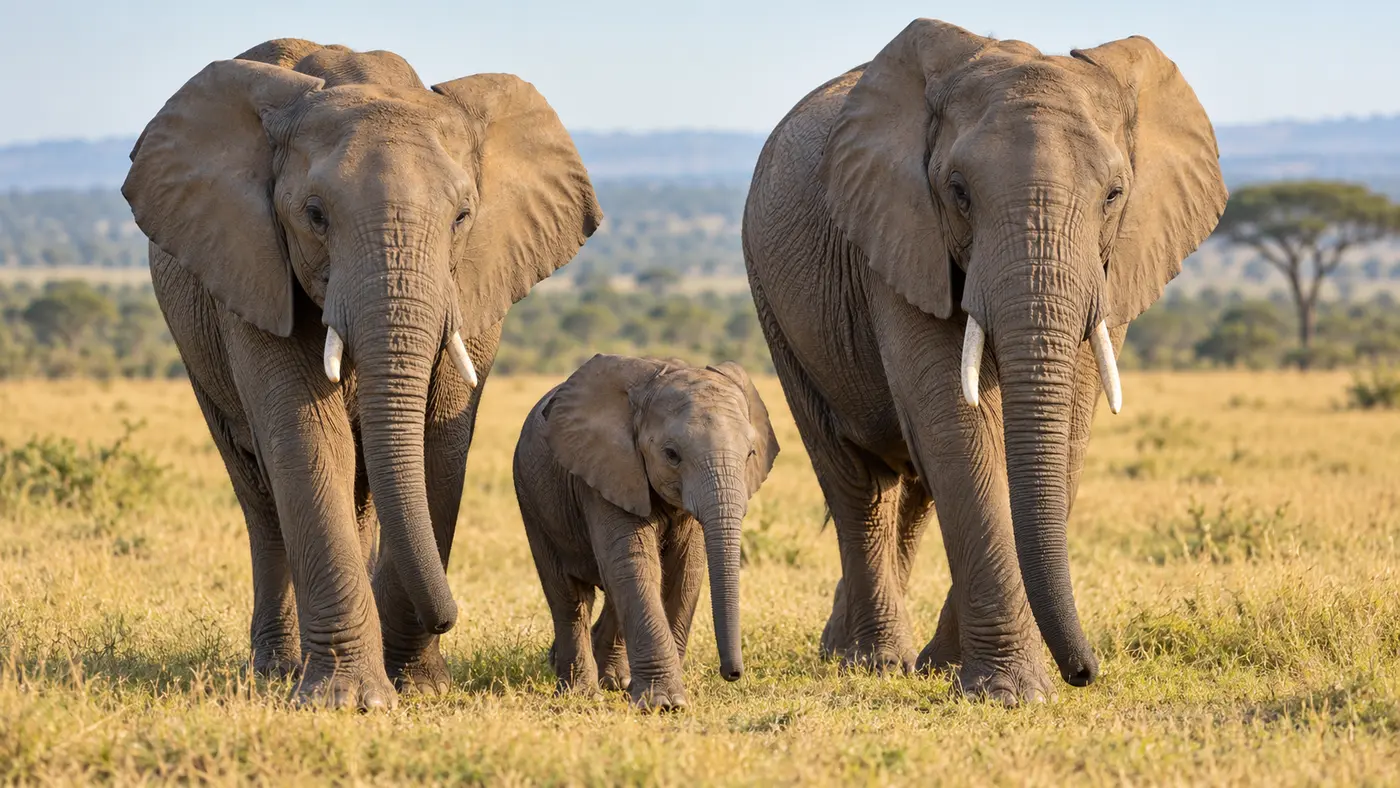
Real elephants are large, powerful, and social. The Smithsonian’s Asian elephant profile notes that related females live in herds and that young elephants are protected within the group. Elephants also communicate through touch, scent, sound, and low-frequency calls. Those facts can make strength, protection, family organization, contact, and group knowledge available as metaphors.
Memory is another common link, but “an elephant never forgets” is too absolute. A recent scientific review found that people celebrate elephant memory more broadly than the direct evidence supports. Memory is worth considering when the scene points that way. The animal alone does not mean a forgotten event is returning.
Your own history comes first. A wildlife worker, a recent zoo visitor, a person raised with stories of Ganesha, and someone who watched an elephant documentary yesterday can all bring different links to the same image.
Strength, protection, and personal authority
A calm elephant can suggest strength that does not need to rush. Standing beside it without fear could fit steady confidence, safety, or respect for someone dependable. If the elephant obeyed every command, look at control. Are you directing a large duty well, or assuming you can manage more than you really can?
Size can also turn strength into pressure. An elephant filling a small room, leaning against a weak fence, or standing too close can resemble a problem that is now too large to minimize. That does not make the dream a warning from outside you. It can simply give shape to something that already feels serious.
Family, belonging, and shared responsibility
A herd can resemble a family, team, community, or other group with its own pace and unspoken roles. Watch where you were. Moving inside the herd can feel supportive. Walking behind it could fit fear of being left out. Being surrounded can feel safe or crowded, depending on your emotion and room to move.
A calf often brings care, learning, or dependence into focus. It does not confirm pregnancy or predict a child. Notice whether adults kept the calf safe, whether it stayed close, and whether you had to care for it. A calf separated from the herd can raise a question about support. It can just as easily echo a recent nature program.
Common elephant dream scenarios
Use this table to identify a line of inquiry, not a verdict. The same scene can carry a different meaning when the emotion or ending changes.
| Dream scene | Possible focus | Question to ask |
|---|---|---|
| A calm elephant | Steady strength, patience, security | What felt dependable rather than forceful? |
| A herd of elephants | Family, belonging, group direction | Was I protected, crowded, leading, or left behind? |
| A baby elephant | Care, learning, new responsibility | Who was responsible for the calf, and was support available? |
| Elephant chasing you | Avoidance, pressure, urgent responsibility | What large issue was I trying not to face? |
| Elephant attacking | Conflict, power, fear, crossed limits | What changed before the attack, and where was safety? |
| Riding an elephant | Direction, authority, borrowed power | Was I guiding the movement or merely holding on? |
| Elephant carrying a load | Duty, endurance, unfair burden | Who chose the load, and could it be set down? |
| Injured or trapped elephant | Blocked strength, concern, limited options | What help was possible, and what exceeded my ability? |
| Dead elephant | Grief, change, lost security | What had ended, and what feeling remained? |
| White elephant | Rarity, tradition, attention, personal belief | Did the color matter during the dream or only afterward? |
| Elephant in your house | A major issue in private life | What room was it in, and what could no longer be ignored? |
| Elephant blocking a road | Delay, scale, caution, another route | Did I wait, turn back, make space, or force the way through? |
A herd, a calf, or one elephant alone
A herd moving together
A herd puts shared direction in the foreground. If the group moved calmly and made room for you, the scene could fit reliable support. If every elephant followed one leader toward danger, the scene raises a different issue: can you trust the group’s judgment? Look for the one that changed course, guarded the edge, or lagged behind.
A protected or separated calf
A protected calf could fit patient teaching or a duty shared by several people. A separated calf can evoke worry, helplessness, or a memory of being unsupported. Before choosing a symbolic reading, check for a direct source such as a recent wildlife video, family talk, or news story.
A lone elephant
One elephant can feel independent, excluded, watchful, or lost. Its behavior matters more than solitude. A lone elephant grazing calmly does not pose the same question as one calling, pacing behind a barrier, or searching for a herd.
When an elephant chases or attacks you
A chase often gives pressure a clear direction. The elephant’s size can match a duty, conflict, deadline, or emotion that feels difficult to outrun. Ask what happened immediately before the pursuit. Did you approach a calf, enter a restricted place, take something, make noise, or simply find yourself in its path?
The answer can shift the focus from vague danger to boundaries, blame, or an accidental clash. Compare the scene with the broader being chased dream guide. The dream does not prove that someone plans to harm you. Assess real risk with waking evidence and seek practical help if a real situation feels unsafe.
An attack can also invert a familiar image. Strength that once felt safe now feels threatening. This could fit a powerful person, group, emotion, or duty whose impact has changed. Keep that reading tentative unless current facts support it.
Riding, guiding, or following an elephant
Riding high on an elephant can feel confident, exposed, formal, or out of control. Were you choosing the route, following a handler, or unable to get down? The height can offer a wider view while the animal’s pace limits your control.
Guiding an elephant can show the difficulty of moving something powerful through a narrow space. Following one could fit trust, curiosity, or a path chosen by someone else. What happened when your direction and the elephant’s direction differed?
An elephant carrying a heavy load
A loaded elephant makes endurance visible, but endurance is not always healthy or fair. Count what it carried and who placed the load. If you added another bundle, examine your part in the pressure. If you removed the load, did relief follow, or could the elephant still not move?
This scene can be a useful prompt for a responsibility audit. Write down what is yours, what is shared, what was assigned without agreement, and what can wait. The dream does not decide which obligation to drop; waking facts and consequences do.
An injured, trapped, or dead elephant
An injured elephant can bring blocked strength, damaged trust, or a capable person without the right conditions to mind. A trap adds human control, limited choices, and the risk of stepping in without the right tools. If you tried to help, was the help effective, wanted, and safe?
A dead elephant could relate to grief, lost safety, the end of an important role, or a recent image of animal harm. It is not a prediction of death. Separate what you saw from what you assumed. Stillness, visible injury, an empty setting, and a grieving herd point toward different feelings.
A white elephant
A white elephant can feel rare, sacred, conspicuous, expensive, or simply visually striking. Start with your own association and the dream’s response. Was the animal welcomed, hidden, displayed, feared, or treated like an ordinary elephant?
Do not turn color alone into a forecast of wealth, pregnancy, status, or spiritual favor. A cultural story could have supplied the image, but that does not make every white-elephant dream part of that tradition.
An elephant in your house
A very large animal inside a home puts a major concern in a private setting. The room adds context. An elephant in a kitchen, bedroom, nursery, hallway, or basement affects different routines and bonds. Did the house hold it with ease, or did doors, floors, and furniture begin to fail?
The familiar phrase “the elephant in the room” could also be a direct source, especially if something important has gone unsaid. That is one possible word link, not an automatic reading. Name the specific issue only if waking evidence supports it.
An elephant blocking a road or standing in water
A blocked road
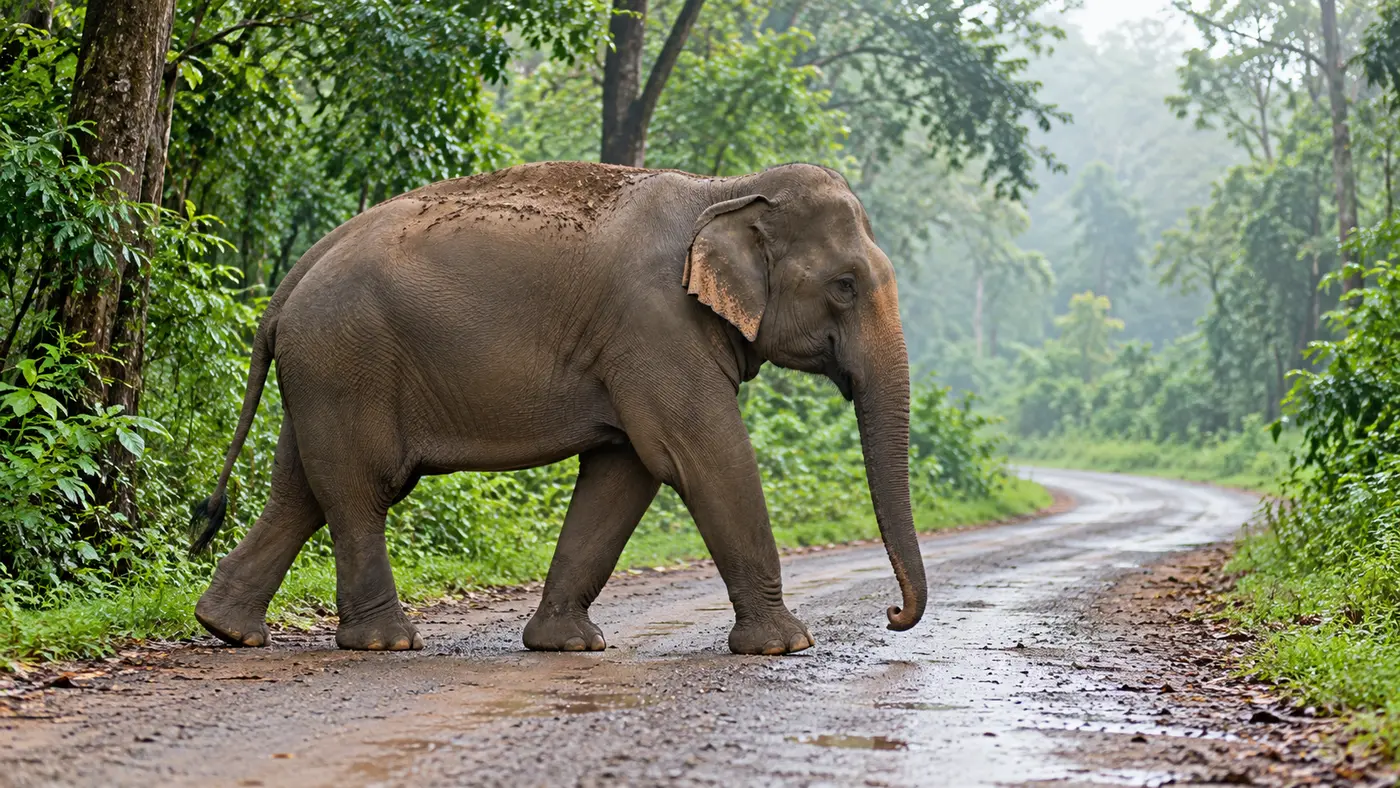
An elephant across a road makes scale, timing, and route choice visible. Waiting can be wise rather than passive. Turning around can be practical rather than fearful. Forcing a route can show how urgency competes with safety. Was there another road, and was the elephant already moving on its own?
Crossing or standing in water
Water adds depth, current, sight, and footing. An elephant crossing calmly could fit steady movement through doubt. One struggling in deep or muddy water brings resources, weight, or a hard change into view. Use the water dream meaning guide to compare what the water allowed or stopped instead of treating water as a single code.
Elephant, bull, cow, or horse?
Another large animal changes the focus. A bull dream can put a charge, conflict, territory, or restraint at the center. A cow dream can bring care, herd life, food, or routine into view. A gorilla dream may put group duty, controlled displays, or strength at close range in view. A horse can shift attention toward speed, travel, partnership, or freedom.
Dreams blur species. If you only decided it was an elephant after waking, record that doubt. Shape, size, movement, and your reaction can be better clues than a label added later.
Use the Size–Social Position–Movement–Outcome check
When several meanings seem plausible, work through these four questions in order:
- Size: What did the elephant’s scale allow or prevent?
- Social position: Who belonged to the group, who needed protection, and where were you?
- Movement: What approached, stopped, carried, followed, crossed, or could not move?
- Outcome: What changed, and what emotion remained when you woke?
Then look for one recent waking situation with the same pattern. Choose a small response that makes sense without relying on the dream: clarify a responsibility, ask for help, wait for more information, set a boundary, or review another route.
A worked example: the elephant on the road
Suppose you dream that your family is waiting in a car on a narrow forest road. A calm elephant crosses slowly and stops near the far shoulder. You want to drive around it, but the road is too tight. After several minutes, the elephant enters the trees and everyone continues safely. You wake impatient but relieved.
Size: The elephant makes the narrow route unusable. Social position: Your family shares the delay, while you feel responsible for moving everyone forward. Movement: The elephant is crossing, not charging. Outcome: Waiting resolves the problem without a confrontation.
A grounded reading could focus on a delay that cannot be forced and a responsibility to keep other people safe while plans pause. The scene could also come from a travel clip or wildlife image. A useful action would be to identify the real delay, confirm what is and is not under your control, and give affected people an honest update. The dream does not warn against a trip or promise that an obstacle will disappear.
Cultural and spiritual context
Hindu traditions and Ganesha
Elephant imagery has specific religious meaning in Hindu traditions. The Metropolitan Museum of Art describes Ganesha as the elephant-headed Hindu god linked with removing obstacles. A dreamer who practices within, or knows, a Hindu tradition could connect an elephant with worship, family teaching, or a certain image of Ganesha.
That context should not be reduced to “elephant means good luck.” Hindu traditions are not a generic dream dictionary, and an elephant dream cannot by itself prove divine guidance, favor, or a message from Ganesha.
Buddhist stories and a white elephant
Some versions of the Buddha’s birth story recount Queen Maya dreaming of a white elephant before his birth. This is a religious and cultural narrative, not evidence that a modern white-elephant dream predicts pregnancy, a special child, or spiritual status. If the story matters to your interpretation, identify the tradition and source rather than borrowing one detail as a universal omen.
Biblical and Christian questions
The Bible does not give a fixed code for elephant dreams. In traditions that include 1 Maccabees, chapter 6 describes elephants used in battle; it does not set a dream meaning. A Christian reader can reflect through prayer, conscience, scripture, or a trusted faith leader. The dream itself cannot prove a blessing, warning, spiritual attack, or future event.
Check for a recent source
Look back over the previous few days. An elephant could have appeared in a documentary, zoo visit, news report, children’s book, logo, game, talk, or social post. Direct memory is not a lesser explanation. It shows where the dream found its material.
Also note phrases you heard, such as “elephant in the room,” “long memory,” or “carrying a heavy load.” The dream symbols guide can help you compare action, setting, emotion, and personal association without treating the image as a forecast.
If the elephant dream keeps returning
Track several versions. Record the elephant’s size, social position, movement, outcome, and your waking emotion. A dream journal can show whether the herd comes closer, a road opens, the load changes, or the same chase repeats.
Recurring dreams can be upsetting even when they are not predictive. Mayo Clinic guidance says nightmares become a clinical concern when they recur, cause distress, disrupt sleep, create fear of sleep, or interfere with daytime life. A qualified healthcare or mental health professional can help with distress or sleep problems. The elephant image itself is not a diagnosis.
Do not base a medical, financial, legal, relationship, travel, pregnancy, or religious decision on a dream alone. Use current evidence, appropriate professional advice, and your actual circumstances.
Frequently asked questions
Is an elephant dream a good sign?
Not automatically. A calm herd could fit support or steady strength. A chase, trap, injury, or overloaded elephant can bring pressure, limits, or concern into view. The dream does not guarantee good luck or warn of bad luck.
What does it mean when an elephant chases you?
It could reflect a large duty, conflict, emotion, or deadline that feels hard to face. Check what started the chase and where you tried to go. It does not prove that a person intends harm.
Does a baby elephant dream mean pregnancy?
No. A calf can prompt thoughts about care, learning, dependence, or a new duty, but it cannot confirm or predict pregnancy. Use a pregnancy test and medical guidance for a real pregnancy question.
What does a white elephant dream mean?
It could draw on rarity, visibility, religious imagery, or a personal memory. Color and cultural context matter, but the dream does not predict wealth, pregnancy, status, or spiritual favor.
What does a herd of elephants mean in a dream?
A herd can raise questions about family, belonging, safety, leadership, or group pressure. Your place in the herd and its direction are more useful than the number of elephants alone.
What is the Hindu meaning of an elephant dream?
Some Hindu dreamers connect elephant imagery with Ganesha or with practices and stories from their own tradition. That context is specific to the tradition, not a universal promise of luck or divine intervention.
What is the biblical meaning of an elephant dream?
The Bible does not provide a standard elephant-dream code. Elephants appear in 1 Maccabees as animals used in battle, not as a key to dream interpretation. A dream cannot establish divine guidance or prophecy.
Related reading
- Dream Meanings hub
- Dream Symbols Guide: A Context-First Method
- Dream of Being Chased Meaning
- Baby Dream Meaning
- Bull Dream Meaning
- Cow Dream Meaning
- How to Keep a Dream Journal
References
- Smithsonian’s National Zoo: Asian Elephant
- Elephant memory review, Neuroscience & Biobehavioral Reviews
- Waking activities and dream content, Dreaming
- Dream content and waking well-being, Sleep
- Motivated interpretation of dreams, Journal of Personality and Social Psychology
- The Metropolitan Museum of Art: Ganesha
- Smithsonian Magazine: Archaeology and the Buddha’s legendary hometown
- 1 Maccabees 6:34–36, Good News Translation
- Mayo Clinic: Nightmare disorder